A Small, Awkward Truth
Ever notice this?
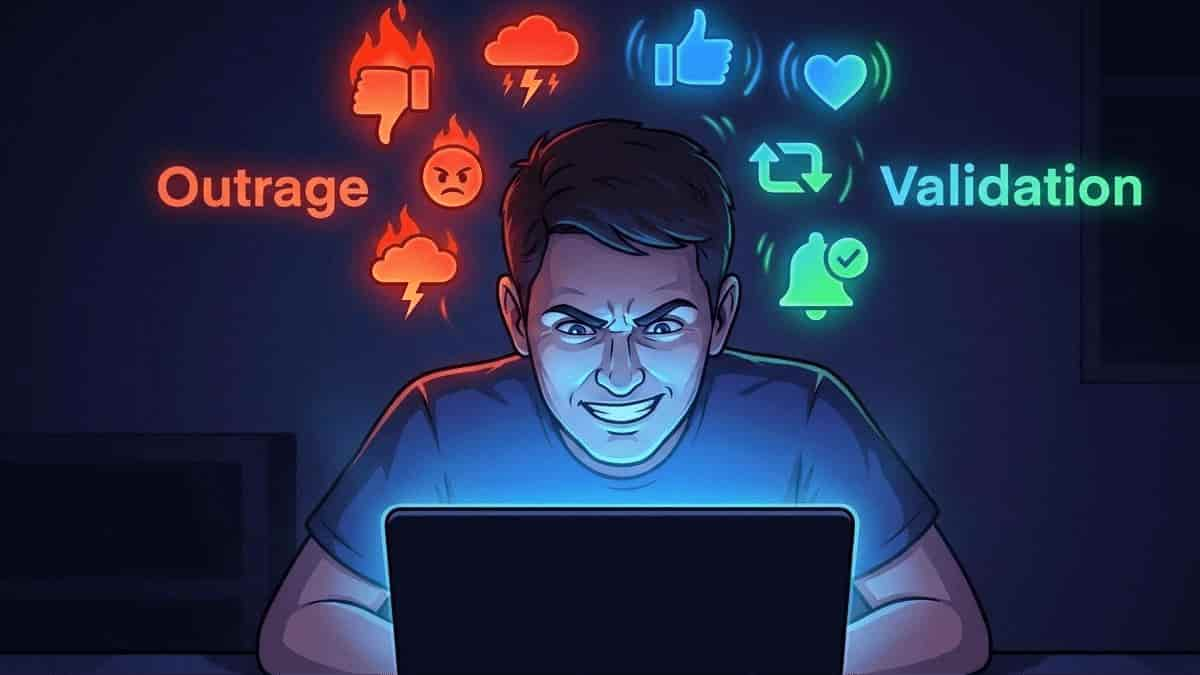
The same person who won’t argue with the chaiwala about ₹5 will happily write a 7-tweet thread destroying a stranger at 2 a.m. Online arguments aren’t just more common—they’re louder, longer, and weirdly… fun.
From a cyberpsychology lens, this isn’t accidental. Digital spaces quietly remove social brakes and replace them with emotional rewards. That’s why online conflict feels easier, safer, and sometimes addictive.
KEY TAKEAWAYS
- Digital environments remove natural social brakes like body language and tone.
- Online conflict triggers dopamine rewards, making it feel addictive.
- Platforms are engineered to prioritize outrage over calm, nuanced discussion.
Conflict in the Digital Arena
Offline, disagreement comes with consequences—tone, facial reactions, awkward silences. Online? You get a screen, a keyboard, and distance. That distance changes how the brain processes confrontation. The internet doesn’t create anger; it amplifies and releases it with fewer costs.
Reduced Social Cues and Emotional Detachment
No eye contact. No body language. No instant feedback.
Without these cues, empathy takes a back seat. The brain stops reading the other person as human and starts treating them like text on a screen. This emotional detachment makes sharper words feel… harmless. They’re not—but they feel that way.
Echo Chambers and Reinforced Beliefs
Algorithms don’t want balance; they want engagement.
So they show you people who think like you—and occasionally someone to hate-argue with. When beliefs get reinforced repeatedly, our perception of reality shifts, making disagreement feel like a personal attack. That’s when discussions turn into battles, not conversations.
The Reward System Behind Online Arguments
The Reward System and “Online Disinhibition” Here’s the spicy part: arguing online triggers dopamine. This happens because of the Online Disinhibition Effect, where the lack of physical presence makes us feel invisible and less restrained. Whether it’s a “like” on a witty comeback or a heated reply, these interactions activate the brain’s reward system.
Interestingly, how we engage in these battles often depends on our personality. Those scoring high in certain Big Five personality traits may be more prone to seeking this digital stimulation. Winning an argument—or even just being “seen” through conflict—provides a mini-high that keeps us scrolling for more.
Outrage as a Form of Engagement
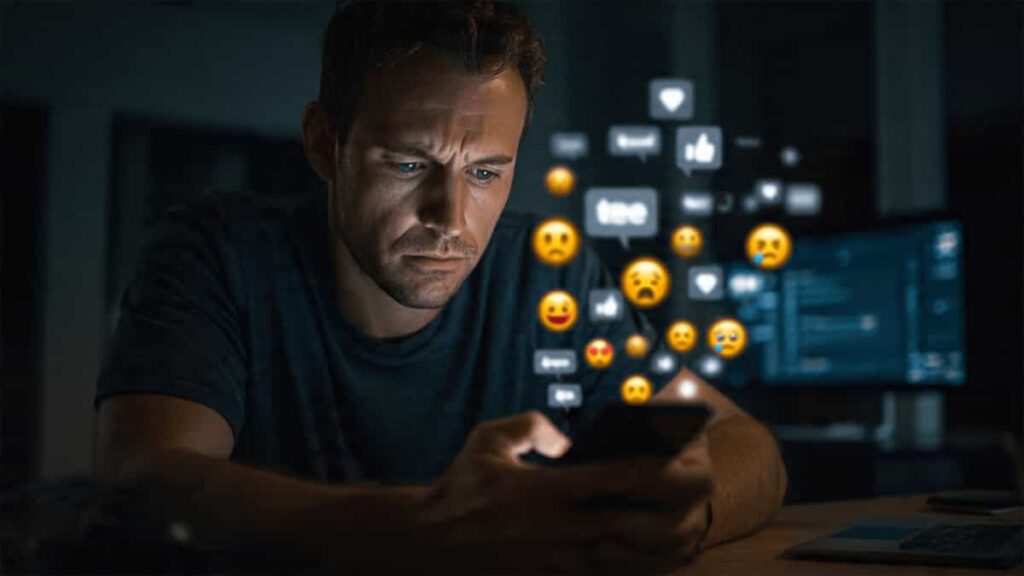
Calm opinions don’t travel far. Outrage does.
Platforms quietly reward emotional intensity, not thoughtful nuance. Over time, the brain learns: anger = visibility. So people escalate—not because they’re bad, but because the system trains them to.
Psychological Fatigue From Constant Conflict

Here’s the cost nobody talks about.
Constant online arguing drains mental energy. It keeps the nervous system slightly on edge, even when the phone is down. That’s why after “doing nothing all day,” you still feel exhausted. Your brain was fighting invisible battles, proving that the mind-body connection in health psychology ensures digital stress has physical consequences.
Disagreeing Without Digital Damage
Disagreement isn’t the enemy—how we do it is.
Pausing before replying, avoiding pile-ons, and remembering there’s a real person behind the comment sounds old-school—but it works. Offline rules applied online reduce burnout and preserve sanity. Radical idea, I know.
PRACTICAL TIPS TO PREVENT DIGITAL BURNOUT
- ✓ Pause 10 seconds before hitting ‘send’ or ‘reply’
- ✓ Ask: ‘Will this matter to me in 24 hours?’
- ✓ Avoid engaging in dogpiling or comment section battles
- ✓ Set boundaries on screen time when feeling emotionally drained
Rethinking Online Discourse
We argue more online because it’s easier, rewarded, and emotionally distanced. We enjoy it because the brain gets something out of it.
But enjoyment doesn’t always mean healthy.
The internet isn’t broken—it’s just very good at pushing human psychology’s weakest buttons. The real flex? Knowing when not to press reply.
FAQs
What is the Online Disinhibition Effect?
It is a psychological phenomenon where people feel less restrained, more expressive, or more aggressive when interacting online compared to in-person environments due to perceived anonymity and distance.
Why do online arguments feel addictive?
Online conflicts release dopamine through social validation (likes, shares, replies) and the brain’s internal reward activation when ‘winning’ or defending beliefs.
How does digital stress affect physical health?
Prolonged exposure to conflict triggers stress responses in the nervous system, leading to psychological fatigue, muscle tension, and physical exhaustion even without physical activity.
Note: This article is for educational purposes only and does not constitute professional clinical advice.
Related Articles


Sponsored


You May Also Like
Integrity vs. Despair (Erikson’s Eighth Stage of Psychosocia…

Why Cyberpunk Worlds Feel More Real Than Real Life

Why Elevators Trigger Panic for Some People
Adaptive vs. Maladaptive Perfectionism: When High Standards …

The Hidden Geometry of Nightclub Approaches