Role-playing games, commonly known as RPGs, are very different from most other types of games. In racing games, you control a car. In shooter games, you complete missions. In strategy games, you manage resources. But in RPG games, you don’t just control a character — you become someone. And that is where psychology comes in.
RPG games are not just about gameplay mechanics, levels, or combat systems. They are about identity, choice, and personal storytelling. That is why people often feel much more emotionally attached to RPG games than to other types of games. From a psychological perspective, RPGs are not just games — they are identity simulators.
The Human Brain Loves “What If” Lives
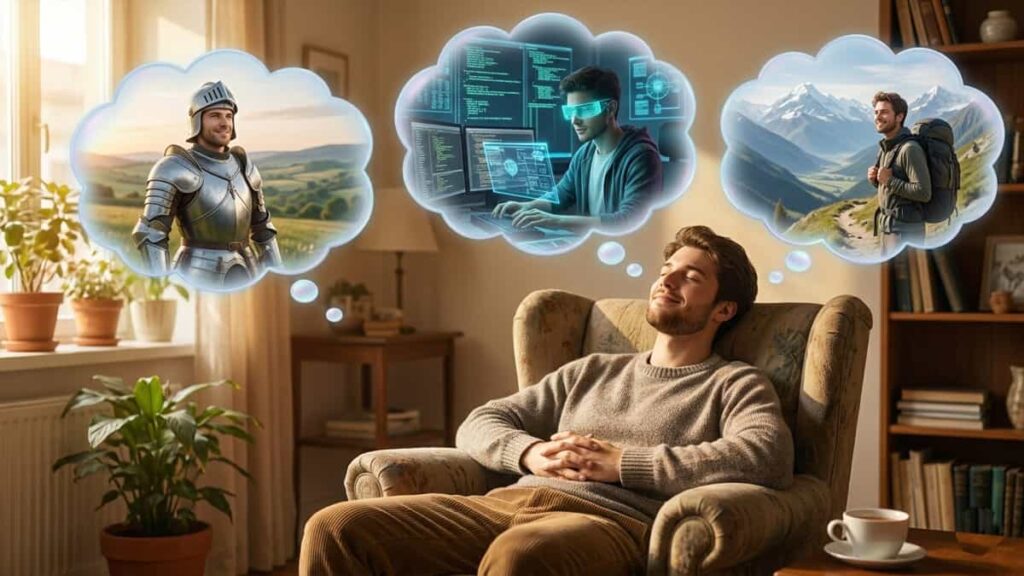
One of the most important psychological ideas behind RPG games is the concept of possible selves. In psychology, this refers to the different versions of ourselves we imagine — what if I was braver, what if I was richer, what if I lived in another country, what if I made different choices, what if I became a different kind of person.
In real life, we only live one version of our life. But the brain constantly imagines alternative paths and different identities. RPG games allow people to explore these alternate identities in a safe environment.
You can be a warrior, a hacker, a criminal, a hero, a trader, a leader, a mercenary, a wizard, or just a traveler exploring the world. These roles may be fictional, but the decisions you make while playing often reflect your real personality. Some players always choose the moral path. Some choose money and power. Some choose chaos. Some help everyone. Some trust no one.
So while the character is fictional, the decisions are real, and those decisions reveal something about the player.
Character Creation Is Identity Creation
One of the most interesting parts of RPG games is character creation. Many players spend a long time choosing appearance, clothing, skills, background, and abilities. This might look like a simple customization feature, but psychologically, it is much deeper.
When people create a character, they usually do one of three things:
- They create an ideal version of themselves
- They create a completely different personality
- They create a version that slowly becomes like themselves
This process is called identity projection. Players project parts of their personality, desires, fears, and values into the character. Over time, the character stops feeling like a game character and starts feeling like an extension of the player.
That is why when something bad happens to a character in an RPG game, players sometimes feel genuinely sad or angry. They are not reacting to pixels on a screen; they are reacting to something they emotionally invested in.
Choice and Consequence Make Identity Feel Real
RPG games often include decision-making systems where choices affect the story, relationships, and ending. This is extremely important psychologically because identity is built through decisions.
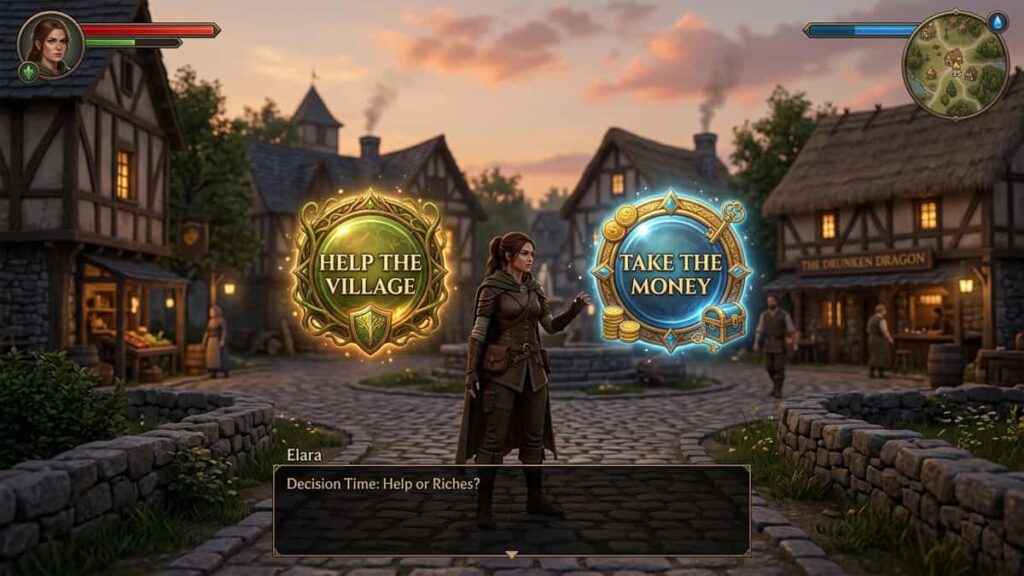
In real life, who you are is not just your name or job — it is the sum of your decisions over time. RPG games simulate this process in a compressed form. You make choices, see consequences, build relationships, gain reputation, and shape the story.
This makes players feel like they are not just playing a story; they are living a story.
And when people feel like they are living a story, they become emotionally connected to it.
RPG Games Give a Sense of Purpose
Another psychological reason RPG games are so engaging is purpose. In real life, purpose is often unclear. People go to work, pay bills, follow routines, and sometimes feel like they are moving without a clear mission.
RPG games are very different. They always provide goals:
How RPGs Provide Purpose
- ✓ Clear and immediate mission objectives
- ✓ Direct rewards for helping non-player characters
- ✓ Visible stats and clear skill progression
- ✓ Explorable maps with clear milestones
- ✓ Reputation indicators reflecting your social impact
There is always something to do, and progress is visible. The player always feels like they are moving forward. This constant sense of progress and purpose is very satisfying for the brain. Humans like progress. Humans like goals. Humans like seeing improvement over time.
RPG games are basically progress simulators, and progress creates satisfaction.
Escapism, But Not in a Bad Way
People often say RPG games are escapism, and that is partly true. But escapism is not always negative. Sometimes people don’t want to escape life; they want to escape limitations.
ADVANTAGES
- ✓ Safe environment to try bold decisions
- ✓ Ability to experience bravery without real risk
- ✓ Freedom to explore impossible worlds and identities
LIMITATIONS
- ✕ Real-world constraints and consequences
- ✕ Social and physical limitations
- ✕ Unclear or slow real-life feedback loops
This is not always about running away from reality. Sometimes it is about experiencing versions of life that reality cannot offer.
RPG Characters Often Become Personal Memories
If you ask gamers about their RPG characters from years ago, many of them remember their characters very clearly — what they looked like, what decisions they made, which ending they got, which characters they trusted, which characters betrayed them.
This is very interesting psychologically because it means the brain stored those experiences almost like real memories. Not exactly the same as real-life memories, but emotionally similar. The brain remembers stories where you were the decision maker much more strongly than stories where you were just watching.
That is why RPG games feel more personal than movies or books.
In a movie, the hero makes decisions.
In an RPG game, you make the decisions.
RPG Games and Identity in the Modern World
In the modern world, people change jobs, cities, social circles, and lifestyles more often than in the past. Identity is not as fixed as it used to be. People are constantly asking themselves questions like:
- What should I do with my life?
- Who do I want to become?
- What kind of person am I?
- What kind of life do I want?
RPG games mirror these questions in a simplified environment. They give players a world where identity can be built through choices, actions, and reputation. That is why RPG games feel so engaging — they reflect the same identity questions people are already thinking about in real life.
The Real Reason RPG Games Feel So Personal

In the end, RPG games are not just about leveling up characters.
They are about building a version of yourself in another world.
You choose how to behave.
You choose who to help.
You choose who to trust.
You choose what kind of person your character becomes.
And when you look at it from a psychological perspective, that is a very powerful idea.
Because RPG games are not just asking you how you want to play.
They are quietly asking you:
Who do you want to be?
🧠 Key Takeaway: The Identity Simulator
- Possible Selves: RPGs allow the brain to explore ‘what if’ scenarios, satisfying a natural human curiosity about alternative life paths and identities.
- Identity Projection: Whether creating an ideal version of ourselves or a total stranger, the characters we build often become emotional extensions of our own personality.
- Meaningful Agency: By linking choices to consequences, RPGs simulate the way real-world identity is built, making the story feel lived rather than just watched.
- The Progress Loop: RPGs satisfy the human need for purpose by providing clear goals and visible progress, acting as a ‘satisfaction simulator’ for the brain.
Frequently Asked Questions About RPG Psychology
Why do RPG games feel more memorable than movies?
Unlike movies where you passively observe a character’s choices, RPGs require active decision-making. Your brain processes memories of events you actively participated in much closer to real-life memories.
Is playing RPG games a healthy form of escapism?
Yes, as long as it remains balanced with real-life responsibilities. RPGs offer a healthy outlet for exploring creativity, practicing decision-making, and experiencing freedom from real-world limitations.
What does character creation say about a player?
Character choices often reflect identity projection. Players tend to either create an idealized version of who they want to be, experiment with traits opposite to their real personality, or build characters that reflect their true core values.