Video game violence has been debated for decades. Some people believe violent games increase aggression, while others believe they actually reduce stress by giving players a safe way to release frustration. The truth is more complicated. Violence in games is not just about shooting, fighting, or destruction — it is about control, emotion, and psychological release.
When we look at games like Cyberpunk 2077 and the Grand Theft Auto series, especially the upcoming Grand Theft Auto VI, the question becomes even more interesting because these games don’t just include violence — they build entire worlds where players are free to act without real-world consequences.
So the real question is not simply “Are violent games bad?”
The real question is “Why do people enjoy violent games in the first place?”
Violence in Games Is Often About Stress Relief
In real life, people cannot release anger freely. You cannot fight your boss, break cars in traffic, or destroy things when you are frustrated. Society runs on self-control. People suppress anger, frustration, and stress every day.
Video games provide a safe environment where consequences are virtual. You can fight enemies, cause chaos, escape police, destroy things, and then simply restart the game. Psychologically, this can work as a stress release mechanism. The brain treats the action as emotional release without real-world damage.
This is one reason open-world games are so popular. They allow players to do things they would never do in real life, and that freedom itself reduces mental pressure.
Cyberpunk Violence Is Different From Random Violence
Violence in Cyberpunk games is often connected to story, survival, or power struggles. In cyberpunk worlds, corporations control cities, crime is everywhere, and people are trying to survive in a broken system. Violence is often presented as part of the environment rather than just random destruction.

This changes how players perceive it psychologically. Instead of feeling like meaningless violence, it feels like conflict inside a harsh world. The player is not just causing chaos; the player is navigating a dangerous system where violence is sometimes necessary for survival.
This makes the violence feel more like part of a story rather than pure aggression.
GTA and the Freedom to Break Rules
The Grand Theft Auto series is different. GTA games are built around freedom — freedom to drive anywhere, do missions, explore cities, and yes, also break laws and create chaos. This is why GTA games became so famous. They simulate a world where rules exist, but players are not forced to follow them.
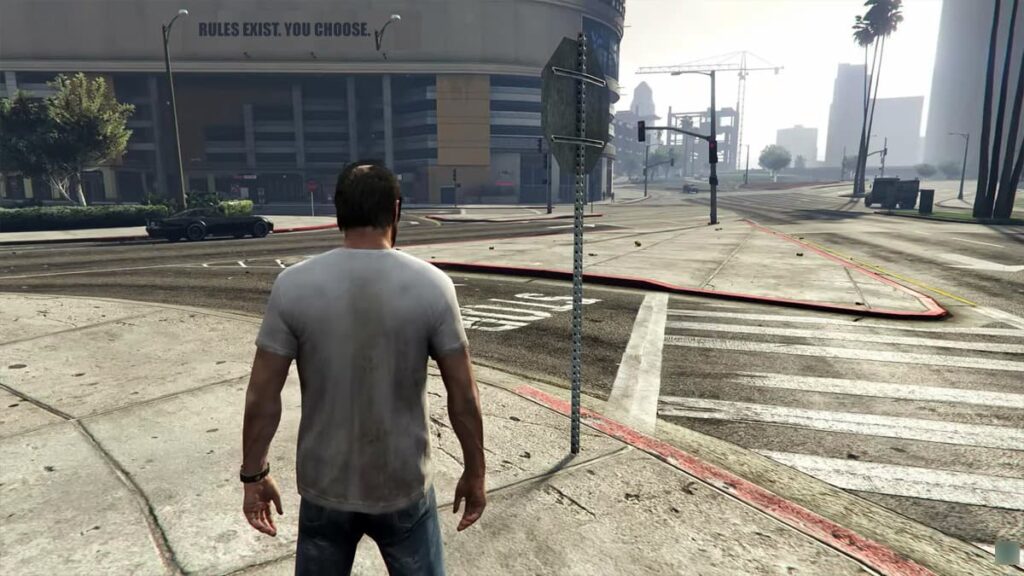
In real life, society is built on rules. In GTA, the player can ignore those rules. This creates a psychological experience of rebellion without consequences. The player is not necessarily enjoying violence itself; the player is enjoying freedom and control.
With Grand Theft Auto VI expected to have even more realistic environments, smarter AI, and more interactive cities, the debate about violence in games will probably become bigger again. The more realistic games become, the more people question their psychological effects.
You May Also Like
How Open-World Games Master the Psychology of Immersion
Does Game Violence Make People Aggressive?
Research over the years has shown mixed results. Some studies suggest short-term aggression can increase slightly after violent gameplay, but there is very little evidence that video games turn normal people into violent criminals. Human behavior is influenced much more by environment, upbringing, mental health, and social conditions than by games.

Most players understand the difference between a game and real life. The brain separates fictional actions from real consequences. In fact, for many people, games reduce aggression because they release frustration in a safe way.
Think of it like this: watching a horror movie does not make most people become criminals, and playing a racing game does not make everyone a professional driver. Games simulate experiences; they don’t automatically change personality.
Violence in Games Is Often About Power and Control
One important psychological reason behind violence in games is the feeling of power. In real life, many people feel powerless — in jobs, in systems, in society, in daily routines. Games give players control. They can win fights, complete missions, defeat enemies, escape danger, and control outcomes.
So when players engage in violent gameplay, they are often not looking for violence itself. They are looking for control, achievement, and emotional release.
This is why open-world games, shooter games, and action RPGs are so popular. They give players agency — the feeling that their actions matter and have visible results.
So, Stress Relief or Problem?
The honest answer is: it depends on the person and how games are used.
If someone plays games for fun, relaxation, story, and occasional stress relief, then violent games are usually not a problem. They are just entertainment and emotional release.
If someone is already angry, isolated, or disconnected from reality and uses violent games as their only emotional outlet, then the issue is not really the game — the issue is the person’s mental and social environment.
Games themselves are tools. Like movies, music, or books, their effect depends on how and why people use them.
The Bigger Picture
Cyberpunk games, GTA games, and other open-world violent games are popular not because people love violence, but because people love freedom, control, intensity, and emotional release. Violence is often just one part of that freedom.
In many ways, these games are not really about violence at all.
They are about living in a world where you are not powerless.
And psychologically, that feeling is very powerful.

KEY TAKEAWAYS: AGENCY OVER AGGRESSION
- Emotional Catharsis: Games provide a safe, virtual outlet for suppressing real-world frustrations, allowing the brain to process stress without causing actual harm.
- Contextual Violence: In Cyberpunk, violence is a narrative tool used to navigate a harsh world, whereas in GTA, it often represents a psychological rebellion against structured society.
- The Power Gap: Many players engage in high-intensity gameplay to counter feelings of powerlessness in their daily lives, seeking agency and visible results for their actions.
- Reality vs. Simulation: Most players maintain a clear psychological boundary between game mechanics and real-world behavior, using games as tools for entertainment rather than personality modification.
FAQs
Do violent video games make players aggressive in real life?
Research shows limited evidence that video games turn individuals into real-world criminals. While short-term arousal or mild frustration can occur during gameplay, long-term behavior is far more strongly influenced by upbringing, environment, and social conditions.
Why do people turn to violent video games to reduce stress?
In daily life, social rules require emotional suppression. Video games offer a safe, virtual environment with zero real-world consequences, allowing the brain to process anger and stress as an emotional release.
What is the psychological difference between violence in Cyberpunk and GTA?
In Cyberpunk games, violence is contextual and tied to narrative survival inside a oppressive system. In GTA, violence represents player agency and rebellion against societal rules, giving players a sense of freedom and control.