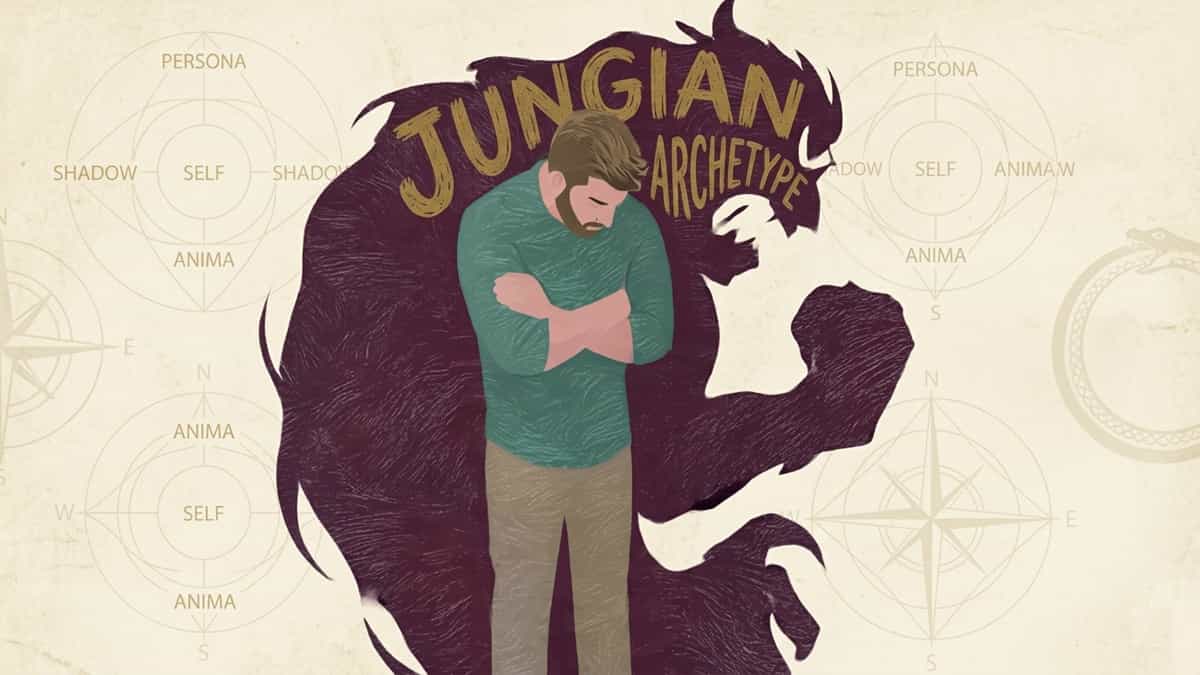
Carl Jung’s archetypes are universal patterns of thought and imagery that exist in what he called the collective unconscious—a shared, inherited layer of the human mind. Think of them as psychic blueprints for the roles, symbols, and stories that repeat across cultures and history. They aren’t literal images, but deep, inborn predispositions that shape how we experience the world: the hero’s quest, the wise mentor, the nurturing mother.
Example: The “Hero” archetype appears in myths as diverse as Hercules and Luke Skywalker. Both follow the same pattern—an ordinary person answers a call to adventure, faces trials, and returns transformed.
KEY TAKEAWAYS
- Archetypes are universal, inborn psychic blueprints residing in the collective unconscious.
- The ‘Core Four’ include the Persona, Shadow, Anima/Animus, and The Self.
- Individuation is the lifelong process of integrating conscious and unconscious aspects of the psyche.
- Jungian archetypes are widely applied in modern storytelling, branding, therapy, and personal growth.
What Are Jungian Archetypes?
Jung, a Swiss psychiatrist (1875–1961), proposed that beneath our
personal unconscious (the realm of our own repressed memories, a concept he adapted from Freud ) lies a
collective unconscious—a psychological inheritance that holds the accumulated experiences of humanity. Archetypes are the fundamental units of this shared unconscious. They act like instincts, shaping behaviour, dreams, and the stories we tell.

This explains why similar symbols and characters appear in myths, religions, and dreams across cultures, even among people who have never met. This contrasts significantly with the focus on individual experiences found in the earlier work of thinkers like Sigmund Freud on
FREUD VS. JUNG AT A GLANCE
- ✓ Focuses on individual, personal unconscious and repressed memories.
- ✓ Driven primarily by sexual and aggressive instincts.
- ✓ Emphasizes childhood developmental stages.
CONS
- ✕ Focuses on a universal collective unconscious shared by humanity.
- ✕ Driven by the drive for wholeness and self-realization (Individuation).
- ✕ Emphasizes lifelong psychological evolution.
The Core Four: Key Concepts in Carl Jung’s Theory

Jungian analysis focuses on integrating several major structural archetypes.
The Collective Unconscious: The deepest psychic layer shared by all humans, containing the archetypes.
Persona: The “mask” we wear to meet social expectations.
Shadow: The repressed, often darker side of ourselves that we deny but easily see in others (related to the traits we might project onto others, much like how we form First Impressions ).
Anima/Animus: The inner feminine side in men (Anima) and inner masculine side in women (Animus).
Self: The central archetype representing the unity of conscious and unconscious—the ultimate goal of psychological growth and wholeness.
Individuation: The lifelong process of integrating the ego with unconscious parts of the psyche, including the shadow and anima/animus.
Archetypes in Everyday Life

Archetypes aren’t just for ancient myths; they show up constantly in modern experience:
- The “Mean Boss” Villain: Projecting the Shadow onto a demanding boss.
- The “Manic Pixie Dream Girl”: A distorted, superficial version of the Anima.
- The “Chosen One” Story: From Harry Potter to The Matrix, tapping directly into the Hero archetype. Understanding these patterns helps us analyze the psychology behind movies.
Jung’s Methods and Milestones

Jung explored archetypes through rigorous study:
Dream Analysis: Interpreting symbolic images in dreams.
Comparative Mythology: Studying recurring figures and themes across global myths and religions.
Active Imagination: A dialogue with unconscious images to bring them into consciousness.
Alchemy Studies: Jung interpreted alchemical texts (like the transmutation of lead into gold) as symbolic maps of psychological transformation (Individuation).
Key Milestones:
Break with Freud (1912): In Symbols of Transformation, Jung moved beyond Freud’s focus on sexuality, introducing the idea of a universal mythological psyche.
Man and His Symbols (1964): Jung’s final work, written specifically for the general public, summarizing his ideas on archetypes and individuation.
Modern Applications of Archetypes

Jungian theory has applications far beyond the therapist’s couch:
Literary & Film Analysis: Archetypal criticism in film studies (like the analysis of Dyslexia in the film Taare Zameen Par ).
Marketing & Branding: Companies use archetypes for brand identity (Nike as the Hero, Apple as the Creator).
Jungian Therapy: Focused on dream work, active imagination, and the integration of unconscious content, which is a key approach among the Different Types of Psychology.
Personal Growth: Helping people identify dominant archetypes to guide life direction, which can be a complement to systems like the Big Five Personality Traits.
The 12 Common Archetypes

Later theorists and practitioners expanded Jung’s work into a 12-archetype model often used in psychology, storytelling, and branding. Each represents a core human drive:
The Innocent – Seeks safety and happiness.
The Everyman – Wants belonging and connection.
The Hero – Proves worth through courage and achievement.
The Caregiver – Strives to nurture and protect others.
The Explorer – Desires freedom and discovery.
The Rebel (Outlaw) – Breaks rules to spark change.
The Lover – Longs for intimacy and passion.
The Creator – Driven to innovate and express originality.
The Jester – Finds joy in humor, fun, and play.
The Sage – Pursues truth and wisdom.
The Magician – Seeks transformation and making visions real.
The Ruler – Aims for control, order, and leadership.
These archetypes show up in myths, movies, literature, and even brands—helping us understand both timeless human stories and modern identities.
You May Also Like
Explore the Big Five Personality Traits (OCEAN Framework)
Applying Archetypes to Your Life
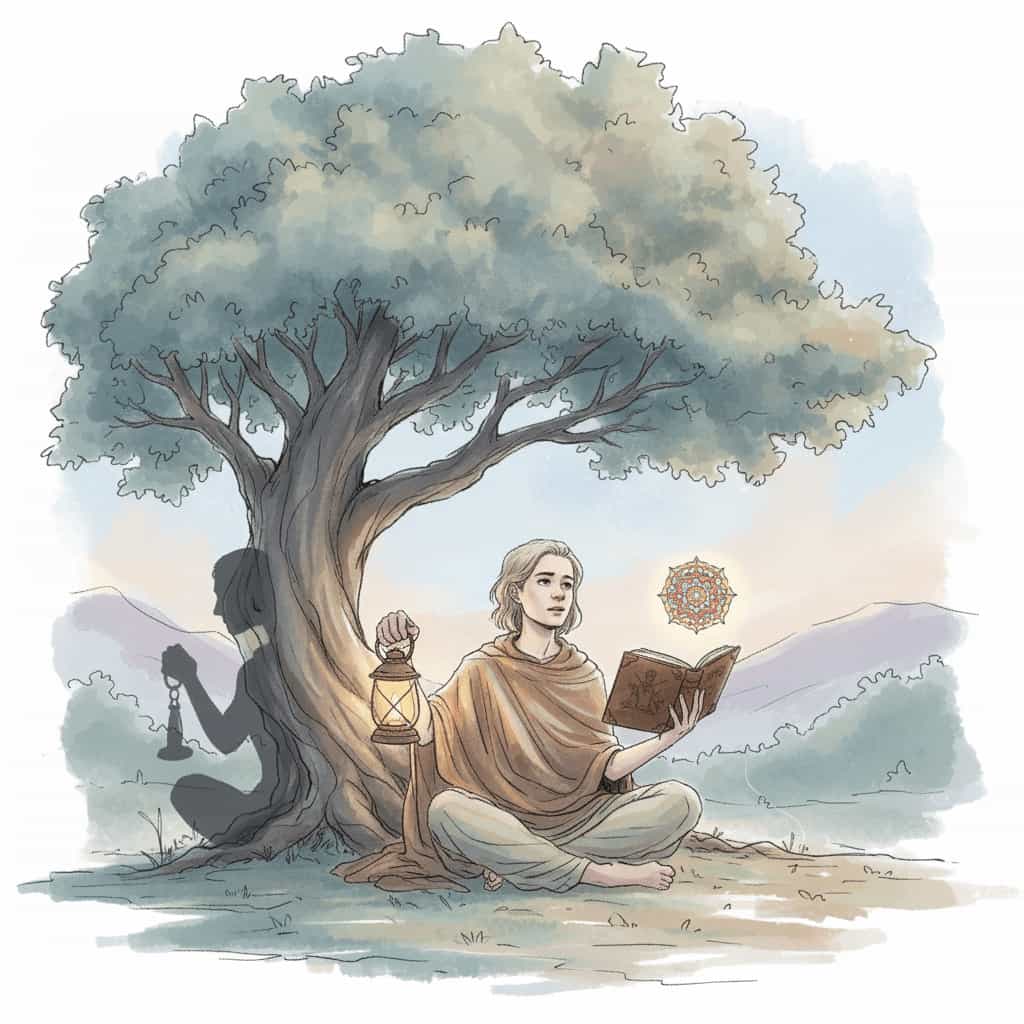
If you’re interested in diving deeper into Jungian theory, focus on these areas:
PRACTICAL TIPS FOR SELF-DISCOVERY
- ✓ Focus on the Core Four: Deeply understand the relationship between Persona, Shadow, Anima/Animus, and Self.
- ✓ Learn through Stories: Connect archetypes to films, books, or mythologies you resonate with.
- ✓ Know the Distinction: Contrast Jung’s Collective Unconscious with Freud’s Personal Unconscious.
- ✓ Think Critically: Discuss both psychological insights and philosophical criticisms regarding testability.
FAQs
Are Jungian archetypes scientifically proven?
No. They are more interpretive than testable. Their strength lies in explaining universal human experiences and psychological patterns, not lab results.
How many archetypes are there?
Jung stated that archetypes are countless. The popular ’12 Archetypes’ model is a later framework created for practical applications in psychology, branding, and storytelling.
Archetype vs. stereotype—what’s the difference?
An archetype is a deep, universal pattern of the human psyche. A stereotype is a shallow, overgeneralized cultural cliché.
What is the 'Shadow Self'?
The Shadow represents the traits, instincts, and desires we repress or deny as unacceptable. Integrating the shadow is essential for psychological wholeness.
Can one person embody multiple archetypes?
Yes. We carry many archetypes, and different ones emerge or dominate depending on our life stage and circumstances.
Is MBTI based on Jung?
Yes. Katharine Cook Briggs and Isabel Briggs Myers adapted Jung’s Psychological Types, though MBTI is a simplified adaptation of his complex work.
Note: This article is for educational purposes only and does not constitute professional clinical advice.