

Why Childhood Still Holds the Pen to Your Story?
Have you ever wondered why you’re a neat freak, a people-pleaser, or someone who can’t stop talking? Long before modern personality tests, Sigmund Freud, the father of psychoanalysis, proposed a provocative answer: your childhood experiences, particularly how you navigated certain developmental stages, shape the adult you become.

Freud’s psychosexual theory of development is one of psychology’s most famous and debated ideas. While critics correctly point out that many of its claims are unscientific, its influence is undeniable. This theory was the first to argue that early experiences don’t just disappear—they become the hidden forces that drive our behaviour. It’s more than a quirky idea about “fixations”; it’s a bold framework for understanding why we are the way we are.
Who Was Sigmund Freud?
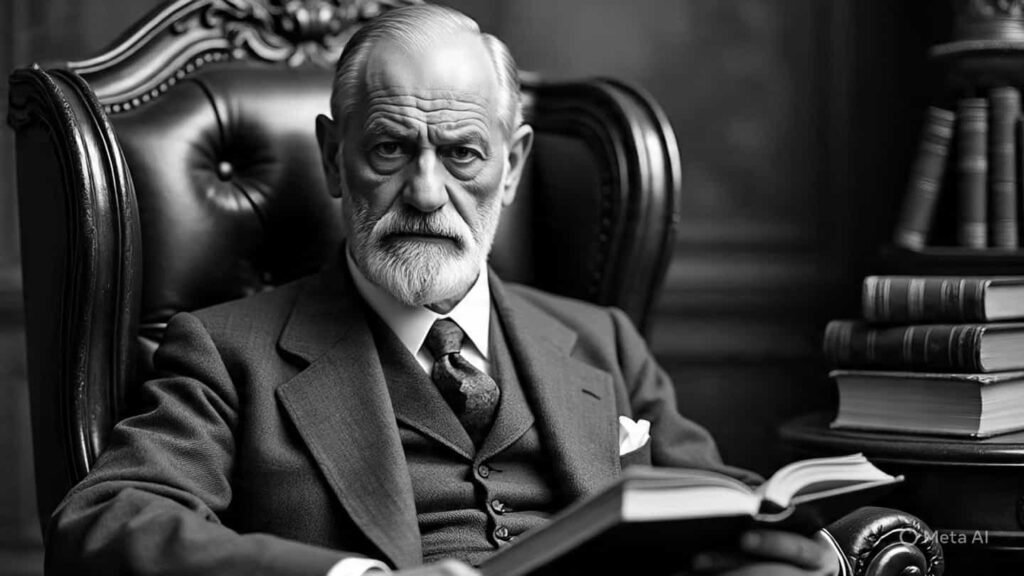
Sigmund Freud (1856–1939) was an Austrian neurologist who revolutionized our understanding of the human mind. He introduced concepts that are now part of our everyday language, such as the unconscious mind, defence mechanisms, and the importance of dream interpretation. Although many of his specific theories are debated today, his core insight—that our behaviours are driven by hidden psychological forces and early experiences—remains a cornerstone of modern psychology.
The Core Idea: Libido as a Driving Force
At the heart of Freud’s model is the concept of libido, which he defined as a broad life energy, not just sexual desire. As a child grows, this energy focuses on different erogenous zones—pleasure-sensitive areas of the body.

Each stage of development presents a unique psychological conflict. According to Freud, if a child’s needs are either over-gratified or under-gratified at a particular stage, they may become fixated, carrying unresolved conflicts into adulthood. These fixations manifest as distinct personality traits and behaviours.
The Five Psychosexual Stages in Depth
Here’s a breakdown of the five stages and the potential impact of fixation at each one.
1. The Oral Stage (Birth to 1 Year)

- Focus: The mouth—sucking, biting, and chewing are the primary sources of pleasure.
- Conflict: The central struggle is between dependence and independence.
- Impact of Fixation:
- Oral-Receptive: Individuals may be clingy, overly dependent, and seek comfort through activities like eating, smoking, or nail-biting.
- Oral-Aggressive: This fixation can manifest as a verbally hostile, sarcastic, or pessimistic personality.
2. The Anal Stage (1 to 3 Years)

- Focus: The anus, centred around bowel and bladder control.
- Conflict: This stage revolves around the power struggle of toilet training, where the child learns self-control and autonomy.
- Impact of Fixation:
- Anal-Retentive: These individuals are often obsessively neat, perfectionistic, controlling, and rigid.
- Anal-Expulsive: The opposite, these people are typically messy, disorganized, impulsive, and may be overly generous.
3. The Phallic Stage (3 to 6 Years)

- Focus: The genitals and a newfound awareness of gender differences.
- Conflict: Freud introduced the highly controversial Oedipus and Electra complexes, where a child develops an unconscious attraction to the opposite-sex parent and rivalry with the same-sex parent.
- Impact of Fixation: Fixation here could lead to vanity, recklessness, and struggles with authority and intimate relationships later in life.
4. The Latency Stage (6 Years to Puberty)

- Focus: A period of relative calm where sexual energy is dormant. The child focuses on social development, friendships, and intellectual growth.
- Conflict: There is no specific conflict, as this is a time for consolidating skills and building confidence.
- Impact of Fixation: While Freud suggested few fixations at this stage, social and emotional struggles during this period could still carry forward.
5. The Genital Stage (Puberty to Adulthood)

- Focus: Maturing sexual interests and a capacity for mature, intimate relationships.
- Conflict: The challenge is to find a balance between love and work, becoming a well-adjusted adult.
- Impact of Fixation: If earlier conflicts remain unresolved, individuals may struggle with intimacy, forming stable relationships, or becoming emotionally dependent.
Why Freud’s Ideas Still Matter (and Where They Don’t)

- Still Relevant: Freud was a pioneer who placed the unconscious mind at the centre of psychology. His work was the first to highlight the profound, lasting impact of childhood on adult personality. His ideas are the foundation for modern psychodynamic therapy.
- Falling Short: Many of Freud’s specific theories, particularly the Oedipus complex, are not supported by modern scientific research. His methods relied on subjective interpretation rather than objective, testable data, which is a major reason why his theories are seen as outdated in many scientific circles today.
Case Studies
The Anal-Retentive Executive

A tech CEO with an obsession for order and detail may, in Freudian terms, show traces of strict toilet training and fixation at the anal stage.
The Oral “People-Pleaser”

A young professional constantly over-gives in relationships, fears abandonment, and turns to food for comfort. Freud might trace this to inconsistent feeding in infancy—an oral-stage fixation.
Expert Insight
Stanford University research: Expands on Freud’s premise, showing how attachment and early relationships affect adult behavior.
Harvard University: Scholars highlight Freud’s role in shaping psychodynamic therapy.
APA (American Psychological Association): Recognizes psychoanalysis as a historical cornerstone of psychology.
Freud in His Own Words

“The mind is like an iceberg, it floats with one-seventh of its bulk above water.” – Sigmund Freud
Practical Takeaways for Your Own Life

While Freud’s stages shouldn’t be used as a literal checklist for your personality, they can be a helpful framework for self-reflection.
- Look for Patterns: The next time you find yourself being a control freak or a chronic people-pleaser, you might ask yourself if there’s a pattern from your childhood that’s still echoing in your adult behaviour.
- Remember the Unconscious: Freud’s most enduring idea is that our motivations are not always conscious. We often behave in ways we don’t fully understand.
- Consider Therapy: If this reflection resonates with you, modern psychodynamic therapy offers a safe, evidence-informed way to explore how early life influences your adult behaviour.
Freud’s psychosexual stages are a provocative blueprint, not a scientific law. His daring claim—that childhood writes the first draft of adulthood—still resonates and continues to challenge us to look beyond the surface of our behaviour and uncover the hidden stories that shape who we are.
Do you see any echoes of these stages in your own life or in the people around you?
Note: This article is for educational purposes only and does not constitute professional clinical advice.
Related Articles



Sponsored


You May Also Like

Recovered vs False Memory in Amnesia: The Shocking Truth Abo…

Extraversion – Social Energy, Confidence & the Need for …

What Is Sports Psychology? The Mind Behind the Medal

The Deception of Dress: How to Ethically Weaponize Your Ward…

Social Loafing: Why Group Projects Feel Unfair (and How to F…
