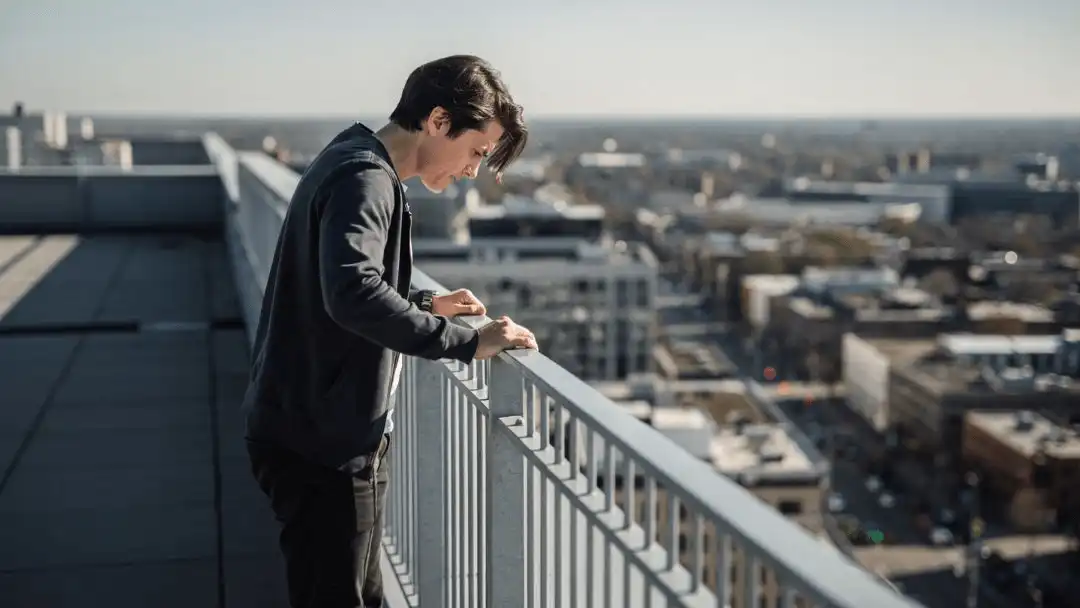
Exploring the brain and balance connection behind height-related dizziness
That strange, swaying sensation when you look down from a high place isn’t something you imagine. It’s a real, explainable clash between two systems your brain relies on every second: vision and balance. Rather than a sign that something is broken, it’s proof that your brain is working hard to keep you stable.
For a broader look at why heights create such powerful reactions, the Acrophobia (Fear of Heights) Explained article unpacks the full psychology behind height-related unease.
Why Looking Down Feels Strange to the Brain
Under normal conditions, the brain integrates information from the eyes, the inner ear’s vestibular system, and body position sensors seamlessly. When you look down from a significant height, the visual system suddenly reports a large vertical gap, while the vestibular system—still registering stable, flat ground under your feet—sends a contradictory message.
The brain struggles to reconcile “I’m standing still” with “I see a deep drop.” This mismatch triggers a rapid correction response that often surfaces as dizziness or a feeling of being pulled off balance.
How Balance and Vision Work Together
Balance isn’t just about the inner ear. The visual system provides a constant stream of spatial orientation, telling the brain which way is up and how far objects are. When those visual cues suddenly shift—like a distant ground far below—the brain leans more heavily on vision than normal.
This heavy reliance can momentarily override the vestibular and proprioceptive signals, creating the sensation that the world is tilting, swaying, or that you might fall forward. The Brain Misjudges Height and Distance article takes a closer look at how the brain’s distance calculations can skew perception and intensify dizziness.
Why High Places Can Affect Your Sense of Stability
Stability relies on predictable sensory feedback. At height, several factors disrupt that predictability:
- The visual field becomes large, open, and without near references.
- The ground is far away, making it harder to judge true position.
- Subtle body sway—normally unnoticed—becomes amplified because there’s no close visual anchor to correct it.
Together, these conditions make the brain feel less certain about its physical placement in space, and that uncertainty manifests as dizziness or lightheadedness.
Common Situations That Trigger This Feeling
Certain environments are especially likely to produce the dizzy sensation:
- Looking over a balcony railing – the direct downward view with only a thin barrier creates immediate visual-vestibular mismatch.
- Stepping onto a glass-bottomed floor or bridge – the transparent surface provides a drop cue while the feet feel solid, confusing the brain.
- Standing at the edge of a rooftop without a high wall – the lack of solid visual enclosure magnifies the sense of exposure.
- Climbing a tall, open-grate staircase – seeing the vertical drop through the steps adds a layer of instability.
- Leaning over a cliff or canyon lookout – the sheer scale of the drop overpowers the brain’s normal distance processing.
These are all situations where visual information about height conflicts with physical stability.
Why Some People Feel Dizzy Faster Than Others
Not everyone reacts the same way. Differences in sensory weighting—how much each person’s brain relies on vision versus vestibular input—contribute to the variation. Some people have a more visually dominant system, making them more susceptible to visual-vestibular mismatch. Others may have a naturally more sensitive vestibular system or a history of motion sickness, both of which lower the threshold for feeling dizzy.
Pre-existing anxiety about heights can also amplify dizziness, because the brain is already on high alert and more likely to interpret ambiguous signals as danger.
The Difference Between Fear and Actual Vertigo
It helps to distinguish between two experiences that often get lumped together:
- Height-induced dizziness – a sense of unsteadiness, lightheadedness, or feeling “off” that arises from sensory conflict. It’s a normal perceptual response.
- Vertigo – a specific spinning sensation, often caused by inner ear disorders, that feels like the room is rotating. True vertigo can occur at any height and is not typically triggered simply by looking down.
In most cases of looking down from a height, what people experience is not vertigo but a sensory mismatch that leaves them feeling momentarily unsteady. Understanding this distinction can reduce the fear that something is medically wrong.
Why Glass Floors and Open Edges Feel Intense
Glass floors and open edges eliminate the visual safety net. When you stand on a solid floor, peripheral vision confirms the ground is near. A transparent floor delivers the visual message “empty space below,” even while your feet feel solid support. This stark contradiction between two strong sensory inputs is one of the most potent triggers for dizziness and discomfort.
The brain’s inability to pick which signal to trust causes a brief, intense moment of disorientation.
Can Stress Make the Feeling Worse?
Yes. Stress heightens the body’s overall arousal level. When you’re already tense, the autonomic nervous system is closer to its fight-or-flight threshold. Add a sensory mismatch from looking down, and the system can overreact, producing stronger dizziness, a faster heart rate, and shallow breathing. This creates a feedback loop: dizziness increases anxiety, and anxiety intensifies the dizziness.
Breaking this loop often starts with calming the body’s stress response first.
Simple Ways People Reduce the Feeling
Many find relief through small adjustments that give the brain clearer information:
- Fix your gaze on the horizon – a distant, stable visual reference helps recalibrate spatial orientation.
- Stand near a solid wall or hold onto a stable object – adding tactile input gives the brain another source of safety confirmation.
- Keep your head level and avoid sudden downward glances – reducing rapid head movement limits vestibular provocation.
- Practice controlled, slow breathing – calming the nervous system can reduce the intensity of the dizzy sensation.
- Widen your stance or sit down – lowering your centre of gravity makes sway feel less threatening.
These approaches are grounded in the same natural ways the body restores comfort. For more on calming the body’s response to unease, the Manage Anxiety Naturally: Psychology Methods article explores techniques that align with human biology.
When Dizziness Around Heights Becomes a Problem
Feeling briefly dizzy on a high balcony is common. However, if the sensation becomes so intense that it leads to avoiding certain buildings, skipping social activities, or altering work routines, it has moved beyond a mere quirk. Persistent, disruptive dizziness around heights often indicates that the brain’s protective systems are over-shooting. Recognizing when the feeling is interfering with daily life is the first step to addressing it thoughtfully, without judgment.
The article When Anxiety Becomes a Problem: Signs offers a gentle, behaviour-focused view on when everyday unease starts to limit everyday life.
Final Thoughts
The dizziness that comes from looking down at a great height is a natural, human experience—your brain’s honest, split-second attempt to protect you when sensory signals conflict. It’s not a flaw or an overreaction, but a window into how deeply interconnected your vision, balance, and safety awareness truly are. By understanding why it happens, people can begin to respond with curiosity rather than alarm, and slowly retrain the brain to feel steadier even when the view is vast.
Related Articles


Sponsored


You May Also Like

Why Students Feel Lost Even After Choosing the “Right” Caree…

Cyberpunk World vs Real World – A Psychological Comparison

Why Families Struggle to See the Grown-Up Version of You

Projection vs Gaslighting vs Blame Shifting (Clear Differenc…

Autonomy vs. Shame and Doubt (Erikson’s Second Stage of Psyc…