Why Turbulence Feels So Scary

Terrified airplane passenger reacting to severe turbulence during a dramatic commercial flight scene

The brain’s reaction to sudden movement, loss of control, and the cabin in motion Turbulence can turn a calm flight into a white-knuckle experience in seconds. The plane shudders, dips, and rattles. The rational mind knows the aircraft is engineered to handle it, yet the body reacts as if disaster is imminent. This isn’t overreacting. … Read more

Why Legs Shake at High Places

Cartoon illustration of a person standing on a mountain edge with shaky legs, showing anxiety and fear response at high places

The body’s protective tremor explained Standing near a high edge—a balcony, a cliff, a rooftop—and feeling your legs begin to tremble can be alarming. The mind knows the railing is solid, yet the legs seem to have their own agenda. This shaking isn’t a sign of weakness or a malfunction. It’s a clear, biological signal … Read more

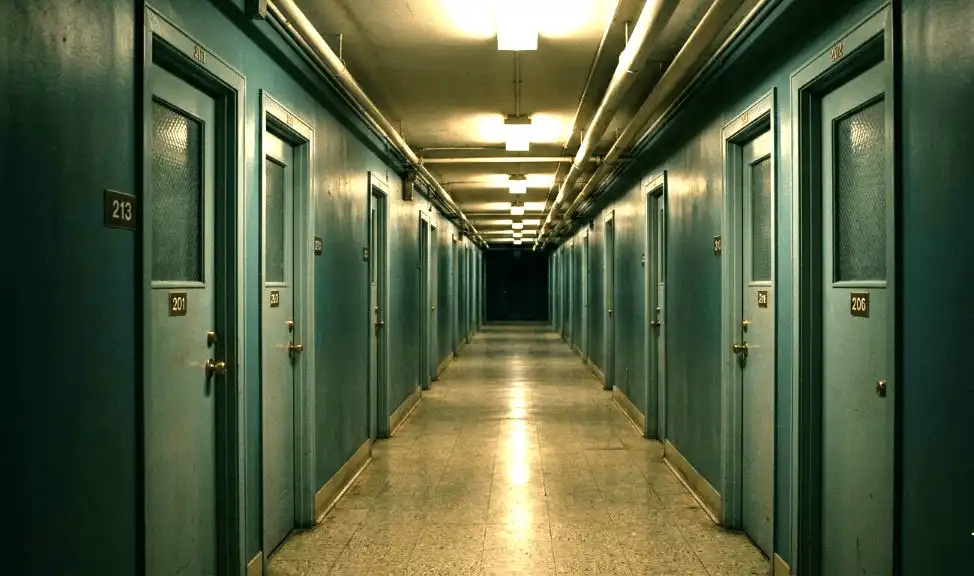
Why Empty Hallways Feel Disturbing

Long, dimly lit empty hallway that triggers unease through isolation, silence, and uncertain depth perception.

The unsettling psychology of long, silent corridors A hallway is meant to be a passage—somewhere to walk through, not to stay. Yet an empty corridor, especially one that stretches on without a visible end, can produce a quiet, creeping unease. There’s no obvious threat, no danger in sight, but the body tightens and the mind … Read more

Why Certain Images Make People Feel Uncomfortable

Person feeling uncomfortable while looking at a strange image on a laptop screen in a dark room

The brain’s rapid detection of pattern, prediction, and the unfamiliar Sometimes, an image unsettles us before we can name why. It might be a photograph with too many holes, a face that looks almost—but not quite—human, or an object placed where it doesn’t belong. There’s no obvious threat, yet a wave of mild discomfort or … Read more

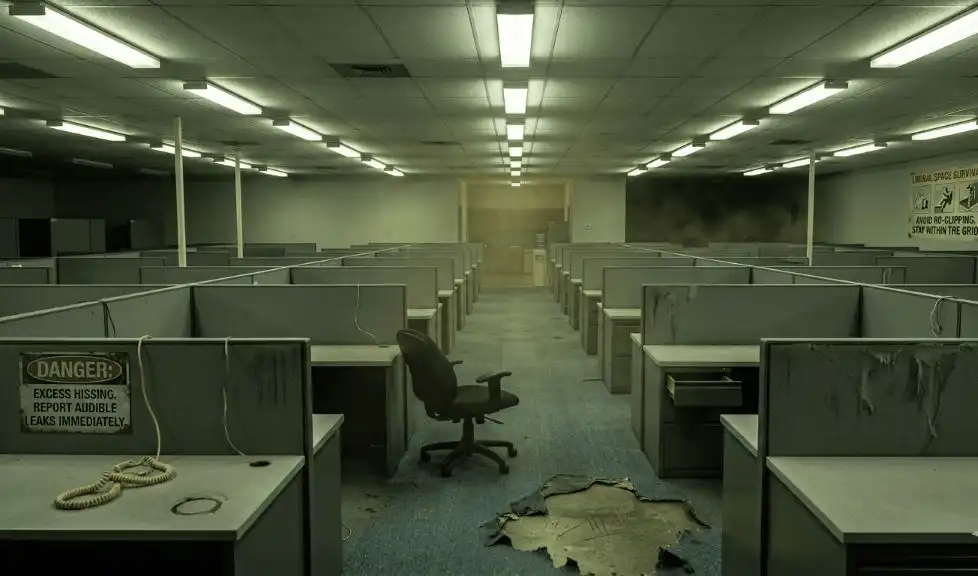
Why Backrooms Images Feel Creepy

Person viewing backrooms image on a computer screen, illustrating the creepy psychological response to liminal, empty spaces.

The psychology of liminal spaces, empty rooms, and the mind’s urge to fill the void Backrooms images—endless yellow corridors, vacant office spaces, damp carpeted rooms with no exit—have carved out a unique corner of the internet. To some, they’re just oddly lit rooms; to many others, they provoke a deep, wordless creepiness. There’s no monster … Read more

Why Silence Feels Creepy at Night

Person awake in a dark silent room at night, illustrating the brain’s heightened alertness to quiet environments after dark.

The brain’s response to quiet, darkness, and the feeling of being alone Silence is not simply the absence of sound. It’s an environment all its own, and after dark, it can change from peaceful to deeply unsettling. The same quiet that feels calming during a morning meditation can become heavy and watchful past midnight. This … Read more

Why Some Faces Look “Off” to the Brain

Subtly altered portrait of a person creating the uncanny feeling of something being "off" in facial perception.

Why Some Faces Look “Off” to the BrainThe split-second science of facial perception and the uncanny A face is the most important visual pattern the human brain processes. We see faces in clouds, in electrical sockets, in the front of a car. And when a real face—or something close to one—feels slightly wrong, the brain … Read more

Why Fog Feels Unsettling to Some People

Person watching dense fog outside a window, illustrating the unsettling feeling of limited visibility and the brain's response to obscured environments.

How limited visibility and the unknown activate the brain’s quiet alarm Fog transforms the ordinary. A familiar street becomes a hushed, uncertain corridor. A park turns into a soft labyrinth. For many, this change is not peaceful but quietly unnerving. The world suddenly lacks edges, distances dissolve, and the brain, built to seek clarity, finds … Read more

Why Deep Water Photos Trigger Anxiety for Some People

Woman feeling anxious while looking at a deep swimming pool photo in an art gallery

The psychology of vast, dark, and unknown aquatic depths A photograph of deep water—an endless ocean abyss, a murky lake with no visible bottom, a flooded cave where light cannot reach—can stir an immediate, visceral reaction. The heart tightens, the breathing shallows, and a quiet voice inside says: this is not safe. Even though the … Read more