

At first glance, comparing a cyberpunk world to the real world sounds like comparing fiction to reality. One is full of neon lights, megacities, cybernetic implants, and powerful corporations. The other is office jobs, traffic, bills, and daily routines. But psychologically, the comparison is not as simple as fiction vs reality. In many ways, cyberpunk worlds are exaggerated versions of real human society, and that is exactly why they feel so familiar.
Games and stories like Cyberpunk 2077 don’t just imagine the future; they exaggerate the present. When you compare the cyberpunk world and the real world from a psychological perspective, you start noticing that the biggest differences are not technology or cities — they are freedom, identity, control, and emotional intensity.
KEY TAKEAWAYS: THE EXPERIENCE GAP
- Stimulation vs. Stability: While the real world provides safety, its predictability can cause boredom; cyberpunk chaos triggers high-alert mental stimulation.
- Identity Fluidity: Virtual worlds allow flexible identity exploration without permanent real-life financial or social consequences.
- Low-Risk Agency: In gaming, the psychological reward for achievement remains high while the cost of failure stays low.
- Reflective Loneliness: Cyberpunk mirrors modern urban isolation—the paradox of high digital density paired with emotional distance.
Structure vs Chaos
The real world is built on structure. There are laws, systems, schedules, social rules, and long-term consequences for actions. Most people live inside structured routines because structure creates stability. Stability reduces risk, and society depends on stability to function.
Cyberpunk worlds, on the other hand, are built on controlled chaos. Corporations fight for power, crime is common, technology evolves faster than laws, and the world feels unstable. From a survival perspective, this would be stressful and dangerous. But psychologically, chaos creates excitement and unpredictability, and the human brain is naturally attracted to unpredictable environments because they are stimulating.
This is why structured real life feels safe but sometimes boring, while chaotic cyberpunk worlds feel dangerous but exciting.
Freedom vs Responsibility
One of the biggest psychological differences between the cyberpunk world and the real world is responsibility. In real life, every major decision has consequences that cannot be reversed easily. Careers, relationships, finances, reputation — everything is connected, and mistakes can follow you for years.
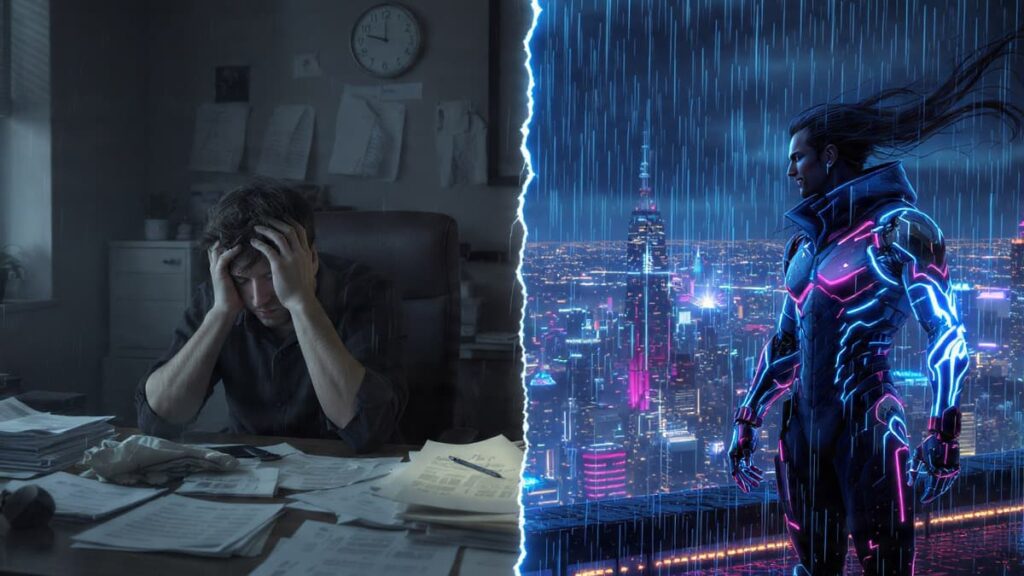
In cyberpunk game worlds, you have a level of freedom that does not exist in real life. You can take risks, make dangerous decisions, fight powerful enemies, break rules, and still continue the story. Even when there are consequences, they are part of the narrative, not permanent life damage.
This creates a powerful psychological effect. People often feel more free in virtual worlds because the cost of failure is low, but the feeling of achievement is still real. That combination makes the cyberpunk world emotionally rewarding.
Identity: Fixed vs Flexible
In the real world, identity is relatively fixed. Your name, education, job, social circle, and background define how society sees you. Changing identity in real life is slow and difficult.
In cyberpunk worlds, identity is flexible. You can change appearance, abilities, reputation, alliances, and even personality through choices. You can be a hero, a mercenary, a hacker, a criminal, or something in between. This flexibility is psychologically powerful because humans naturally think in “what if” scenarios — what if I made different choices, what if I lived differently, what if I was someone else.
Cyberpunk worlds allow people to experiment with identity in a safe environment. This is one of the main reasons RPG and open-world games feel so immersive.
Emotional Intensity
Real life emotions are usually slow and subtle. Most days are normal days. Big emotional events are rare — a new job, a breakup, moving to a new city, a major success, a major failure. Life moves slowly.
Cyberpunk worlds compress emotional experiences. In a short period, you might experience danger, loyalty, betrayal, friendship, loss, success, revenge, and survival. The emotional highs and lows are much closer together, which makes the experience feel intense and meaningful.
From a psychological perspective, humans remember emotional intensity, not normal routine. Because cyberpunk worlds are emotionally intense, they feel more memorable and therefore more real in memory.
Social Connection vs Urban Isolation
Interestingly, both the cyberpunk world and the real world share one major psychological theme: urban isolation. In large modern cities, people are surrounded by millions of others but often feel alone. Work, screens, and busy schedules reduce deep social connections.

Cyberpunk worlds exaggerate this idea. Cities are huge, crowded, and bright, but emotionally lonely. People trust very few others. Relationships are intense but rare. This reflects a real fear about the future — that technology will connect everyone digitally but isolate them emotionally.
This is why cyberpunk stories often feel believable. They are not predicting technology; they are predicting human loneliness in technological societies.
Control and Power
In the real world, most people feel like small parts of very large systems — governments, corporations, economies, and social structures. Individual control is limited.
In cyberpunk stories, large corporations and powerful systems still control the world, but the main character often fights back or operates outside the system. This creates a strong psychological fantasy: the idea that one person can challenge powerful organizations and change their own fate.
This is a very old human story — the individual vs the system — but cyberpunk places this story in a futuristic setting with technology and megacorporations.
Which World Is Better?
Psychologically, this is an interesting question.
The real world offers stability, safety, long-term relationships, and real achievements. It is slow, structured, and sometimes boring, but it is sustainable.
The cyberpunk world offers freedom, intensity, flexible identity, and constant excitement. It is unpredictable, emotional, and visually alive, but it is not stable and probably not a world most people would actually want to live in permanently.
UPSIDES
- ✓ High psychological stability and long-term security
- ✓ Real-world accomplishments with permanent value
- ✓ Deep, lasting interpersonal relationships
- ✓ Low daily risk to physical and emotional health
DOWNSIDES
- ✕ Higher consequences and lasting impacts for failure
- ✕ Slower emotional feedback loops and routine boredom
- ✕ Rigid identity expectations within social structures
- ✕ Feeling trapped by systemic or economic forces
So the real comparison is not which world is better. The real comparison is this:
The real world is better for living.
The cyberpunk world is better for experiencing.

And maybe that is why people are so attracted to cyberpunk worlds. They are not an escape from reality; they are an exaggerated reflection of reality — a world where technology is powerful, corporations are dominant, cities are huge, people are connected but lonely, and individuals are still trying to find identity and meaning.
In other words, cyberpunk worlds do not feel like the opposite of the real world.
They feel like a possible version of it.
FAQs
Why are people so psychologically attracted to cyberpunk worlds?
Cyberpunk settings exaggerate high-reward, low-risk environments. They offer immediate emotional density, high agency, and fluid identity choices without the permanent negative consequences of real life.
Is cyberpunk fiction an escape from reality or a mirror of it?
It functions as both. While offering immersive virtual escape, it acts primarily as an exaggerated mirror of modern society, accentuating real issues like corporate power, rapid technological evolution, and urban loneliness.
What is urban isolation in cyberpunk media?
Urban isolation refers to the paradox of being physically surrounding by millions of people and constantly connected digitally, yet feeling profound personal and emotional isolation.
Related Articles


Sponsored


You May Also Like

Amnesia: More Than Just Memory Loss
Micro-Friction Mastery: The Social Premium of Kinesthetic Co…

Forensic Psychology: The Real Science Behind the Crime Drama…

Employee Motivation: Why Salary Alone Doesn’t Keep People En…

The Explorer Archetype – The Drive for Freedom, Adventure &a…
