
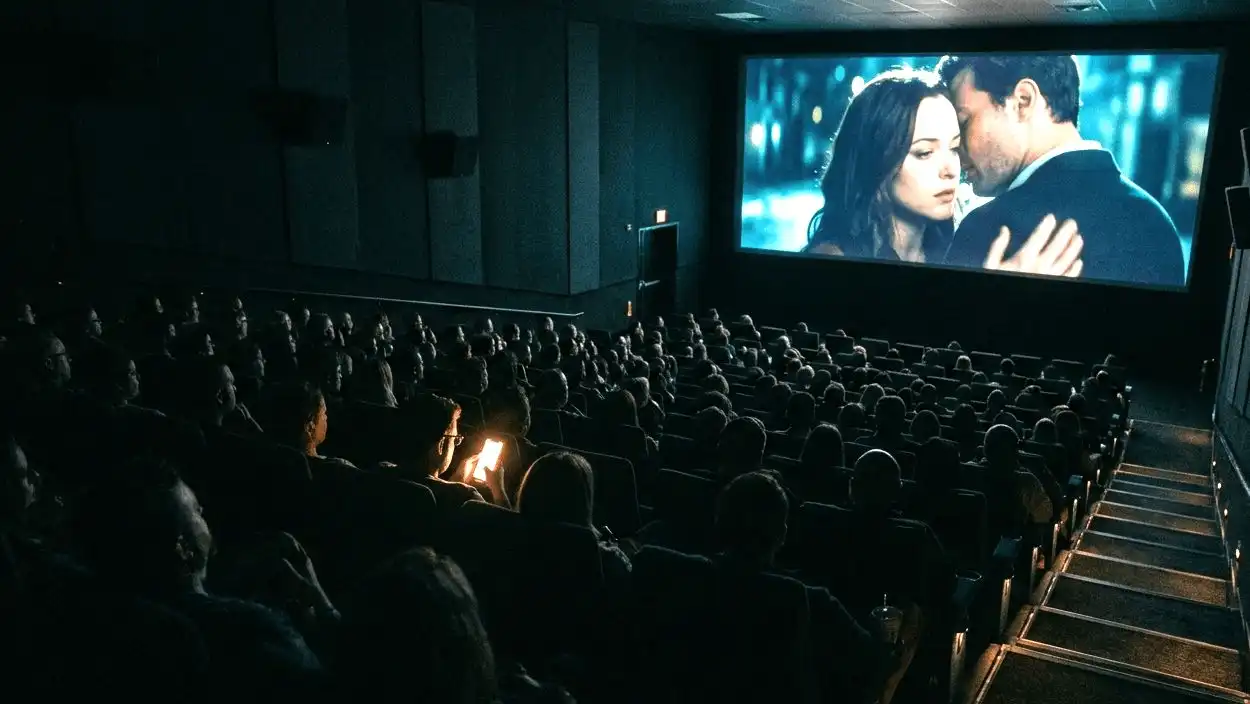
Why Silence Feels Mandatory in Theaters
A movie theater is a psychological paradox. You are surrounded by strangers, yet you have all agreed to pretend they are not there. You sit in the dark, facing the same direction, sharing an emotional experience — but any deviation from the silent, still norm triggers immediate, intense judgment.
This is the civic contract: an unwritten agreement to minimize personal disruption in shared, low‑stimulus environments. In a theater, the contract demands silence, stillness, and darkness. Violate it — even slightly — and you become the villain of the room.
The brain’s sensitivity to disruption in dark spaces is amplified because visual input is reduced. When you cannot see clearly, your auditory and tactile senses become hyper‑alert. A phone light or a whispered conversation feels blindingly loud. The violator is not just annoying. They are perceived as threatening the shared experience.
The Brain’s Sensitivity in Dark Environments
In low light, the brain shifts into a different processing mode. The amygdala — threat detection center — becomes more reactive because the environment is less predictable. Every unexpected sound or light flash is treated as a potential danger until proven otherwise.
This is why a single phone glow in a dark theater feels invasive. Your brain does not think, “Oh, someone is checking a text.” It thinks, “Unexpected light — threat? — no — still annoying.” But the annoyance is neurologically real. Cortisol levels rise slightly. Immersion breaks.
| Violation | Brain Response | Social Judgment |
|---|---|---|
| Phone screen lights up | Startle, threat detection | “Inconsiderate, unaware” |
| Whispered conversation | Auditory intrusion, hyper‑focus | “Rude, entitled” |
| Crinkling wrapper loudly | Irritation, loss of immersion | “Annoying, low self‑control” |
| Kicking the seat in front | Tactile invasion, anger | “Aggressive, disrespectful” |
| Arriving late (blocking view) | Frustration, blame | “Selfish, poor planning” |
Phone Lights, Whispers, and Cognitive Friction
Minor disruptions in a theater create cognitive friction — the mental effort required to refocus after an interruption. Studies show that even a two‑second distraction can take up to twenty seconds to recover from fully. In a movie theater, that means missing dialogue, losing emotional buildup, or breaking immersion for an entire scene.
The person who checks their phone is not just bothering their immediate neighbors. They are degrading the experience for rows around them. But because the disruption is indirect (light, not touch), violators often underestimate its impact.
The civic contract requires situational awareness: the ability to predict how your behavior affects others in shared space. People who violate the contract are not usually malicious. They are just unaware. But unawareness does not reduce judgment. The room judges them harshly anyway.
The Social Contract of Shared Immersion
Movie theaters sell immersion — the feeling of being transported into another world. That immersion is fragile. It depends on every person in the room agreeing to maintain the illusion.
This is a social contract: a mutual, unspoken agreement to prioritize the group’s experience over individual convenience. When one person breaks the contract, they are not just being annoying. They are betraying the agreement. The emotional response is stronger than simple irritation — it feels like a violation of trust.
In psychology, this is called norm violation. The group’s reaction is not just annoyance. It is moral outrage, scaled to the setting. This is why people feel genuinely angry at a texter in a theater, not just mildly annoyed.
Why Small Disturbances Feel Massive
The negativity bias explains why small disturbances feel disproportionately large. The human brain weighs negative events more heavily than positive ones. One phone light in an otherwise perfect movie can ruin the entire experience in memory.
This is compounded by the peak‑end rule: people remember experiences by their most intense moment and their ending. If the most intense moment is frustration at a texter, the whole movie is remembered negatively — even if ninety minutes were excellent.
Violators do not realize the asymmetric weight of their actions. A five‑second text check can erase an hour of goodwill. That is not fair. But it is psychology.
Situational Awareness and Public Respect
Situational awareness is the ability to perceive your environment and predict how your actions will affect others. In a theater, it means:
THEATER ETIQUETTE CHECKLIST
- ✓ Silencing your phone before the previews start
- ✓ Unwrapping candy before the movie begins
- ✓ Holding coughs or sneezes when possible
- ✓ Exiting only during non‑critical scenes (action lulls, transitions)
- ✓ Not narrating your reactions to your companion
People with high situational awareness are perceived as respectful, considerate, and socially intelligent. People with low awareness are perceived as selfish, oblivious, or entitled — even if they are kind in other contexts.
How Violating Norms Triggers Group Irritation
The group response to a norm violator in a theater is almost never direct confrontation. Instead, the room expresses irritation through collective non‑verbal punishment:
- Exaggerated sighs
- Loud “shushing” from multiple directions
- Staring (though hard to see in the dark)
- Passive‑aggressive comments just loud enough to be heard
This collective punishment is a form of social regulation. The group enforces the contract without a designated authority. The violator usually complies — but the damage to their social standing in the room is done.
In extreme cases (repeated violations, bright phone use), someone may confront directly. That confrontation is socially risky, so it rarely happens. Most violators leave the theater unaware of how much they annoyed others — but the annoyance lingers.
Final Thoughts
The civic contract of the movie theater is simple: be still, be silent, be dark. It is not a legal requirement. It is a psychological agreement that makes shared immersion possible.
When you enter a theater, you are not just watching a movie. You are joining a temporary society. Your behavior signals your respect for that society — or your indifference to it.
Silence your phone. Unwrap your candy early. Hold your whispers. The person next to you is not your enemy. They are your partner in illusion. Honor the contract, and the illusion holds.
Related Articles



Sponsored


You May Also Like

How Different Scent Profiles Secretly Signal Your Personalit…
Psychology Quotes – Words That Understand the Mind

Neuroticism – Emotional Reactivity, Anxiety & Sensitivit…
Why Turbulence Feels So Scary

Why Social Pressure Is Harder to Resist Than You Think: The …
