
Why Humans Mirror Group Emotions
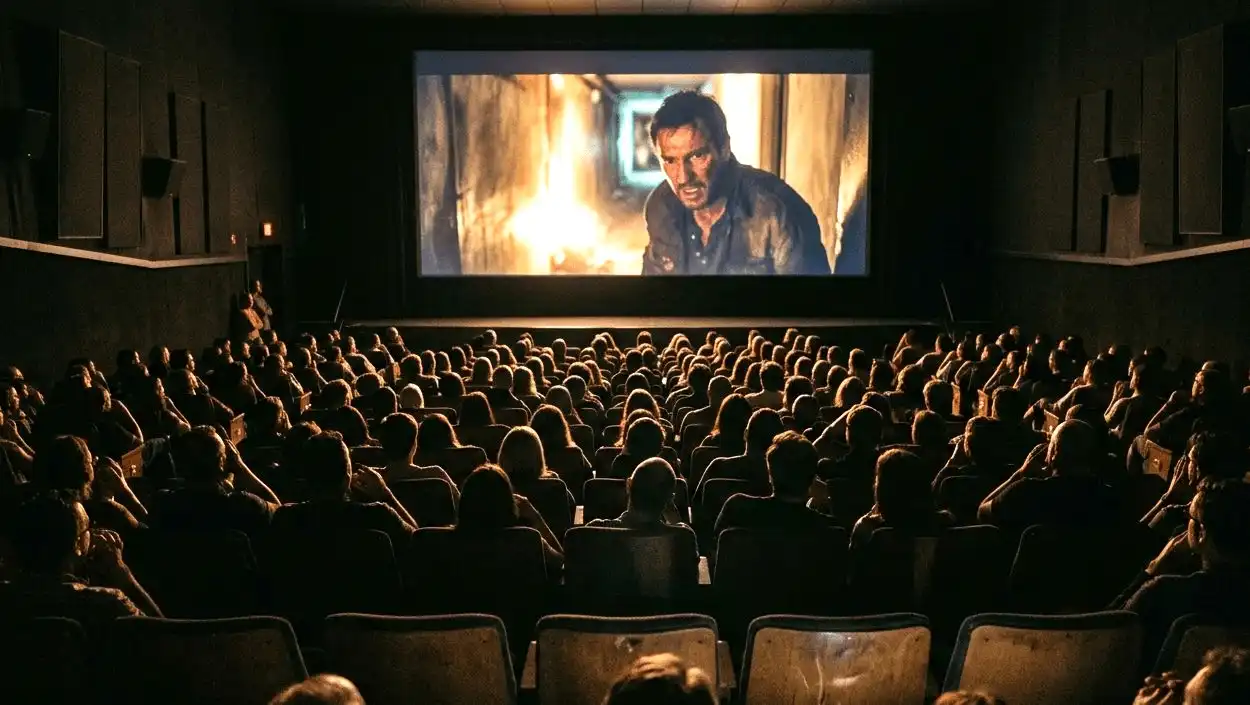
You have felt it: a joke lands, and the entire theater erupts in laughter. You laugh too — even if you did not find the joke particularly funny. Later, a jump scare makes the whole room gasp. You gasp a split second later, even though you saw it coming.
This is emotional contagion — the automatic transfer of emotional states from person to person through facial expressions, vocal tone, and posture. In a movie theater, emotional contagion transforms private viewing into a shared ritual. The audience does not just watch the film. They feel it together.
The phenomenon is powered by mirror neurons. When you hear someone laugh, your brain activates the same neural circuits as if you were laughing yourself. When you hear a gasp, your threat detection system primes for danger. Collective emotion amplifies individual emotion. A funny movie becomes funnier with a laughing crowd. A sad movie becomes sadder with sniffling neighbors.
The Science of Emotional Contagion
Emotional contagion occurs in three stages:
STAGES OF CONTAGION
- Mimicry — You unconsciously copy the facial expression, posture, or vocal tone of those around you.
- Feedback — Your brain receives sensory feedback from your mimicked expression (smiling muscles, tensed brow).
- Experience — Your emotional state shifts to match the expression you are wearing.
In a theater, this happens on a massive scale. One person laughs. Their neighbor mimics a smile. The smile triggers amusement. The amused neighbor laughs audibly. The laugh spreads. Within seconds, the entire theater is synchronized.
This is why sitcoms use laugh tracks. The recorded laughter triggers emotional contagion, making the comedy seem funnier than it is. In a live theater, the contagion is even more powerful — because the emotion is real.
| Audience Reaction | Emotional Contagion Effect | Individual Experience |
|---|---|---|
| Collective laughter | Dopamine release, amusement | Joke feels funnier than it actually is |
| Collective gasp | Adrenaline spike, startle | Jump scare feels more intense |
| Collective crying (sniffling) | Oxytocin, empathy | Sad scene feels devastating |
| Silence (no reaction) | No contagion, emotional flatness | Film feels less engaging |
| Dispersed reactions (one person laughing alone) | Mild contagion, but also awkwardness | Mixed experience, distraction |
Must Read
Explore why people behave differently in groups — emotional contagion is strongest in crowds
Collective Laughter and Fear Responses
Laughter and fear are the most contagious emotions in a theater because they are visceral and audible. Laughter triggers reward circuits. Fear triggers survival circuits. Both spread faster than sadness or anger.
Collective laughter does more than make a comedy better. It signals social safety. When everyone laughs together, the group bond strengthens. Strangers become temporary allies. The shared amusement lowers defenses and creates a fleeting sense of belonging.
Collective fear — a synchronized gasp or scream — works differently. It signals group threat detection. When one person gasps, everyone’s amygdala primes for danger. The jump scare lands harder because the audience has already activated each other’s alarm systems.
Horror movie directors deliberately design scenes to maximize collective fear. A sudden silence, then a loud noise — the room’s tension is palpable. That tension is contagious. The person who does not react is the exception, not the norm.
Why Quiet Crowds Change Movie Perception
Not every crowd reacts. Some audiences sit in near‑total silence, offering no audible feedback to the film or each other. This changes the experience profoundly.
A silent crowd provides no emotional contagion. The viewer must generate all emotional responses internally. A comedy that would be hilarious with a laughing crowd feels flat. A horror movie that would be terrifying with gasps feels merely tense.
This is why film studios test movies with “test audiences” and measure laughter frequency and gasp timing. A movie that plays well to a silent crowd is rare. Most films rely on the audience to amplify the emotion.
The psychology is clear: you are not just watching a movie. You are co‑creating the emotional experience with everyone else in the room.
You May Also Like
Learn why we care so much about others’ opinions — audience reactions validate or invalidate your own feelings
The Psychology of the “Vibe-Killer”
A vibe‑killer is a person whose behavior disrupts emotional contagion for everyone around them. Common vibe‑killers in theaters:
COMMON VIBE-KILLERS
- The stone face — Shows no reaction to jokes, scares, or sad moments. Their stillness breaks the contagion loop for neighbors.
- The late laugher — Laughs five seconds after everyone else. The delay resets the emotional rhythm.
- The narrator — Comments on every scene (“Oh no, don’t go in there”). Their voice overrides the film’s audio and breaks immersion.
- The phone checker — The glow pulls attention away from the screen, disrupting emotional synchronization.
Vibe‑killers are not malicious. They are often unaware of their impact on collective emotion. But the group feels it. A single vibe‑killer can reduce a room’s emotional intensity by 30–40%, according to observational studies of shared media experiences.
Shared Reactions and Social Bonding
Emotional contagion does more than amplify feeling. It builds social bonds between strangers.
After a shared laugh or a collective gasp, people in a theater are more likely to:
BENEFITS OF SHARED REACTIONS
- ✓ Make eye contact with strangers
- ✓ Smile at each other during credits
- ✓ Discuss the film with people they do not know
- ✓ Rate the experience as more positive overall
This is the shared reality effect. When you experience an emotion simultaneously with others, you feel less alone. The theater becomes a temporary tribe. That feeling is valuable — and it is completely dependent on audible, visible emotional reactions.
In an age of streaming and solo viewing, the theater’s unique psychological value is this collective emotional synchronization. You cannot get it at home.
Trending
Discover why humans fear being watched — but in a theater, shared watching reduces that fear
Mirror Neurons Inside Group Experiences
Mirror neurons are the biological basis of emotional contagion. These brain cells fire both when you perform an action and when you observe someone else performing it.
In a theater, mirror neurons cause you to:
MIRROR NEURON EFFECTS
- ✓ Smile when you see others smile (even in the dark)
- ✓ Flinch when you see others flinch
- ✓ Lean forward when the person in front of you leans forward
- ✓ Feel tension when you hear someone hold their breath
The mirror neuron system evolved for group survival. If your tribe reacted with fear to a predator, you needed to react instantly — without stopping to analyze. Today, that same system makes you jump when the theater gasps.
Final Thoughts
Emotional contagion is the hidden magic of the movie theater. A film is not just a film. It is a collective emotional event.
When you laugh, you give permission for others to laugh. When you gasp, you prime the room for fear. Your audible reactions are not just your own. They are contributions to the group’s emotional symphony.
The next time you are in a theater, notice how you feel when the crowd reacts — and how you feel when it does not. The difference is contagion. And contagion is why going to the movies still matters.
Related Articles


Sponsored


You May Also Like

What is Social Psychology?

The Comfort Conundrum: Does Dressing Casual Casualize Your W…

How Early Learning Shapes Attention and Focus Later in Life

Vocal Anchoring: How Pitch Modulation and Inflection Command…

How Environmental Alertness Shifts Public Respect
