
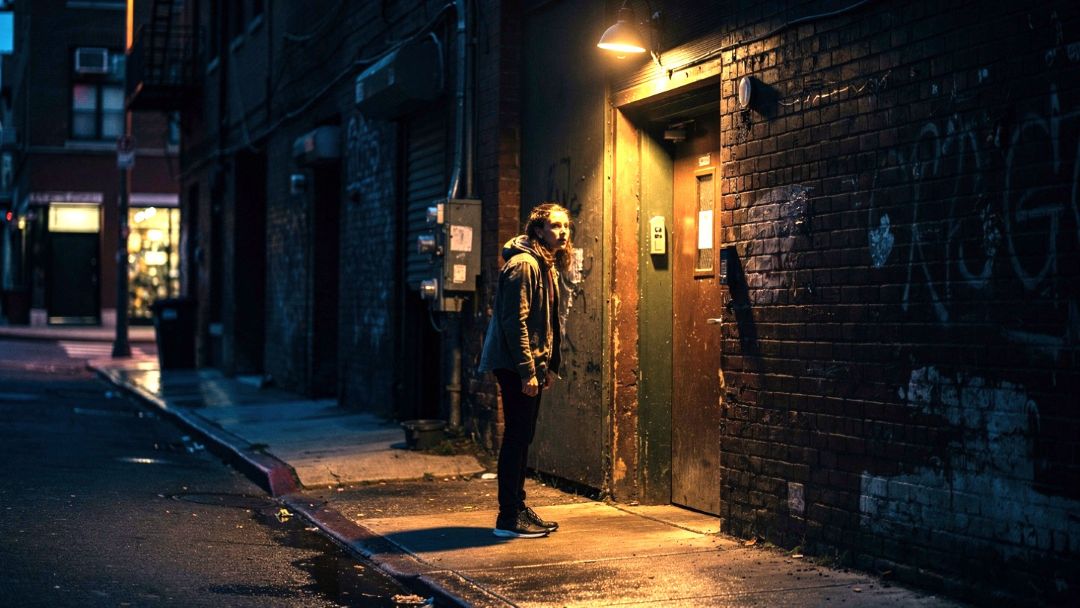
The psychology behind the instant sense of comfort or caution in different environments
Some spaces welcome you. Others make the hair on your arms stand up before you can explain why. A dark alley, an empty parking garage, a quiet waiting room with flickering lights—these places can provoke a quiet, persistent sense of danger even when nothing threatening is visible. This feeling isn’t irrational. It’s the brain’s environment-scanning system running at full speed, drawing on evolution, memory, and sensory detail to assess safety long before the conscious mind can weigh in.
By understanding why certain places feel unsafe, we can learn to trust our instincts without being ruled by them. The Perception vs Reality article explores how the brain constructs its own version of the world from incomplete cues, and why that version sometimes errs heavily on the side of caution.
Why Some Places Instantly Feel Comfortable or Uncomfortable
The brain doesn’t wait to form an opinion about a place. It judges within milliseconds.
A space that feels safe typically offers a combination of clear sightlines, moderate lighting, familiar proportions, and visible exits. A space that feels unsafe often contains the opposite: shadows, corners that can’t be seen around, a sense of enclosure without escape, or a lack of other people. These assessments are automatic and largely subconscious.
This instantaneous judgment is the brain’s way of efficiently categorizing environments. It draws on a library of past experiences, both personal and ancestral. A narrow, dark alley triggers caution not because you’ve personally been attacked in one but because the brain was shaped in environments where such spaces were genuinely risky.
The First Impression Psychology: Instant Judgments article shows how quickly the brain forms emotionally weighted impressions from minimal visual data, often determining the tone of an entire experience before you’ve taken a second step.
How the Brain Reads Environment Signals
The brain’s environmental scanning systems operate far below conscious awareness.
The amygdala, the brain’s threat-detection hub, constantly monitors sensory input for potential danger signals. The hippocampus compares the current scene to stored memories of past safe and unsafe places. Even the reticular activating system filters incoming stimuli for novelty and significance.
When you walk into a new room, the brain notes the exit points, the lighting, the number of people, and the overall layout within a fraction of a second. It then generates a feeling—comfort, unease, vigilance—that colors your entire experience of the space. This process is rapid, automatic, and heavily influenced by evolutionary legacy. Our ancestors who quickly identified potentially dangerous environments survived to pass on their genes, and modern humans inherit that same neural architecture.
The Why Humans Are Naturally Afraid: Psychology of Survival article explains how these ancient survival circuits continue to operate, triggering caution in environments that our deep brain interprets as risky, even when the logical mind knows there’s no immediate threat.
Why Lighting, Space, and Sound Matter
Three environmental features dominate the brain’s safety calculations: how much light there is, how enclosed the space feels, and what background sounds are present.
Low light removes the visual system’s primary tool for verifying safety. Shadows become potential hiding places, and the brain fills uncertain visual areas with cautious speculation. This is not a failure of nerve; it’s a direct consequence of being a visually dominant species in a world where darkness once concealed genuine predators.
Enclosed or narrow spaces trigger a different alarm. The brain calculates escape potential constantly, and when a space restricts movement—a single door, a long corridor with no side exits, a low ceiling—it flags the environment as a potential trap. The prefrontal cortex may know the space is safe, but the amygdala responds to geometry, not logic.
Sound is the third crucial signal. A space that is too quiet can feel menacing because the absence of normal ambient sound suggests isolation. A space that is too loud, with chaotic or jarring noises, overloads the sensory system and prevents the brain from monitoring effectively. The ideal environment for psychological safety usually contains a moderate level of predictable, non-threatening background sound.
Common Examples of “Unsettling” Places
Certain environments reliably trigger unease across many people because they combine several safety-undermining features at once. Common examples include:
🌑 Dark, empty parking garages at night, where echo, shadow, and lack of visible exits create a sense of vulnerability.
🚪 Long, windowless hallways with only one door at the far end, which the brain processes as a trap with limited escape options.
👥 Dense crowds that restrict movement, where personal space is eliminated and exit paths are blocked.
🏚️ Abandoned or neglected buildings, where the absence of maintenance signals that the space is unmonitored and unpredictable.
🌲 Natural areas with high undergrowth or poor visibility, where the ancestral brain recalls that predators could be concealed.
The Neighbourhoods Stress Safety Wellbeing article explores how the physical environment of a neighborhood—its lighting, maintenance, and layout—can shape residents’ sense of safety and stress levels in lasting ways.
How Memory Influences Place-Based Feelings
The brain never encounters a place fresh. Every new environment is compared to the stored catalogue of past experiences.
If you once had a frightening experience in a parking garage—a confrontation, a panic attack, even just a scary movie scene—the hippocampus tags that memory with fear. When you later enter a different parking garage with similar features, the memory is activated, and the fear response fires again. The rational mind may know the two places are unrelated, but the emotional brain does not wait for that distinction.
This associative memory system is evolutionarily sensible. It encourages avoidance of places that resemble past danger sites, even if the resemblance is superficial. The cost of a few false alarms is far lower than the cost of missing a real threat. The Why Memory Is Less Reliable Than You Think article shows how emotional memories are reconstructed rather than replayed, often amplifying the fear and making a mildly unpleasant memory feel like a clear warning signal.
Why New or Unknown Spaces Feel Different
Novelty introduces a unique kind of unease. A new space has no mental map, no catalogue of past safe visits, and no established patterns.
The brain responds to unfamiliar environments by raising its overall vigilance. Until it has scanned the space, identified exits, noted the people present, and compared the scene to known categories, it keeps the sympathetic nervous system slightly activated. This is why walking into a new workplace, a new hotel room, or a new city can feel subtly draining. Your brain is working hard to build a safety assessment from scratch.
Once the space becomes familiar, the brain downgrades its threat level. The same café that felt slightly intimidating on the first visit becomes a comfortable refuge after a dozen visits. The difference is not in the space but in the brain’s database. Familiarity is one of the strongest predictors of perceived safety.
Why Some People Trust Their Instinct More Than Logic
Many people describe a “gut feeling” about a place, and that feeling often overrides rational analysis.
This instinct is not supernatural. It’s the brain’s pattern-matching system detecting subtle cues that the conscious mind has not yet catalogued. Perhaps there was a faint scent associated with a past dangerous situation, or a barely perceptible shift in background noise that signaled something unusual. The brain picks up these micro-signals and generates an emotional output—unease, wariness, a desire to leave—before the rational mind can articulate a reason.
People who have experienced trauma or who work in high-alert professions often develop an even more acute sensitivity to these cues. Their brain has learned through hard experience that ignoring a gut feeling can have severe consequences, and it prioritizes that instinct over deliberate reasoning. Trusting this feeling is not foolishness; it’s the brain’s pattern-recognition software operating at its most efficient.
Physical Reactions People May Notice
The body’s response to an unsettling place is often the first sign that the brain has flagged the environment as risky. Common physical reactions include:
- ❤️ A sudden increase in heart rate
- 🌬️ Shallow, faster breathing or a tightness in the chest
- 💪 Muscle tension, especially in the shoulders and back
- 👁️ Pupils dilating to take in more light and visual information
- 🫳 Sweaty or cold palms
- ⚠️ A feeling of alertness or being “on edge”
- 🏃 An urge to leave or move toward a more open area
These sensations are not a medical crisis. They are the sympathetic nervous system preparing the body to respond rapidly if the environment proves genuinely dangerous. The discomfort they cause is the price of having a brain that prioritizes survival over comfort.
Can Familiarity Change the Feeling?
Yes, and often dramatically. The brain’s assessment of a place is not static. It updates with experience.
A person who moves to a new neighborhood may initially feel unsafe walking home after dark. Each safe walk adds data to the brain’s threat model. Over weeks and months, the amygdala’s response to that specific route diminishes. The route becomes “known,” and the brain reclassifies it from ambiguous danger to predictable safety.
This recalibration works best when exposure is gradual and voluntary. Forced exposure to an environment that feels highly threatening can intensify the fear. But when a person chooses to spend time in a mildly unsettling place in safe conditions, the brain slowly learns that its initial alarm was unnecessary.
Small environmental changes can also tip the balance. Better lighting, visible exits, and the presence of other people can shift a space from unsettling to comfortable almost instantly, because they address the specific cues the brain was using to assess risk.
Final Thoughts
Feeling unsafe in certain places is not a sign of excessive anxiety or a weak character. It’s the brain’s honest, ancient response to environments that trigger its safety-checking systems. The shadowy corner, the echoing hallway, the unfamiliar street at night—these activate circuits that have saved lives for thousands of generations.
Understanding why these feelings arise can help you relate to them with more clarity and less fear. You can learn to recognize when your brain is responding to legitimate threat cues, and when it’s simply running an old, overzealous safety script. The goal is not to never feel uneasy, but to let that unease inform your choices without controlling them.
Related Articles


Sponsored


You May Also Like

Positive Synonyms: 101 Powerful Alternatives to “Good&…

Conquering the Fear of Heights: A Look at Acrophobia

Perception Psychology — How Your Mind Shapes Reality (A Simp…

How Football Trains the Brain for Split-Second Decisions: Th…

Why Looking Down Makes People Dizzy
