
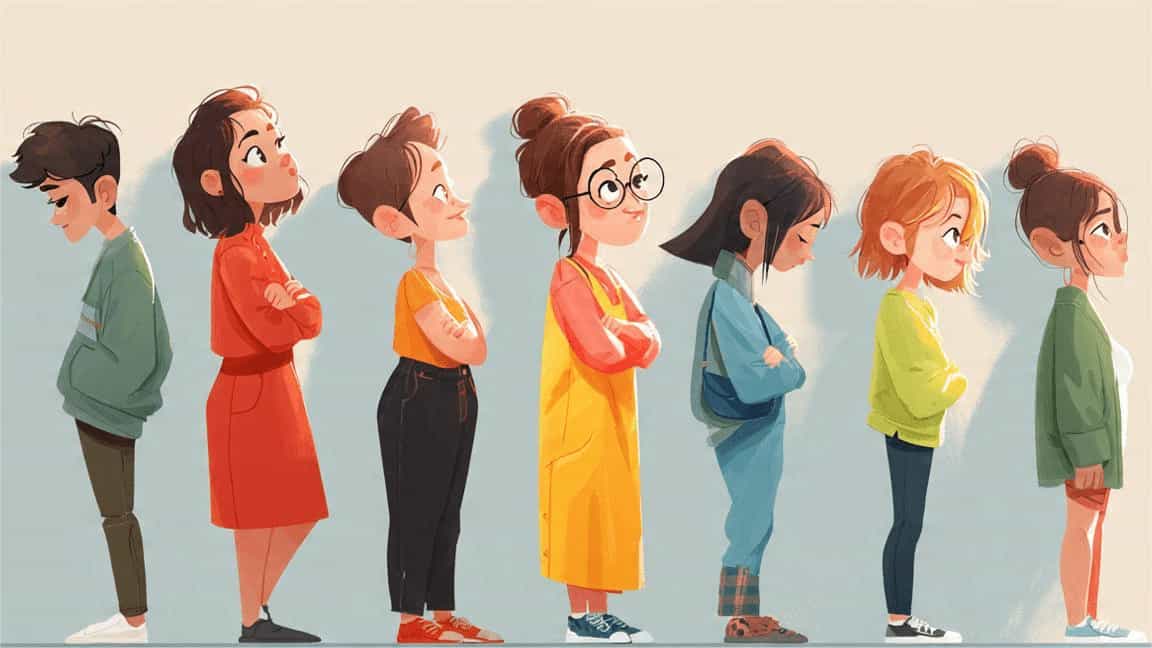
While observing everyday decisions—career choices, lifestyle trends, and opinions expressed online—a recurring pattern emerges. People often believe they are acting independently, yet their choices closely mirror those around them.
Social pressure doesn’t always look dramatic. It can be subtle, polite, even invisible. Social psychology shows that resisting group influence is far more difficult than we assume—not because we are weak, but because belonging is a fundamental biological necessity.
The Illusion of Independence
Most of us like to think we’re independent thinkers. We believe our opinions are our own and our values come from careful reflection. But research tells a different story: we are far more influenced by others than we realize.
This influence is often “silent.” We adopt the speaking patterns of our peers, find ourselves agreeing with group opinions we might have questioned alone, and choose life paths that fit what our social world deems “acceptable.” The illusion of independence persists because influence feels like choice when it aligns with the majority.
The Biology of Belonging: Pain and Survival
Why is social pressure so hard to resist? Because belonging isn’t optional—it’s biological. For early humans, exclusion from the tribe meant a lack of protection, which meant death.
This history left us with a powerful psychological system: social pain registers in the brain (specifically the anterior cingulate cortex) similarly to physical pain. Rejection “hurts” because, ancestrally, it was life-threatening. We are hard-wired to monitor social signals and adjust our behavior to stay in the group’s good graces.
The Two Faces of Conformity
Psychologists distinguish between two distinct types of social influence that lead us to conform in everyday scenarios:
Modern conformity operates through both, often through internalized group norms where we start to genuinely believe the group’s consensus is our own original thought.
Why Resistance Triggers an “Alarm”
Resisting the group isn’t just a cognitive disagreement—it triggers a survival response. Anxiety about standing out activates the amygdala, the brain’s threat-detection center. The emotional cost of honesty—social friction, awkwardness, or potential rejection—often feels higher than the cost of conformity. This is why we stay silent in meetings or laugh at jokes we don’t find funny; we are protecting our “social safety.”
Digital Groupthink and the Cost of Exclusion
Digital environments have amplified social pressure. On social media, visibility is constant and validation is public.
MODERN DIGITAL DRIVERS
- Comparison Culture: Measuring our internal reality against someone else’s curated online highlights.
- The ‘Cancel’ Threat: Digital exclusion serving as a high-stakes version of ancestral tribal banishment.
- FOMO: Fear Of Missing Out condensed into persistent modern psychological anxiety.
You May Also Like
Psychology of Discounts, Scarcity, and FOMO
Authority, Peer Proof, and Digital Trust
Social pressure flows both from Authority Figures (those with status or expertise) and Social Proof (the sheer number of people doing something). We are primed to trust those with perceived authority, a bias that is easily manipulated on digital platforms where “clout” often substitutes for credibility.
Post-Decision Justification: The “I Meant to Do That” Trap
After we give in to social pressure, our brain works to protect our ego through Cognitive Dissonance. We rationalize the choice: “I didn’t stay at this boring party because I was afraid to leave; I stayed because the networking was valuable.”
This Post-decision justification prevents us from admitting we were swayed, which maintains our sense of being an autonomous, logical individual.
Building “Social Courage” Without Isolation
Resisting social pressure doesn’t mean rejecting all influence. We are social creatures, and we should care about our communities. However, we can build Social Courage:
ACTIONABLE STEPS TO BUILD SOCIAL COURAGE
- ✓ Define Your ‘North Star’: Establish clear, written-down values to create a firm reference point that doesn’t shift with group opinion.
- ✓ Find a ‘Dissenter’ Ally: Partner with at least one person who values truth over consensus—reducing conformity risk by up to 80%.
- ✓ Apply the 24-Hour Rule: Delay responses on trends or commitments and ask: ‘Would I choose this if I couldn’t tell anyone about it?’
Independence Is Awareness
Social pressure is not a sign of weakness; it is a sign of being human. The goal isn’t to become immune to influence—that is impossible and would make you a social outcast. The goal is to move from unconscious compliance to conscious choice.
Independence isn’t the absence of influence. It is the presence of awareness. When you recognize social proof shaping your judgment, you gain the power to ask: “Is this what I want, or is this just what the tribe wants?”
FAQs
Why does social rejection feel physically painful?
Social pain activates the anterior cingulate cortex—the same brain region that registers physical pain. Ancestrally, exclusion from a tribe meant death, making social pain an evolutionary survival mechanism.
What is the difference between Informational and Normative influence?
Informational influence happens when you look to others for correct information during uncertain situations. Normative influence occurs when you conform simply to fit in, be liked, or avoid social friction.
How can having just one ally reduce social conformity?
Asch’s social conformity experiments proved that having a single fellow dissenter reduces an individual’s likelihood to conform by up to 80%, providing the ‘social safety’ needed to state the truth.


