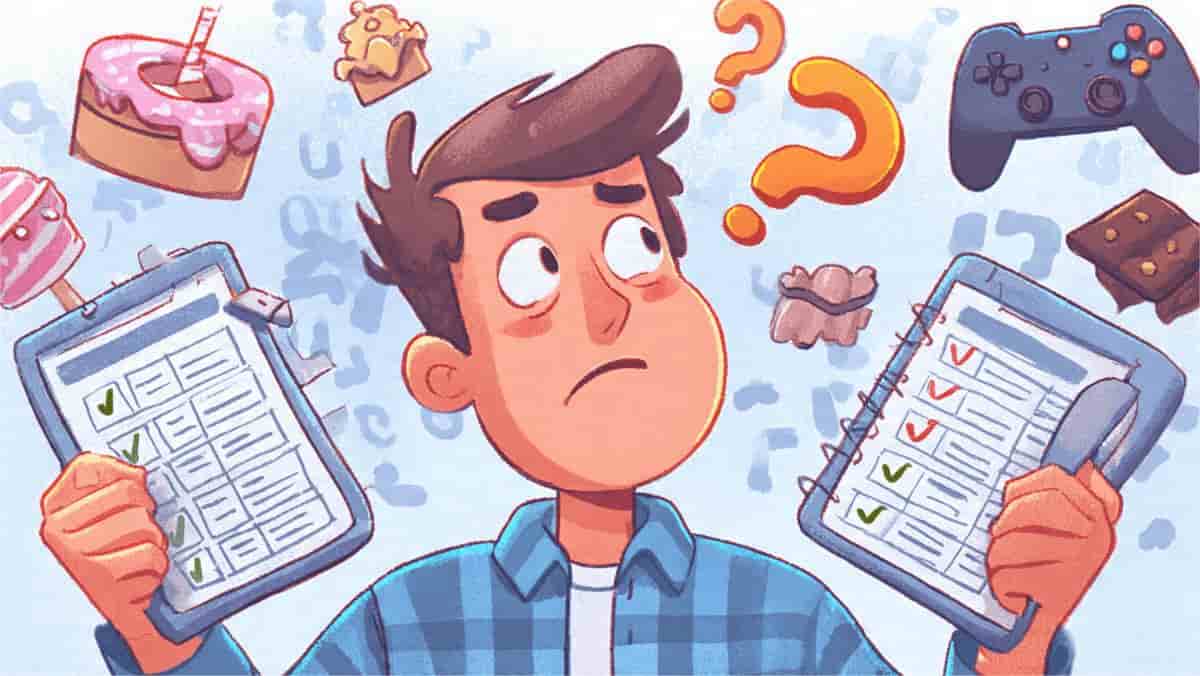
While observing everyday choices—career moves, financial risks, arguments, and impulsive purchases—one pattern becomes clear: even intelligent, well-informed people repeatedly make decisions that don’t align with logic.
The issue isn’t a lack of intelligence. It is that human decision-making is deeply influenced by emotion, bias, memory, and context. Cognitive psychology reveals that irrational decisions are not random mistakes—they follow predictable patterns.
Rational Minds, Emotional Decisions
Most of us like to believe we think clearly. We weigh pros and cons, consider alternatives, and arrive at logical conclusions. But research in cognitive psychology tells a different story: we are rational only in theory. In practice, emotion, mental shortcuts, and unconscious biases shape most of our choices.
The illusion of logical thinking persists because we don’t notice the mental processes happening beneath awareness. By the time a decision reaches conscious thought, it has already been filtered through layers of emotional evaluation. We think we’re being objective—but we’re often just justifying what we already feel.
The Emotional Brain vs. the Logical Brain
Psychologist Daniel Kahneman popularized the idea of two thinking systems: System 1 (fast) and System 2 (slow).
The problem? System 1 is the “default setting.” It requires less energy and draws on emotional memory to give us quick answers. System 2 is “lazy” and only activates when we consciously push it. In a fast-paced world, System 1 dominates, bringing all its emotional baggage into our decision-making.
Cognitive Biases That Distort Judgment
If System 1 runs on shortcuts, those shortcuts come with predictable errors called cognitive biases. These patterns distort our judgment in consistent ways:
COMMON COGNITIVE BIASES
- ✓ Confirmation Bias: Seeking information that confirms existing beliefs while ignoring challenging evidence.
- ✓ Availability Bias: Overestimating the likelihood or importance of recent, dramatic, or emotional memories.
- ✓ Anchoring Effect: Relying heavily on the first piece of information received as a benchmark.
- ✓ Overconfidence Bias: Consistently overestimating personal knowledge, accuracy, and predictions.
The Role of Stress and Pressure
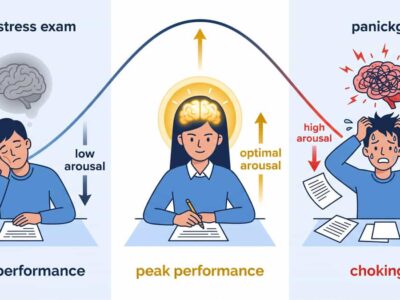
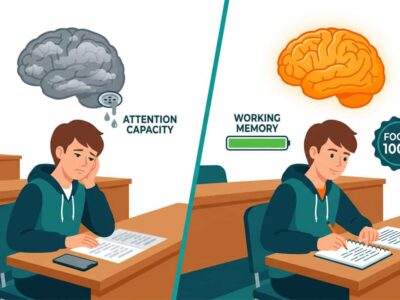
When stress enters the picture, irrationality intensifies. Under pressure, the brain’s “tunnel vision” kicks in. Options that aren’t immediately obvious drop away, and we grab the first workable solution rather than the best one.
Stress also reduces cognitive flexibility. The same mental rigidity that helps us focus on a physical threat makes it harder to think creatively or consider alternatives. This is why poor decisions cluster in moments of urgency.
Social Influence and the “Herd”
We rarely decide in a vacuum. Other people—their opinions, behaviors, and expectations—constantly shape our choices through Herd Behavior.
It feels biologically safer to move with the crowd than to stand alone. Social validation loops—likes, shares, and public approval—create feedback that reinforces decisions we might not have made in isolation. In digital environments, this desire to belong can quietly steer decisions away from logic and toward social acceptance.
Short-Term Rewards vs. Long-Term Consequences
One of the most consistent patterns in irrationality is Temporal Discounting: we value immediate rewards more highly than future benefits, even when the future benefits are objectively larger.
This is the psychological root of procrastination and impulsive spending. The discomfort of the present moment (boredom or craving) feels urgent, while the “future self” feels like a stranger. We choose relief now and let “tomorrow’s self” deal with the consequences.
You May Also Like
Consumer Psychology: Impulse Buying Triggers
Post-Hoc Rationalization: Why We Justify Mistakes
Perhaps the strangest part of irrationality is what happens after the decision. Instead of acknowledging a mistake, we use Post-Hoc Rationalization—constructing logical-sounding explanations for choices that were never logical to begin with.
This protects our self-image. Admitting we acted impulsively threatens our sense of being competent people. So we rewrite the narrative: “I didn’t buy this because I was stressed; I bought it because it was a long-term investment.”
Can We Reduce Irrational Decisions?
We cannot eliminate irrationality—it’s built into the hardware. However, we can use Choice Architecture to design better outcomes:
KEY STRATEGIES TO BETTER DECISIONS
- Slowing Down: Give System 2 time to ‘boot up’ by delaying major decisions by at least 24 hours.
- The ‘Friend’ Filter: Ask, ‘What would I tell a friend to do?’ to create emotional distance.
- Environment Design: Remove friction for good choices and add friction (like removing 1-Click buying) for impulsive ones.
Environment often shapes behavior more effectively than willpower.
Awareness Is the First Step
Irrationality is a human trait, not a failure. It follows predictable pathways: emotional dominance, cognitive shortcuts, and social pressure. Understanding these patterns doesn’t make us perfectly rational, but it does make us aware.
And awareness changes the game. When you catch yourself anchoring on a price or feeling the pull of the “herd,” you can pause. Intelligence alone isn’t enough to make good decisions; it needs the right conditions—slower thinking, better environments, and honest self-awareness.
FAQs
Why do smart people make irrational decisions?
Intelligence doesn’t make someone immune to cognitive biases or emotional influence. Smart people often rely on System 1 fast thinking or use their intelligence to post-rationalize bad decisions after making them.
What is the difference between System 1 and System 2 thinking?
System 1 is fast, automatic, emotional, and subconscious. System 2 is slow, deliberate, analytical, and requires active mental effort.
How can I prevent impulsive spending and bad choices?
Implement a cooling-off period (such as waiting 24 hours), remove easy purchasing friction (like saved credit card details), and ask yourself how you would advise a friend in the same situation.