

While observing conversations in group settings, I noticed a consistent contrast. Some people processed ideas aloud, refining thoughts as they spoke. Others stayed quiet, preferring to think deeply before responding.
This wasn’t about confidence or intelligence—it was about cognitive style. Personality psychology suggests that introverts and extroverts don’t just behave differently; they often process information through entirely different biological pathways.
KEY TAKEAWAYS
- Introversion and extroversion are rooted in neurological differences and brain chemistry, not just social preferences.
- Extroverts process information externally and lean on dopamine-driven reward systems.
- Introverts process information internally through acetylcholine pathways, requiring lower baseline stimulation.
Beyond the Quiet vs. Loud Myth
When we hear “introvert” and “extrovert,” we typically think of social preferences. Introverts like quiet evenings; extroverts thrive at parties. These stereotypes capture surface behavior but miss the neurological “why.”
The real difference isn’t about social skills. It is about cognitive style—how the brain processes stimulation, where it focuses its energy, and how thinking unfolds. Understanding these differences explains why the same environment can energize one person while leaving another completely depleted.
Must Read
Personality Types: Big Five and MBTI
The Biological Root: The Dopamine Connection
At its core, the distinction comes down to Reward Sensitivity. Research suggests that the primary difference lies in how our brains respond to the neurotransmitter dopamine.
Extroverts have a less active dopamine reward system. They require more external stimulation—noise, risk, and social interaction—to feel the same “hit” of pleasure.
Introverts are more sensitive to dopamine. Too much of it feels overwhelming rather than rewarding. Instead, introverts favor acetylcholine, a neurotransmitter linked to calm, internal reflection and deep focus.
This is a spectrum, not a binary. Most people are “ambiverts” falling somewhere in the middle, but we all have a “home base” where we feel most balanced.
Thinking Styles: Internal vs. External Processing
One of the most striking cognitive differences is how thoughts take shape.
Extroverts often use External Processing. They build understanding through the act of speaking. For an extrovert, words are tools for exploration. They might not fully know their stance on a topic until they hear themselves articulate it aloud.
Introverts utilize Internal Processing. Their thoughts travel a longer neural pathway involving memory, planning, and problem-solving before reaching the speech centers. The silence in a conversation isn’t a lack of interest; it is the brain consolidating information. While an extrovert fills silence with exploration, an introvert uses silence for precision.
Optimal Arousal Theory
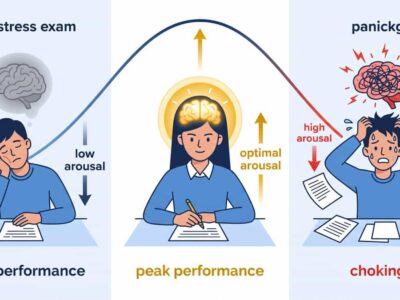
The Reticular Activating System (RAS) regulates our baseline alertness. According to the Optimal Stimulation Theory, introverts have a naturally higher baseline of internal arousal.
Because their “engine” is already running at a high RPM, loud environments or constant social demands push them into overstimulation. Extroverts have a lower baseline and seek external input to “rev” their engine up to an optimal state. This explains why an open-office plan can feel like a productive hub to one person and a sensory nightmare to another.
You May Also Like
Neuropsychology: Brain, Thoughts, and Behavior
Decision-Making: Speed vs. Depth
Cognitive style directly impacts judgment. Extroverts tend toward rapid decision-making, often drawing on social feedback and immediate external cues. They are comfortable with a “trial and error” approach, adjusting as they go.
Introverts lean toward depth over speed. They gather information, reflect on past experiences, and weigh long-term implications before committing. This isn’t indecision—it’s a preference for accuracy over velocity. In a team setting, this creates a vital balance: the extrovert provides momentum, while the introvert provides the “sanity check.”
The “Introvert Hangover”
A common experience for introverts is the “social hangover“—a state of physical and mental exhaustion following prolonged interaction. Because introverts process so much information internally, their “social battery” drains faster.
Misunderstandings arise when these recovery needs are judged. Extroverts may perceive the need for solitude as aloofness. Introverts may see the extrovert’s need for “more” as overwhelming. Recognizing these as energy management styles rather than personality flaws reduces social friction.
The Power of Cognitive Diversity
Both styles bring essential strengths to any environment:
STRENGTHS OF COGNITIVE DIVERSITY
- ✓ Introverts excel in deep focus, sustained attention, and reflective analysis (Deep Work).
- ✓ Extroverts excel in adaptability, social navigation, and rapid-fire collaboration (Social Capital).
- ✓ Balanced teams leverage extroverts to generate the ‘what’ and introverts to refine the ‘how’.
Flexibility vs. Core Nature
While we can develop situational flexibility—the ability to act outside our comfort zone for a specific goal—our core biological tendencies usually remain stable. An introvert can learn to lead a keynote speech, just as an extrovert can learn the discipline of quiet research.
However, “acting” against your nature requires energy. Understanding your home base allows you to plan for recovery after stretching your social or internal boundaries.
RECOMMENDED READ
Erik Erikson’s Stages of Psychosocial Development
Different Is Not Incorrect
The goal of personality psychology is not to change who we are, but to optimize how we operate. When we stop viewing introversion as “shyness” and extroversion as “loudness,” we can appreciate the unique ways each mind navigates the world.
Self-awareness improves interaction. When you know you process internally, you can say, “I need a moment to think that through,” rather than apologizing for silence. When you know you think out loud, you can clarify, “I’m just brainstorming,” so others don’t mistake your first thought for your final decision.
Frequently Asked Questions About Cognitive Styles
Can an introvert become an extrovert over time?
While people can develop strong situational flexibility and improve social or observational skills, basic biological neuro-pathways and dopamine sensitivity generally remain consistent throughout adulthood.
What is an ambivert?
An ambivert is someone whose personality traits fall near the middle of the introvert-extrovert spectrum, allowing them to draw energy from both solitude and social settings depending on the situation.
Is introversion the same thing as social anxiety?
No. Introversion is a biological cognitive preference regarding how energy is processed and replenished. Social anxiety is a fear-based mental health condition involving anxiety or dread in social scenarios.
Related Articles



Sponsored


You May Also Like

Why Backrooms Feel Like a Dream You Can’t Escape

Spatial Awareness as an IQ Metric: Why Cluelessness Signals …

How Ghajini Movie Mental Disorder Amnesia Works and What Mem…

Why Mental Health Issues Often Go Unnoticed
Exam Pressure and Peak Performance: Understanding the Yerkes…
