While observing how young adults talk about growing up today, I noticed something noticeably different from earlier generations. Milestones feel delayed, confidence feels fragile, and uncertainty feels constant. Many describe adulthood not as a clear transition, but as a prolonged state of “almost there.” Developmental psychology offers useful frameworks to understand why growing up today feels more complex—and emotionally heavier—than it once did.
KEY TAKEAWAYS
- Adulthood is no longer a linear transition; emerging adulthood now extends well into the late twenties and thirties.
- Overchoice and constant social comparison amplify anxiety and delay personal confidence.
- Financial instability and high emotional expectations contribute heavily to cognitive overload and burnout.
- Delayed milestones are a natural adaptive response to a complex modern landscape, not a personal failure.
Growing Up in a Faster World
Modern life moves faster, but personal development often feels slower. Young adults today face rapid technological change, social visibility, and shifting social norms all at once. Traditional markers of adulthood—financial independence, stable careers, long-term relationships—are no longer synchronized or guaranteed. This mismatch creates internal tension between where one expects to be and where one actually is.
Changing Timelines of Adulthood
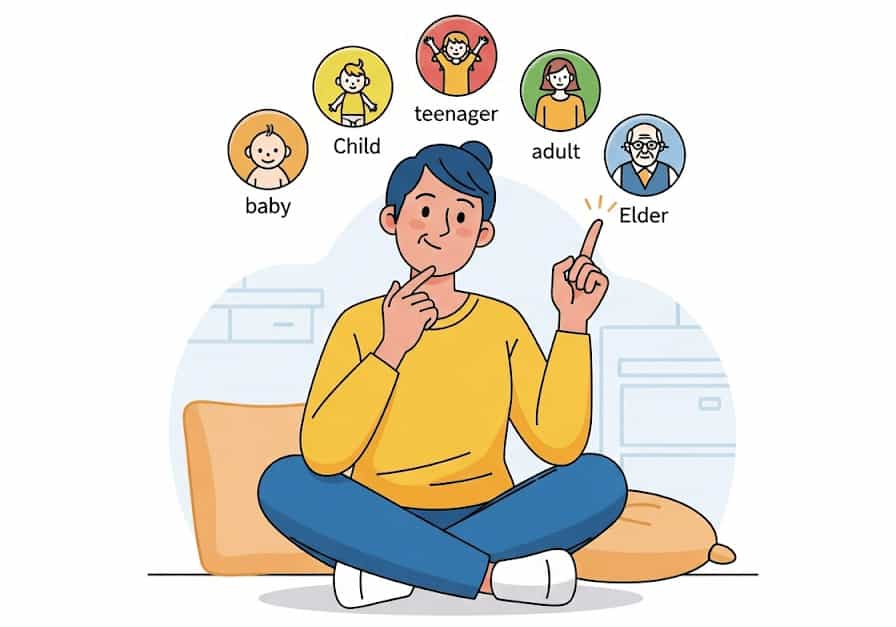
Earlier generations followed relatively predictable life paths. Education led to work, work led to independence, and adulthood felt clearly defined. Today, emerging adulthood has stretched into the late twenties and even thirties. Developmental theories, such as Erikson’s psychosocial stages, were designed around more stable timelines, which makes modern delays feel like personal failures rather than contextual shifts .
UPSIDES
- ✓ Predictable, standardized life paths
- ✓ Clear traditional markers of independence
- ✓ Fewer career options leading to lower choice overload
DOWNSIDES
- ✕ Non-linear, extended transitions into adulthood
- ✕ Distorted benchmarks amplified by social comparison
- ✕ High economic precarity and chronic cognitive load
Increased Choices, Increased Pressure

Paradoxically, more options often mean more anxiety. Career paths, relationship models, and lifestyles are no longer limited—but this abundance increases fear of making the “wrong” choice. Research in cognitive and social psychology shows that decision overload amplifies self-doubt and regret, especially during identity formation years .
Instead of freedom feeling empowering, it often feels paralyzing.
Social Comparison and Delayed Confidence
Social media has transformed comparison into a constant, unavoidable process. Young adults now compare their behind-the-scenes struggles with others’ curated successes. This fuels social comparison, eroding confidence and distorting developmental self-assessment. Studies in social psychology show that frequent upward comparison is linked to lower self-esteem and increased anxiety, particularly during identity exploration phases .
A useful reminder comes from Theodore Roosevelt:
“Comparison is the thief of joy.”
In the digital age, that theft happens daily.
Economic and Social Uncertainty
Economic instability plays a major role. Rising housing costs, job insecurity, and student debt have redefined independence. A UK-based longitudinal study found that financial precarity significantly delays perceived adulthood, even among highly educated young adults. Similarly, a U.S. case study following Millennials post-2008 recession showed long-term impacts on career confidence and risk-taking behavior.
Uncertainty doesn’t just affect wallets—it affects psychological safety and long-term planning.
Emotional Load of Modern Expectations
Beyond survival, today’s adults are expected to be emotionally intelligent, mentally healthy, productive, passionate, and socially aware—simultaneously. This emotional multitasking increases cognitive load, leading to burnout earlier in life. Health psychology research highlights how chronic stress during developmental years impacts motivation, emotional regulation, and self-concept .
Adapting Developmental Models to Today
The solution isn’t to label this generation as fragile—it’s to update our models. Developmental psychology must account for prolonged transitions, digital identity formation, and economic instability. Growth hasn’t stopped; it has simply become non-linear. Recognizing this reduces shame and reframes delay as adaptation, not failure.
Growth Has Changed, Not Stopped
Growing up today feels harder because the world demands more flexibility, resilience, and self-definition than ever before. When young adults struggle, it isn’t a sign of weakness—it’s evidence of navigating a more complex developmental landscape. Adulthood hasn’t disappeared; it has evolved.
Note: This article is for educational purposes only and does not constitute professional clinical advice.
FAQs
Is it normal to feel “behind” in adulthood today?
Yes. Delayed milestones are increasingly common due to economic, social, and psychological factors.
Does social media really affect emotional development?
Research consistently shows it intensifies comparison and impacts confidence during identity formation years.
How can young adults cope better with uncertainty?
By reframing timelines, reducing comparison, and understanding that non-linear growth is still valid development.
Related Articles



Sponsored


You May Also Like

Employee Motivation: Why Salary Alone Doesn’t Keep People En…

The Recency & Primacy Effects: How to Structure a Date t…

Why Rereading Notes Fails: The Science of Retrieval Practice…

How Different Scent Profiles Secretly Signal Your Personalit…

The Paradox of Modern Intelligence: Why Students Are Smarter…