The Red Alert: The Psychological Danger and Desire Behind Wearing Bold Colors

A person wearing a red blazer or red tie standing confidently in a modern office, drawing attention from others in neutral clothing.

Why Red Grabs Attention Instantly Red is the most psychologically urgent color on the spectrum. Your brain processes red faster than any other color. This is not cultural. It is biological. Red light has the longest wavelength and penetrates the retina most directly. Evolution hardwired this response: red signals blood, danger, ripeness, and readiness. When … Read more

The Armor Effect: How Minimalist vs. “Loud” Fashion Belies Your Core Personality Trait

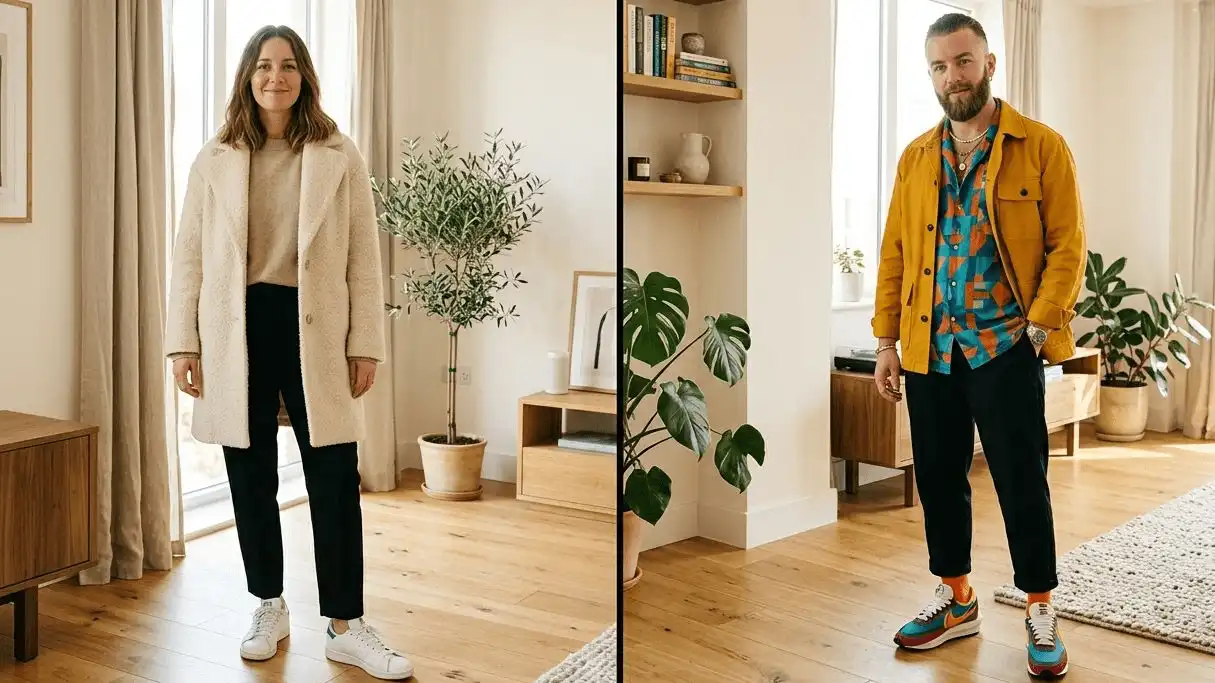
Two people side by side — one in minimalist neutral clothing, one in bold colorful patterns — each standing confidently, representing different emotional armor.

Why Fashion Becomes Emotional Armor Clothing is never neutral. Every outfit is a layer of psychological protection. Some people build walls with quiet, repetitive uniforms — the same black turtleneck, the same gray hoodie, the same minimalist dress. Others build walls with noise — logos, patterns, bright colors, constant rotation. Both are armor. Both protect … Read more

Enclothed Cognition: The Brain Chemistry Behind Why “Dressing Up” Alters Your IQ and Focus

A person putting on a blazer in front of a mirror, showing a shift from casual to formal attire, with a focused expression.

What Is Enclothed Cognition? Enclothed cognition is the systematic effect that clothing has on the wearer’s psychological processes. Unlike the halo effect (how others see you), enclothed cognition is about how you see yourself. When you put on a lab coat, you become more attentive. When you wear a suit, you think more abstractly. When … Read more

The Comfort Conundrum: Does Dressing Casual Casualize Your Work Ethic?

A person working from home at a desk, wearing comfortable but neat casual clothing (not pajamas), looking focused and productive.

Why Comfort Changes Behavior Comfort feels harmless. But comfort is information. When you wear soft pants, a loose hoodie, and slippers, your brain receives a clear signal: “This is rest territory. Threats are low. Effort can be low.” The problem is not the clothing itself. The problem is that your brain cannot fully separate physical … Read more

Impulse vs. Identity: The Dark Psychology of Fast Fashion and Why We Revenge-Shop

A person surrounded by online shopping bags and packages on a bed, looking overwhelmed rather than happy, representing emotional shopping consequences

Why People Emotionally Shop Shopping is never just about acquiring things. It is about regulating feelings. When you feel anxious, bored, lonely, or angry, the brain seeks relief. Fast fashion offers the cheapest, fastest relief available. A $15 shirt delivers a dopamine spike within seconds — no therapy, no meditation, no difficult conversation required. The … Read more

The Deception of Dress: How to Ethically Weaponize Your Wardrobe for Job Interviews and Negotiations

A confident professional in a well-fitted blazer sitting across a table from another person, both engaged in a serious but respectful conversation.

Why Appearance Influences Trust Trust is the currency of interviews and negotiations. And trust is not purely logical — it is visual. Within milliseconds of seeing you, the other party’s brain has already made a preliminary trust calculation. Clothing is a primary input. Not because people are shallow, but because brains need shortcuts. When time … Read more

How Reels, Symbols, Comments, and DecentralizedIdentity Rapidly Shape Public Behavior

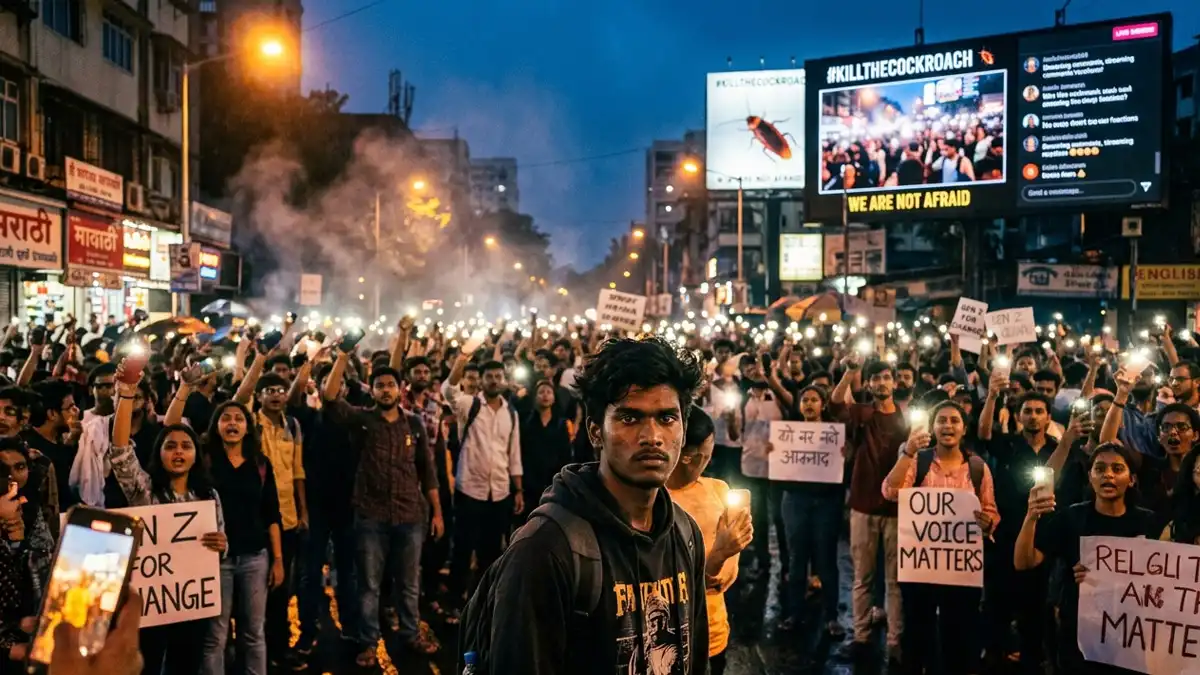
A massive crowd of Gen Z youth gathered at night on an Indian street holding glowing smartphones and placards reading Our Voice Matters, while a large digital billboard displays the viral cockroach symbol and social feeds.

There was a time when public movements in India had a predictable structure. A leader appeared on television, newspapers printed slogans, rallies were organized weeks in advance, and political offices controlled the narrative from the top down. The internet existed, but mostly as a supporting tool. That structure is collapsing in front of our eyes. … Read more

The Trust Spectrum: How Blue and Earth Tones Lower Social Defenses

A person wearing a soft blue sweater and another wearing an olive jacket, sitting in a warm, comfortable room, having a calm conversation.

Why Soft Colors Feel Safer Not all authority is built on intimidation. Some authority is built on trust. Blue and earth tones (brown, beige, olive, terracotta) operate below the brain’s threat detection threshold. Unlike black which says “stop,” or red which says “look at me,” blue and earth tones whisper: “You are safe here.” This … Read more

Cultural Lenses: How Modern vs. Traditional Style Alters Social Judgment Across the Globe

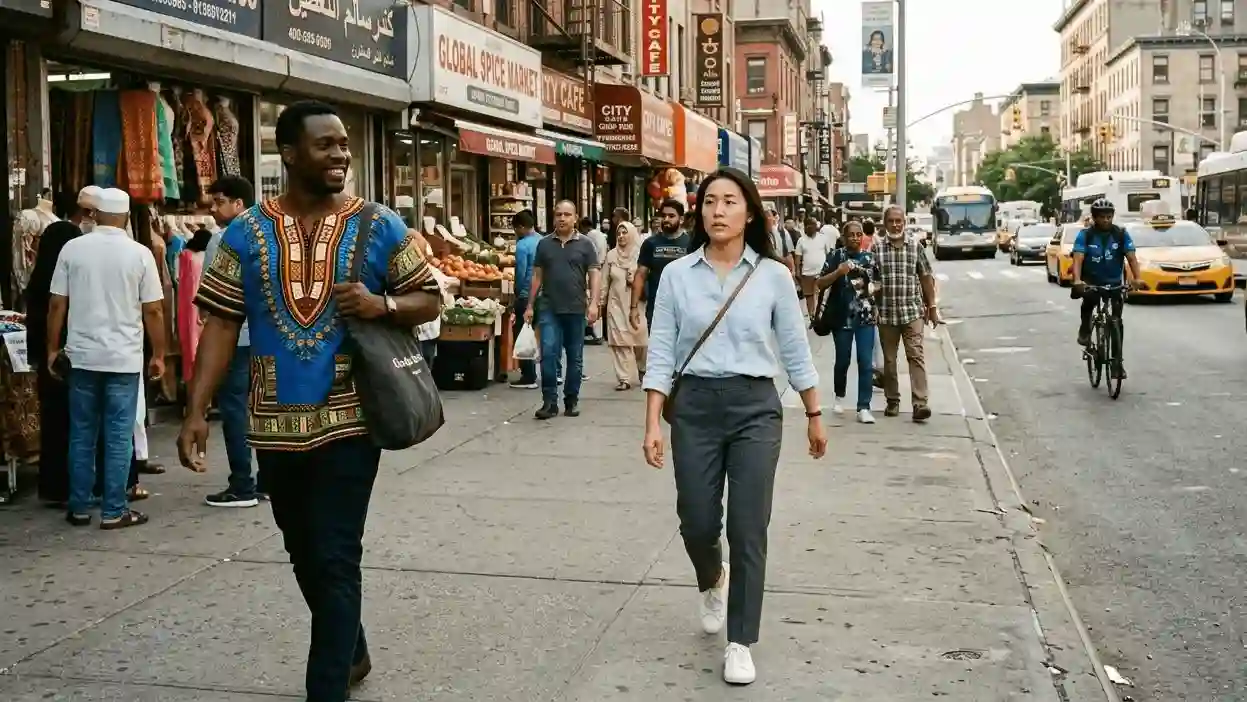
Two people in different cultural attire — one traditional, one modern — standing side by side in a global city street.

Why Culture Shapes Fashion Perception Clothing does not carry fixed meaning. Meaning is assigned by culture. A white dress signals weddings in Western cultures but funerals in parts of Asia. A beard signals religious devotion in some societies and rebellion in others. The same outfit that earns respect in Milan may earn suspicion in Mumbai. … Read more

The Power Matrix: Why Black and Navy Command Authority (And the Science of When to Wear Them)

Two professionals — one wearing a black suit, one wearing a navy suit — standing in a corporate hallway, conveying different types of authority.

Why Dark Colors Feel Powerful Dark colors are not neutral. They are psychological weapons. Your brain associates darkness with depth, seriousness, and control. Unlike bright colors that scatter attention, black and navy concentrate it. When someone wears these colors, the eye has nowhere to rest except the face and posture — exactly where authority resides. … Read more