The Minimalist Polish: How the “Put-Together” Aesthetic Signals Low Effort, High Status

A person in neutral, well‑fitted clothing — beige coat, white shirt, simple watch — standing calmly in a bright, minimal room.

What Is the Minimalist Aesthetic? Minimalist polish is not about expense. It is about intentional simplicity. Clean lines, neutral colors, perfect fit, and zero clutter — whether in clothing, grooming, or surroundings. The brain reads minimalist polish as: “I have nothing to prove. I have already arrived.” This is the opposite of loud luxury (logos, … Read more
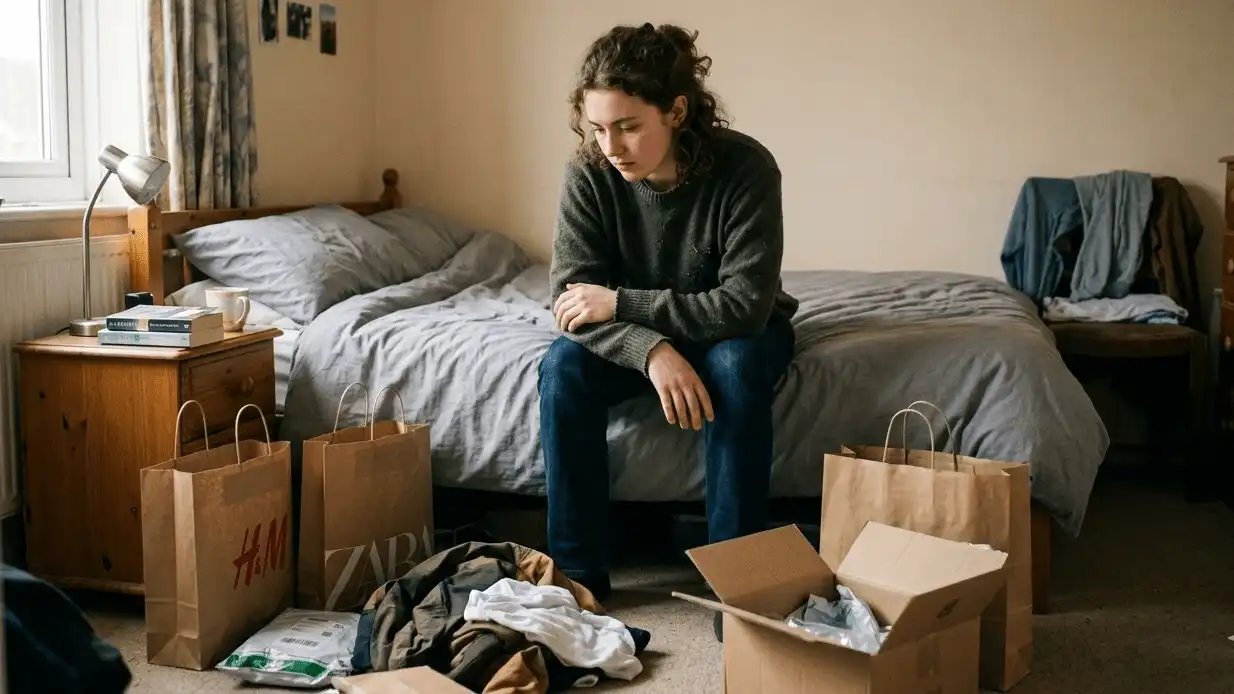
Impulse vs. Identity: The Dark Psychology of Fast Fashion and Why We Revenge-Shop

A person surrounded by online shopping bags and packages on a bed, looking overwhelmed rather than happy, representing emotional shopping consequences

Why People Emotionally Shop Shopping is never just about acquiring things. It is about regulating feelings. When you feel anxious, bored, lonely, or angry, the brain seeks relief. Fast fashion offers the cheapest, fastest relief available. A $15 shirt delivers a dopamine spike within seconds — no therapy, no meditation, no difficult conversation required. The … Read more

Why Gamers Love Anti-Hero Characters in Cyberpunk Worlds

A gamer's hands hold a controller glowing with neon blue and pink light in a dark messy room. Johnny Silverhand's shadow is reflected on the wall. A paused cyberpunk game is visible on screen. Represents why gamers prefer flawed honest anti-heroes over perfect heroes.

Not too long ago, gaming heroes were simple. You knew who the good guy was, who the bad guy was, and what needed to be done. But things have changed. Today, especially in Cyberpunk games, players are drawn toward characters who don’t fit the traditional “hero” mold. They are flawed, unpredictable, sometimes selfish, sometimes noble … Read more

The Psychology of Discounts: Why “Limited Time” Overrides Logic

A person casually browsing an online store on a laptop and smartphone in a bright workspace, with subtle urgency cues like a countdown timer and discount badge, illustrating how limited-time offers influence buying decisions.

Urgency Sells While scrolling through a flash sale, you might realize how urgency overrides logic. Items you were hesitant about suddenly feel like “must-haves” just because a timer is counting down. This is rooted in evolutionary psychology—our ancient minds are hardwired to respond to scarcity as a survival mechanism. As behavioral economist Robert Cialdini states: … Read more

Why We Buy Things We Don’t Need: The Science of Consumer Psychology

A split-screen image: on the left, an open, organized closet full of clothes and shoes; on the right, a woman sitting on a bed at night looking at a fashion shopping website on her laptop.

Buying Isn’t Logical Despite thinking of ourselves as rational beings, much of our consumer behavior is subconscious. Many purchases are triggered by emotions rather than objective needs. This often stems from perception and how our brain constructs reality; we don’t see a product for what it is, but for the “feeling” we perceive it will … Read more