
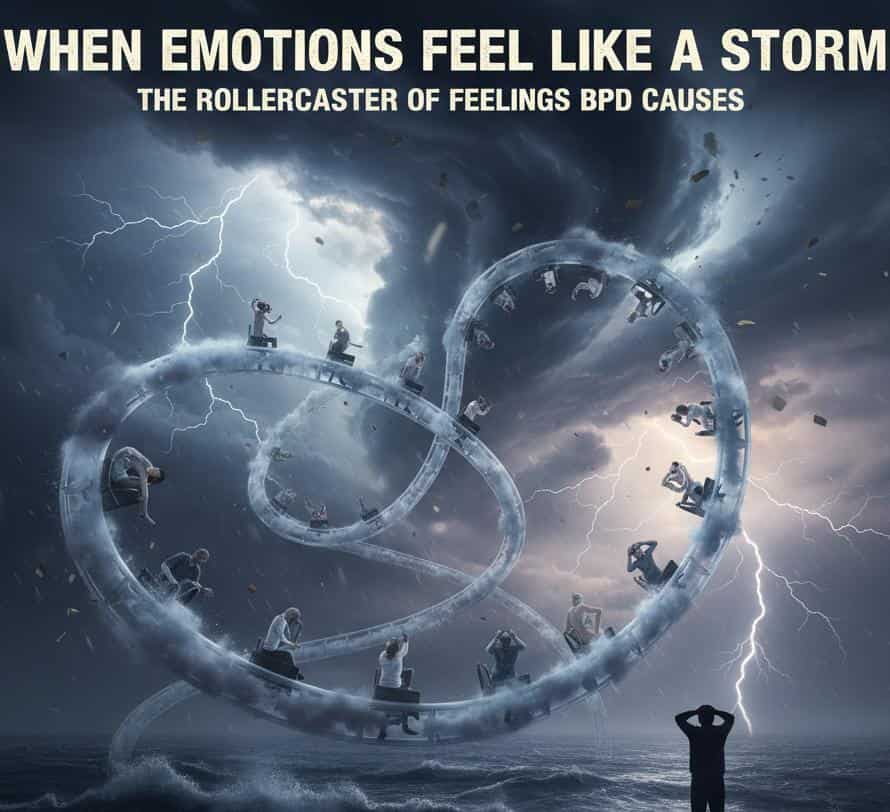
Emotions that shift without warning, relationships that feel like a rollercoaster — Borderline Personality Disorder (BPD) can make life intense and unpredictable. Learn what causes it, how it’s treated, and how recovery actually looks in real life.
When Emotions Feel Like a Storm
Some people feel everything — too deeply, too quickly.
A small misunderstanding feels like rejection. A quiet day feels empty. One moment there’s love, the next, rage.
If that sounds familiar, it’s not because you’re “too emotional.” It might be Borderline Personality Disorder, a condition that heightens sensitivity to emotions and relationships.
It’s heavy, yes — but it’s not hopeless. With the right help, those same emotions can be understood, managed, and even used as strength.
What Exactly Is Borderline Personality Disorder?
Borderline Personality Disorder (BPD) is a mental health condition that affects how a person thinks, feels, and interacts with others. People with BPD often experience:
- Emotional intensity: feelings can be extreme, shifting rapidly from joy to sadness or anger.
- Unstable self-image: a sense of identity that changes frequently, making it hard to know who they are or what they want.
- Challenging relationships: connections with others can swing between closeness and conflict.
- Impulsive behaviors: acting quickly in ways that might later be regretted, such as spending, substance use, or risky choices.
In simple terms, living with BPD can feel like navigating life on a rollercoaster of emotions — every high is higher, every low is deeper.
The hopeful truth: BPD is treatable. With the right therapies, support, and coping strategies, people can manage their emotions, build stronger relationships, and lead fulfilling lives.
How BPD Feels: Common Signs and Patterns
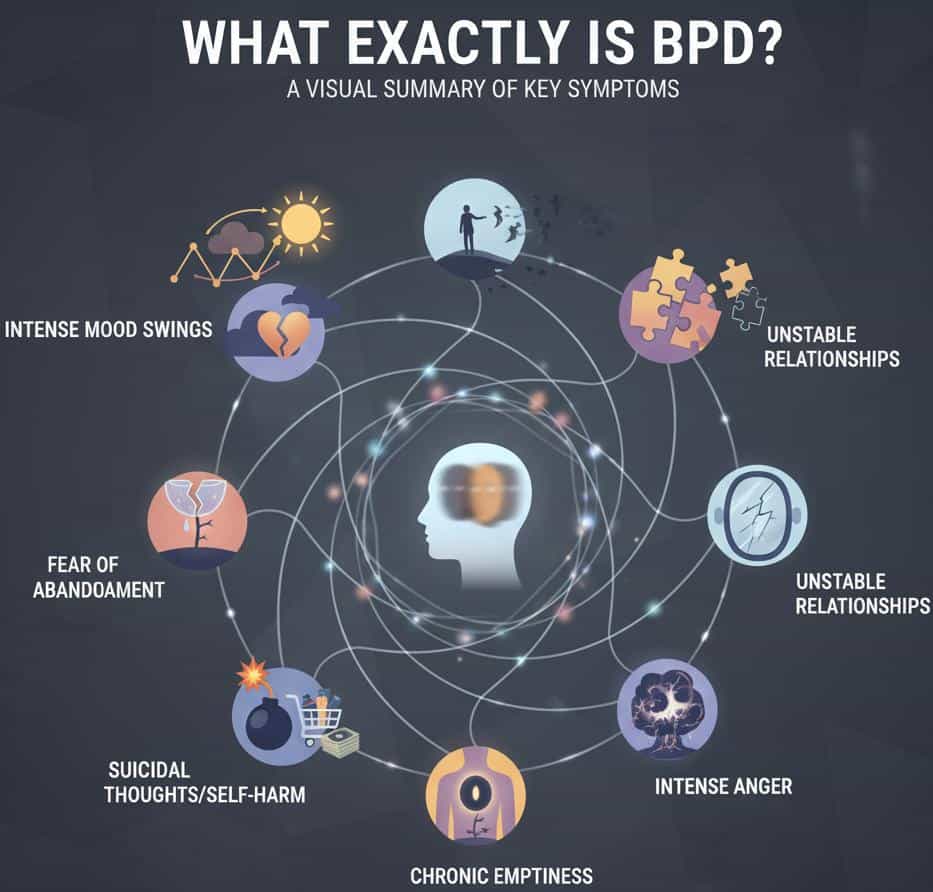
BPD doesn’t look the same for everyone, but most people share a few emotional themes:
- Fear of abandonment — doing anything to avoid being left or rejected.
- Unstable relationships — intense highs and painful lows.
- Unclear self-image — not knowing who you are or what you want.
- Impulsive decisions — spending, driving, or relationships done in the heat of emotion.
- Self-harm or suicidal thoughts — often in moments of panic or despair.
- Emotional whiplash — joy, anger, sadness, all within hours.
- Chronic emptiness — a hollow space that never feels full.
- Intense anger — small things triggering big reactions.
- Paranoia or detachment under stress.
Recognizing these doesn’t mean labeling yourself — it means naming your experience, which is the first step toward change.
Why Does It Happen?
There’s no single cause behind BPD. It usually grows from a mix of genetic, biological, and environmental factors:
- Brain wiring: Areas that regulate emotion and impulse control may function differently.
- Genetics: A Journal of Psychiatry study found that people with a close relative with BPD are nearly three times more likely to develop similar emotional instability (Zanarini et al., 2011).
- Early environment: Childhood trauma, neglect, or unstable attachments often play a role.
No one chooses BPD — and it’s never about blame. It’s about understanding how past and biology interact, so healing can begin.
A Glimpse From Real Life
Case Study: “Aisha, 22”
Aisha, a college student, described feeling like she lived “on emotional high alert.” A friend not replying to her message could trigger panic and anger, followed by shame and self-blame. She often feared people would leave her, even when they reassured her.After months of therapy, Aisha began Dialectical Behavior Therapy (DBT). Through mindfulness and distress-tolerance exercises, she slowly learned to pause before reacting.
One year later, she says, “I still feel a lot — but I don’t fall apart like before.”
(Case inspired by clinical reports published in the Indian Journal of Psychological Medicine, 2023*, and anonymized for privacy.)*
Diagnosis: Turning Awareness Into Action
If these signs sound familiar, consider talking with a mental health professional.
Diagnosis usually involves a detailed interview, history, and screening for other conditions like anxiety or depression.
A diagnosis isn’t a verdict — it’s a roadmap. It helps you and your therapist build a plan that works for you.
What Actually Helps: Evidence-Based Treatments
The outlook for BPD is much brighter than people think. With consistent treatment, most people see major improvement in emotions, relationships, and self-control.
Therapies That Work
- Dialectical Behavior Therapy (DBT): The gold standard — teaches mindfulness, emotion regulation, and distress tolerance.
- Cognitive Behavioral Therapy (CBT): Helps reframe unhelpful thoughts and reactions.
- Mentalization-Based Therapy (MBT): Builds insight into your own and others’ mental states.
A 2020 meta-analysis in Frontiers in Psychology found that DBT leads to significant decreases in self-harm, impulsivity, and emotional instability — confirming its long-term benefits.
Medication and Crisis Support
No single medication “cures” BPD, but antidepressants or mood stabilizers can help manage specific symptoms.
In moments of intense distress or self-harm risk, short-term hospitalization can provide safety and space to reset.
Daily Practices That Build Stability
Therapy teaches skills, but practice makes them stick. Small, consistent choices build real emotional balance:
- Apply DBT tools — mindfulness, grounding, deep breathing.
- Maintain a daily rhythm — regular sleep, meals, exercise.
- Journal or meditate to track patterns instead of reacting to them.
- Stay connected to a few stable, understanding people.
- Avoid alcohol or drugs that amplify mood swings.
Change doesn’t come overnight — but it does come.
Supporting Someone with BPD
If someone you care about has BPD, your role can be life-changing — and tough.
What helps:
- Learn what BPD really is — understanding reduces frustration.
- Offer empathy, not criticism.
- Celebrate progress, however small.
- Protect your boundaries and mental health too.
A 2017 study in Borderline Personality Disorder and Emotion Dysregulation showed that psychoeducational programs for families reduced emotional burden and improved understanding in as little as 8 weeks.
Life Beyond the Diagnosis
BPD is often misunderstood, but it’s not a life sentence. Many people recover, build stable lives, and form lasting relationships.
Healing is possible. Growth is real.
You’re not broken — you’re learning to live with deeper awareness of what moves you.
If You Need Help Today
If you or someone you know may be struggling with BPD, reach out now:
- NAMI Helpline: nami.org/help
- SAMHSA Helpline: 1-800-662-HELP (4357)
- Crisis Text Line: Text HOME to 741741
- 988 Suicide & Crisis Lifeline: Call or text 988
You don’t have to face it alone. The storm can calm.
Related Articles


Sponsored


You May Also Like

The Synchronization Principle: How Mirroring and Body Langua…

Why Cyberpunk Worlds Feel More Real Than Real Life

Fear of Losing Control Explained

The “Halo Effect” in Fashion: Why Your Outfit De…

Why Do People Have Such Different Personalities?
