

The 3-Second Scent Judgment People Make
You walk into a room. Before you say a single word, your fragrance has already spoken. Research in social psychology shows that people form a rapid, lasting impression based on your scent within the first three seconds of an interaction. This isn’t about smelling “good” or “bad” in a simple sense—it’s about the personality traits your chosen perfume signals to others.
KEY TAKEAWAYS
- People evaluate personality traits within the first 3 seconds of smelling your fragrance.
- Scent directly bypasses logical filters, connecting to emotion and memory in the brain.
- Attractiveness and trustworthiness are communicated by different scent families.
- Intensity matters: overly strong scents project dominance, while light scents suggest reserved warmth.
Think of your fragrance as a silent introduction. It can suggest warmth, confidence, mystery, or energy before you even shake someone’s hand. This instant judgment happens below conscious awareness, but it powerfully shapes how others perceive you. As explained in psychology of first impressions , your scent is a key part of the split-second assumptions people make about your character.
Your Fragrance as a Silent Personality Signal
Why does a spritz of perfume carry so much meaning? Because smell is deeply tied to memory, emotion, and social signaling. Unlike what you wear or how you style your hair—choices that are consciously noticed—scent works on a more instinctive level. It bypasses logical filters and speaks directly to how people feel around you.
For example:
- Floral scents (rose, jasmine) often signal warmth, kindness, and a nurturing personality.
- Citrus scents (lemon, bergamot) tend to communicate energy, optimism, and openness to experience.
- Woody or earthy scents (sandalwood, cedar) can suggest stability, thoughtfulness, and quiet confidence.
- Sweet or gourmand scents (vanilla, caramel) are often linked to friendliness and approachability.
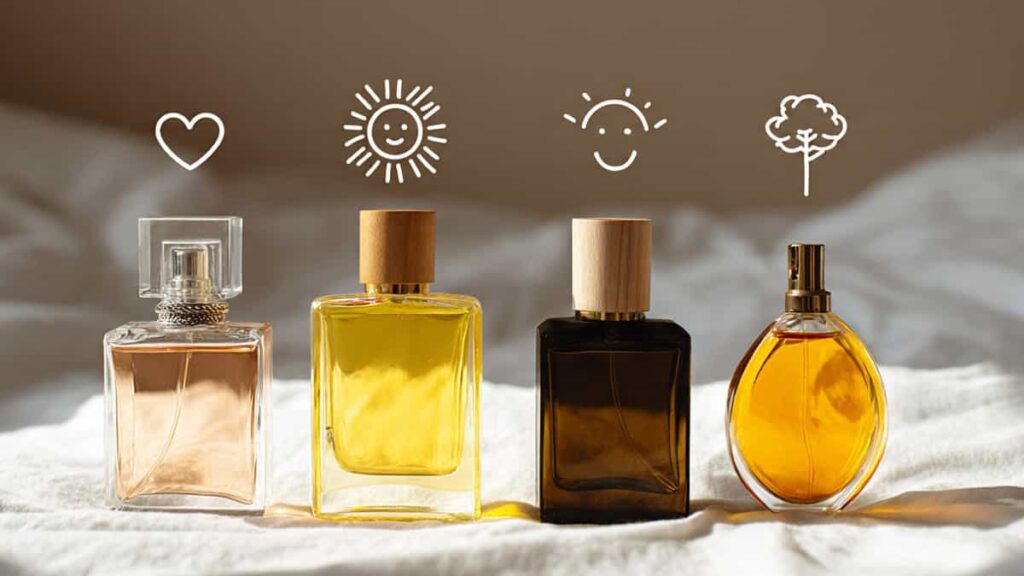
Your regular fragrance choice becomes part of your personality type signature —a consistent cue that others learn to associate with who you are.
Light vs Strong Scents: What They Communicate
One of the most immediate judgments people make is based on the intensity of your fragrance.
| Scent Intensity | What It Communicates | Best For |
|---|---|---|
| Light (barely noticeable) | Thoughtfulness, respect for others’ space, quiet confidence | Office, close conversations, daytime |
| Moderate (present but not overwhelming) | Balance, social awareness, reliability | Most social settings, dates, group events |
| Strong (enters a room before you do) | Boldness, high extraversion, desire for attention | Nightlife, parties, confident extroverts |
A very strong scent can signal dominance or high extraversion. That can be powerful in the right setting, but it risks overwhelming others in tight spaces. A very light scent, on the other hand, suggests reserved warmth—someone who wants to be noticed only when up close. Neither is “better”; it’s about matching intensity to your natural social style and the situation.
Why the Brain Links Smell to Personality Traits
This isn’t random. Your brain’s olfactory system is directly connected to the amygdala and hippocampus—regions tied to emotion and memory. That’s why a single whiff can trigger a vivid memory or a gut feeling about someone.
Psychologists call this scent-personality attribution. Without realizing it, people associate certain smell categories with known personality stereotypes. For instance:
- Clean, soapy scents → conscientious, organized, reliable
- Spicy, complex scents → creative, open-minded, intellectually curious
- Simple, single-note scents → straightforward, honest, no-nonsense
These associations are learned through culture, media, and personal experience—and they vary by region. For example, a “clean” scent in one country might mean fresh laundry, while in another it could mean a specific flower. Likewise, “spicy” can signal warmth in some cultures and aggression in others. But within a given social environment, the signals are surprisingly consistent.
Attractive vs Trustworthy: The Scent Divide
Here’s a fascinating split: the scent that makes you seem more attractive is not always the scent that makes you seem more trustworthy.
Research in consumer psychology finds that:
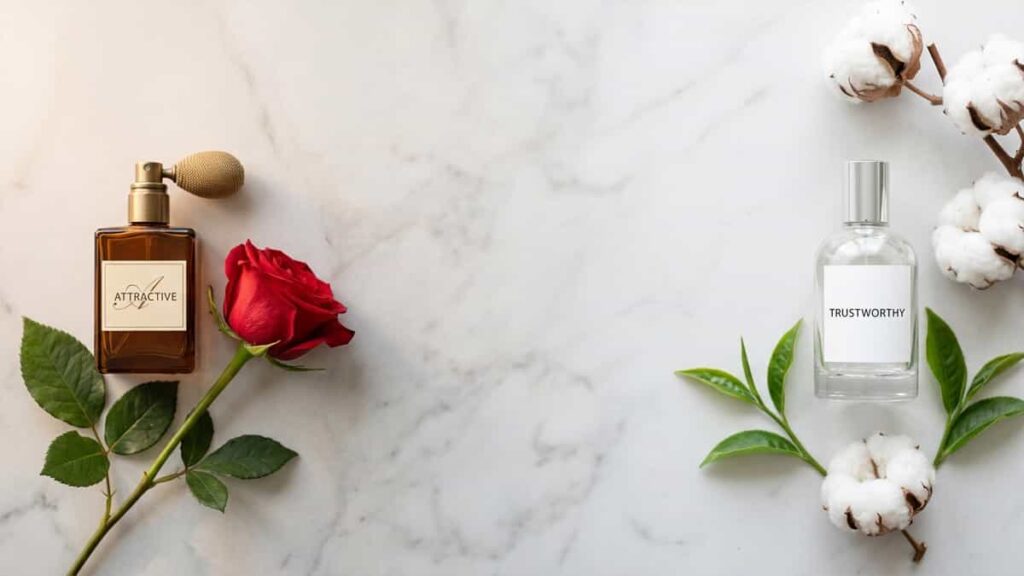
If you’re going on a first date, you might prioritize attractiveness. If you’re meeting a new client or your partner’s parents, trustworthiness may serve you better. The smartest fragrance users own different scents for different goals—not because they’re being fake, but because they understand why people behave differently in different social contexts .
You May Also Like
Why People Behave Differently in Different Social Contexts
Common Fragrance Mistakes That Hurt Your Image
Even a great perfume can backfire. Avoid these common errors that send the wrong signal:
Over-spraying – Two sprays too many can shift “confident” into “unaware of social boundaries.” Less is often more.
Wearing a “challenging” scent to work – Heavy oud, intense leather, or overly sweet gourmands can distract or annoy colleagues. Save bold scents for personal time.
Using the same fragrance for every situation – A date night scent rarely works for a job interview. Context matters.
Letting your scent fade completely – An old, barely-there fragrance can signal that you don’t pay attention to details. Reapply lightly if you’ll be out for many hours.
Copying someone else’s signature scent – What smells amazing on your friend may clash with your own natural chemistry and personality. Your scent should fit you.
Wanting to impress can backfire—much like how social pressure leads people to make choices that don’t fit the situation.
Can You “Fake” a Personality Through Scent?
Yes and no. You can absolutely choose a fragrance that projects traits you want to be seen as—more confident, more creative, more approachable. This is not deception; it’s social intelligence. We all adjust our clothing, words, and body language depending on the situation. Scent is just another tool.
However, there’s a limit. A bold, intense scent (a physical signal) combined with timid, hesitant body language (a behavioral signal) creates what psychologists call cognitive dissonance in the observer. People may sense that something is “off” without knowing why. That’s because scent works best when it amplifies your genuine tendencies, not when it directly contradicts them.
As one study put it: scent is a signal, not a mask. For a deeper look at why our minds sometimes make irrational choices like this, see why we make irrational decisions —including wearing scents that don’t fit us.
Aligning Your Fragrance With Your True Identity
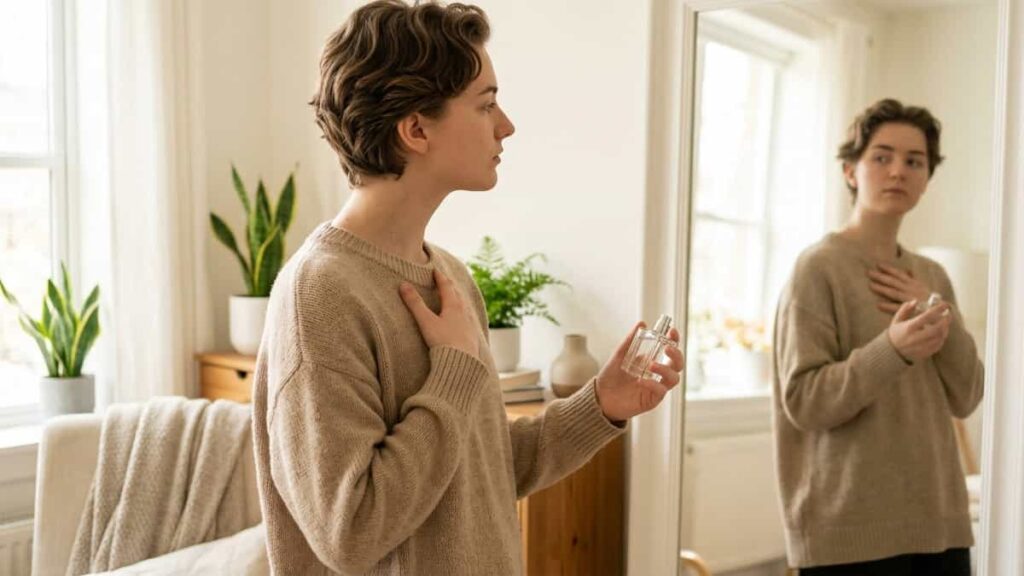
The most powerful fragrance choice is one that feels like an extension of you. Start by asking:
- How do I want people to feel around me? (Comfortable? Energized? Curious?)
- What are my core personality traits? (Are you naturally calm or high-energy? Traditional or unconventional?)
- What settings do I spend the most time in? (Office? Social events? Intimate gatherings?)
EXPERT TIP
- Wear a new perfume sample for a full 8-hour day before committing to it. Fragrances evolve across top, heart, and base notes, and they interact differently with your skin chemistry over time.
Then, test scents that match those answers. Don’t rush. Wear a sample for a full day. Notice how it makes you feel—because if you don’t feel like yourself, others will sense the disconnect.
Your fragrance should say, “This is me,” not “This is who I wish I were.” Authenticity always leaves a better lasting impression than performance.
Final Insight: Your Scent Enters the Room Before You Do
Long before you speak, before anyone sees your expression or hears your laugh, your scent has already arrived. It has already started shaping opinions, sparking feelings, and planting assumptions. That’s not something to fear—it’s something to use wisely.
Choose your fragrance with the same care you choose your words. Because in the silent language of scent, you are always saying something.
Frequently Asked Questions About Scent Psychology
How fast do people make a judgment based on scent?
Research suggests people form an initial impression based on scent within the first 3 seconds of an interaction, completely below conscious awareness.
Which perfume notes project trustworthiness?
Fresh, clean, and familiar scent profiles such as green tea, light citrus, and fresh cotton are most associated with reliability and trust.
Can wearing the wrong perfume create a bad first impression?
Yes, over-applying or wearing an intensely heavy, aggressive fragrance in professional or close-quarter settings can project a lack of social boundary awareness.
Should I use one signature scent or alternate?
Alternating scents based on context (work, dates, casual outings) allows you to align your psychological signaling with your specific goals for each environment.
Disclaimer: This article is for informational and educational purposes only. The psychological and social concepts discussed are based on general research and everyday observations. They are not intended to diagnose, treat, or replace professional guidance of any kind. Individual experiences may vary. Always use your own judgment when interpreting how personality and scent relate to your personal image.
Related Articles

Sponsored


You May Also Like

Why Do I Overthink Everything? (And How to Finally Calm Your…

The Minimalist Polish: How the “Put-Together” Ae…

Why Procrastination Is Not Just Laziness

The Behavioral Blueprint for Altering Long-Term Family Perce…

RPG Games and Identity Psychology – Why Role-Playing Games F…
