Coding the Visual Cue: The Psychological Subtext of First-Date Attire
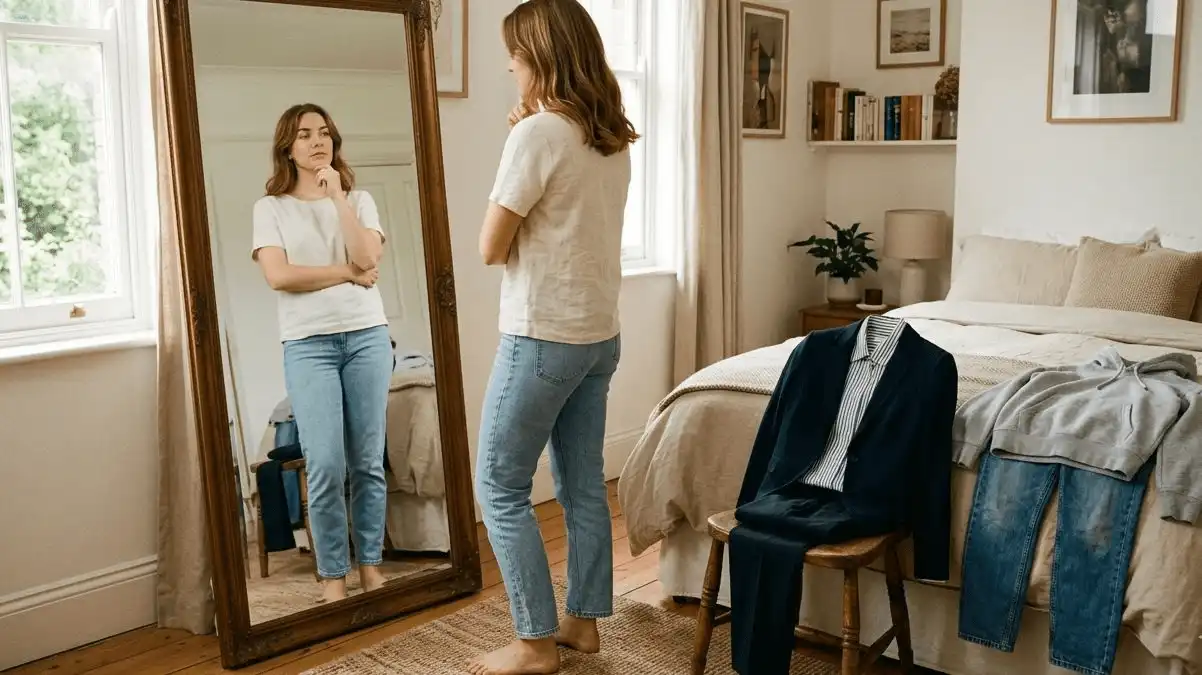
A person standing in front of a mirror, choosing between two outfits — one casual, one more polished — representing the effort vs comfort decision.

Why Clothing Matters on Dates On a first date, your outfit is not just fabric. It is a message. Before you say a word, before you smile, before you pull out a chair, your clothing has already communicated effort level, self‑respect, social awareness, and emotional availability. The person across from you decodes these signals automatically … Read more


Commuter Claustrophobia: Managing the Silent Status Battles of Crowded Platforms

Extremely crowded metro platform at rush hour, train arriving, passengers standing near doors, one person standing calmly to the side with open posture.

Why Crowded Platforms Trigger Anxiety A metro platform at rush hour is a pressure cooker. Hundreds of people stand shoulder to shoulder, waiting for a train that may already be packed. The air is warm. The noise echoes. And somewhere behind you, a crowd is pressing forward, ready to surge. This is commuter claustrophobia — … Read more

The Micro-Leakage Project: How Fidgeting and Self-Soothing Gestures Tank Trust

A person in an interview setting, hands resting calmly on the table, no fidgeting, with a relaxed but focused expression.

What Are Displacement Behaviors? Displacement behaviors are small, repetitive, often unconscious movements that occur when the brain is experiencing internal conflict, stress, or cognitive load. These are the micro‑leakages — neck touching, hair twirling, ring adjusting, lint picking, foot tapping, and the endless adjusting of cuffs or collars. In high‑stakes settings like job interviews, these … Read more

Decoding the Dominance Matrix: How Verticality and Posture Signal Executive Presence

A professional sitting upright in an office chair with shoulders back, arms relaxed, and engaged eye contact, signaling confidence

Why Posture Shapes First Impressions Before a single word is spoken, your posture has already announced your place in the hierarchy. The human brain is exquisitely tuned to read verticality, openness, and stability in others. These cues are processed in milliseconds and directly inform judgments of competence, authority, and trustworthiness. In high-pressure environments like job … Read more

Active Listening Anatomy: How Your Subconscious Conversational Cues Signal High Value

Two people sitting on a park bench, one speaking animatedly, the other leaning in with a slight head nod and warm expression, listening intently.

What Active Listening Actually Means Active listening is not “waiting for your turn to speak.” It is a distinct psychological state where your attention is fully directed toward understanding the other person — not preparing a response, not evaluating, not judging. Most people think they are good listeners. Almost no one is. True active listening … Read more

Gaze Architecture: The Fine Line Between Threat and Intimacy in Eye Contact

Two people sitting close together, making soft eye contact with genuine smiles, warm lighting, representing comfortable romantic gaze. Image Title: Gaze Architecture – The Fine Line Between Threat and Intimacy in Eye Contact Caption: Soft, mutual, broken by comfort breaks. The right gaze invites connection. The wrong gaze triggers threat.

Why Eye Contact Feels Powerful Eye contact is the most direct form of human connection — and the most easily misinterpreted. When someone holds your gaze, your brain releases a cascade of neurochemicals. Oxytocin (bonding) and phenylethylamine (excitement) can create feelings of intimacy and attraction. But stare too long, and the same gaze triggers cortisol … Read more

The Vulnerability Paradox: Why “Flawless” Behavior Kills Long-Term Attraction

Two people sitting on a couch, one laughing slightly after spilling a drink, the other smiling warmly — representing a small, endearing mistake.

Why Perfection Feels Unnatural A flawless first date is not romantic. It is terrifying. When someone appears too perfect — no awkwardness, no self-doubt, no minor mistakes — your brain does not think “ideal partner.” It thinks “threat.” Perfection signals impenetrability. And impenetrability signals: “You cannot reach me. You cannot matter to me. You are … Read more

Conversational Velocity: The Psychology of Speech Rate and Pause Length in Hiring Decisions

A job candidate sitting across from an interviewer, pausing thoughtfully before answering, hands resting calmly, expression focused.

Why Speech Speed Changes Perception Your voice carries data that words alone cannot communicate. Among the most powerful of these paralinguistic cues is conversational velocity — the rate at which you speak and, more critically, where you place your pauses. In hiring decisions, speech speed and pause length directly influence perceptions of intelligence, honesty, and … Read more

The Minimalist Polish: How the “Put-Together” Aesthetic Signals Low Effort, High Status

A person in neutral, well‑fitted clothing — beige coat, white shirt, simple watch — standing calmly in a bright, minimal room.

What Is the Minimalist Aesthetic? Minimalist polish is not about expense. It is about intentional simplicity. Clean lines, neutral colors, perfect fit, and zero clutter — whether in clothing, grooming, or surroundings. The brain reads minimalist polish as: “I have nothing to prove. I have already arrived.” This is the opposite of loud luxury (logos, … Read more

The Micro-Flaws We Miss: The Psychology of Nails, Hairlines, and Shoes in Social Judgment

Close-up of a person’s hands with clean nails and polished shoes visible, representing attention to micro-grooming details.

Why Humans Scan Tiny Details Your brain is a detail detective. While you focus on the conversation, your unconscious mind is scanning nails, hairlines, teeth, and shoes — cataloging micro‑flaws that may contradict the polished overall impression. This is not pettiness. It is verification. The brain encounters a well‑dressed, attractive person and asks: “Is this … Read more