The Deception of Dress: How to Ethically Weaponize Your Wardrobe for Job Interviews and Negotiations

A confident professional in a well-fitted blazer sitting across a table from another person, both engaged in a serious but respectful conversation.

Why Appearance Influences Trust Trust is the currency of interviews and negotiations. And trust is not purely logical — it is visual. Within milliseconds of seeing you, the other party’s brain has already made a preliminary trust calculation. Clothing is a primary input. Not because people are shallow, but because brains need shortcuts. When time … Read more


The Trust Spectrum: How Blue and Earth Tones Lower Social Defenses

A person wearing a soft blue sweater and another wearing an olive jacket, sitting in a warm, comfortable room, having a calm conversation.

Why Soft Colors Feel Safer Not all authority is built on intimidation. Some authority is built on trust. Blue and earth tones (brown, beige, olive, terracotta) operate below the brain’s threat detection threshold. Unlike black which says “stop,” or red which says “look at me,” blue and earth tones whisper: “You are safe here.” This … Read more

Cultural Lenses: How Modern vs. Traditional Style Alters Social Judgment Across the Globe

Two people in different cultural attire — one traditional, one modern — standing side by side in a global city street.

Why Culture Shapes Fashion Perception Clothing does not carry fixed meaning. Meaning is assigned by culture. A white dress signals weddings in Western cultures but funerals in parts of Asia. A beard signals religious devotion in some societies and rebellion in others. The same outfit that earns respect in Milan may earn suspicion in Mumbai. … Read more

The Power Matrix: Why Black and Navy Command Authority (And the Science of When to Wear Them)

Two professionals — one wearing a black suit, one wearing a navy suit — standing in a corporate hallway, conveying different types of authority.

Why Dark Colors Feel Powerful Dark colors are not neutral. They are psychological weapons. Your brain associates darkness with depth, seriousness, and control. Unlike bright colors that scatter attention, black and navy concentrate it. When someone wears these colors, the eye has nowhere to rest except the face and posture — exactly where authority resides. … Read more

The Non-Conformity Paradox: Why Dressing Slightly Different Can Actually Boost Your Authority

A person in a professional setting wearing a slightly different outfit than others — standing out confidently but not extremely.

Why Standing Out Attracts Attention Conformity signals safety. Non-conformity signals confidence — but only up to a point. The human brain pays more attention to deviation from the norm because deviation could indicate threat, opportunity, or leadership. In a group of ten people wearing navy suits, the one person wearing a charcoal suit with a … Read more

The Status Signal: How Clothing Triggers Instant Assumptions About Wealth and Class

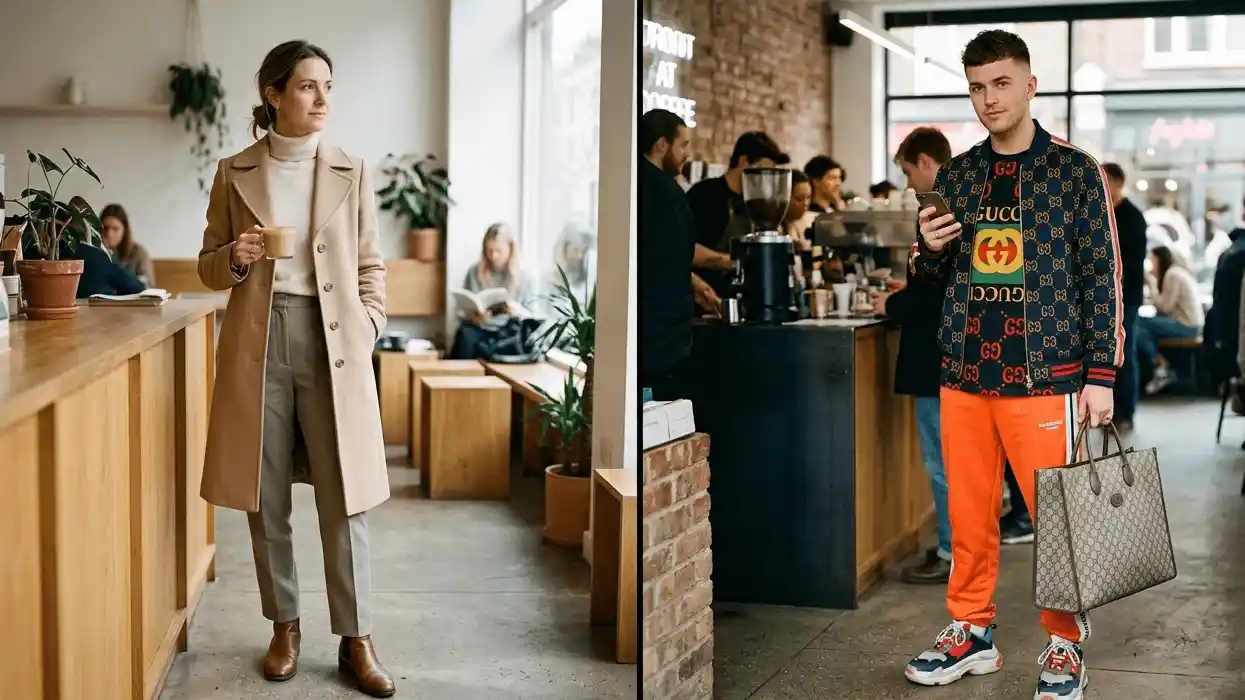
Two people in different styles of clothing — one in quiet luxury, one in loud branding — representing status signals.

Why Clothing Signals Social Status Humans have used clothing as a status marker for over 5,000 years. In ancient Rome, purple robes were legally reserved for emperors. In medieval Europe, sumptuary laws dictated which fabrics commoners could wear. Today, no laws exist — but the psychology remains identical. Your brain is wired to detect resource … Read more

The “Halo Effect” in Fashion: Why Your Outfit Decides the First 7 Seconds of an Encounter

A well-dressed person entering a room, capturing the first 7 seconds of attention and judgment.

Why Humans Judge Clothing Instantly The human brain requires approximately seven seconds to form a first impression. Within that window, clothing accounts for more than half of the judgment. This isn’t superficial. It’s survival wiring. Your visual cortex processes clothing faster than facial expressions because fabric patterns, fit, and color carry evolutionary signals — safety, … Read more

Office Politics & Hidden Insecurities

Two coworkers having a calm, respectful conversation in a bright modern office

What Projection Looks Like at Work You’re in a team meeting. You suggest an idea. A colleague immediately says, “You’re just trying to make the rest of us look bad.” You weren’t. You were just sharing an idea. But their reaction tells you something: they feel insecure about their own performance. Instead of sitting with … Read more

Interdependent Friction: Managing Social Status and Autonomy in a Joint Family Matrix

A multi‑generational family sitting together in a living room, one younger adult speaking calmly while elders listen, warm and respectful atmosphere.

The Psychology of Multi‑Generational Living A joint family is not a collection of individuals. It is a living system — an interdependent matrix where every action triggers a reaction, every mood influences the group, and every member occupies a specific rung on an invisible ladder. In this system, social status is not earned through career … Read more