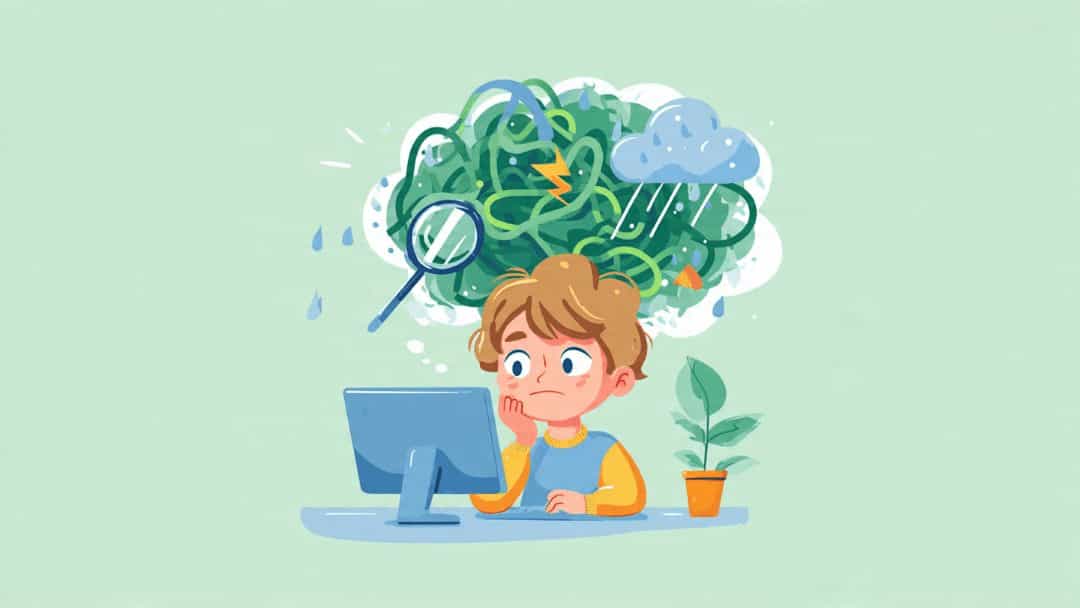
We all have inner voices and repetitive thoughts. Sometimes they lift us up, other times they drag us down. But how do you know when your everyday thinking habits have crossed a line into something more harmful? The signs are often subtle — a small shift in how you talk to yourself, how you explain setbacks, or how you predict the future.
Learning to recognize these patterns early can help you step back, breathe, and choose a kinder, more accurate way of thinking. Below are common signs that your thinking patterns may be turning against you — written in plain, everyday language.
KEY TAKEAWAYS
- Harmful thinking patterns often start subtly through inner dialogue, predictions, and self-blame.
- Recognizing cognitive distortions like all-or-nothing thinking or future-tripping is the first step toward change.
- Habits of thought can be rewired using gentle self-compassion, evidence-checking, and intentional awareness.
You Constantly Expect the Worst Outcome
Do you find yourself thinking, “Something will definitely go wrong,” before a meeting, a trip, or even a casual conversation? This habit — often called “future-tripping” — makes you live in a constant state of alert. While being prepared is good, always assuming the worst exhausts your energy and spoils today’s peace.
Example: Your friend hasn’t replied to a text for two hours, and you immediately think they’re angry with you.
You Dismiss Your Wins as “Luck”
When someone praises you, do you say, “Oh, it was nothing,” or “Anyone could have done it”? Downplaying your own successes is a sign that your inner voice has become overly critical. Over time, this pattern can make you feel like an imposter in your own life.
You See Things Only in Black or White
Harmful thinking often removes all the gray areas. You might tell yourself: “I’m either a total success or a complete failure,” or “If I’m not perfect, I’m useless.” This all-or-nothing pattern leaves no room for the reality that most of life lives in the middle — where learning, growth, and self-compassion happen.
You Overthink Small Remarks for Days
A casual comment from a coworker or a friend’s offhand joke — and you replay it for 72 hours, searching for hidden meaning. Overthinking (or rumination) is a strong sign that your mind is stuck in a loop. Instead of helping you solve problems, it just drains your mental battery.
You May Also Like
Perception Psychology: How the Brain Constructs Reality
You Blame Yourself for Everything
Does your inner voice immediately say “my fault” when something goes wrong — even events you had no control over? A harmful thinking pattern often exaggerates your responsibility. You become the main character in every disaster story, even when you’re just an extra.
Example: It rains on a picnic you planned, and you think, “I should have checked the forecast better” — as if you could control the weather.
You Feel Stuck Replaying Past Events
Thinking about the past can be useful for learning. But harmful patterns keep you trapped in past moments — replaying mistakes, old arguments, or regrets as if they’re happening right now. This steals your ability to be present and blocks you from making new choices.
You Compare Yourself Unfairly to Others
A little comparison is natural. But when you constantly measure your behind‑the‑scenes reality against someone else’s highlight reel, your thinking has become harmful. You might tell yourself: “Everyone else has it together except me,” or “I’ll never be as good as them.”
Recommended
Big Five Personality Traits (OCEAN Model)
You Struggle to Accept Compliments
When someone says something kind about you, do you feel uncomfortable or immediately deflect? “This shirt? Oh, it’s old.” “That project? I just got lucky.” Difficulty accepting warm feedback is a quiet sign that your thinking pattern has learned to reject evidence of your own worth.
What You Can Do Next (Gently)
Recognizing these signs is already a huge step. Here are a few gentle shifts you can try:
ACTIONABLE STEPS
- Name the pattern without judging yourself. (“Ah, there’s that black‑and‑white thinking again.”)
- Ask for evidence — “What’s one fact that my worry might be missing?”
- Talk to someone you trust or write down your thoughts to see them more clearly.
- Learn about balanced ways to understand your mind from resources like the PERMA Model for Well‑Being.
Remember: harmful thinking patterns are just habits — and habits can be rewired, one small choice at a time.
FAQs
What are harmful thinking patterns?
Harmful thinking patterns (often called cognitive distortions) are repetitive, biased ways of thinking that distort reality, increase anxiety, and negatively impact self-esteem.
Can harmful thinking patterns be changed?
Yes. Because thinking patterns are cognitive habits, they can be rewired over time using techniques like mindfulness, Cognitive Behavioral Therapy (CBT), and self-compassion practices.
When should I seek professional help for overthinking?
If your repetitive thoughts lead to constant distress, disrupt your sleep, affect your work, or strain your personal relationships, reaching out to a licensed mental health professional is highly recommended.
Disclaimer: This article is for informational purposes only and does not constitute professional advice. If you find that your thinking patterns are seriously affecting your daily life, relationships, or well‑being, please reach out to a qualified professional for support. You are not alone, and help is available.
Related Articles



Sponsored


You May Also Like

Behavioral Psychology: Understanding Why We Act the Way We D…

Loneliness Isn’t a Personal Failure — It’s a Community Gap

The Civic Contract: The Psychology of Hyper-Awareness in Dar…

Why Our Closest Relations Misread Our Micro-Behaviors

How Football Trains the Brain for Split-Second Decisions: Th…