What the Propinquity Effect Really Means
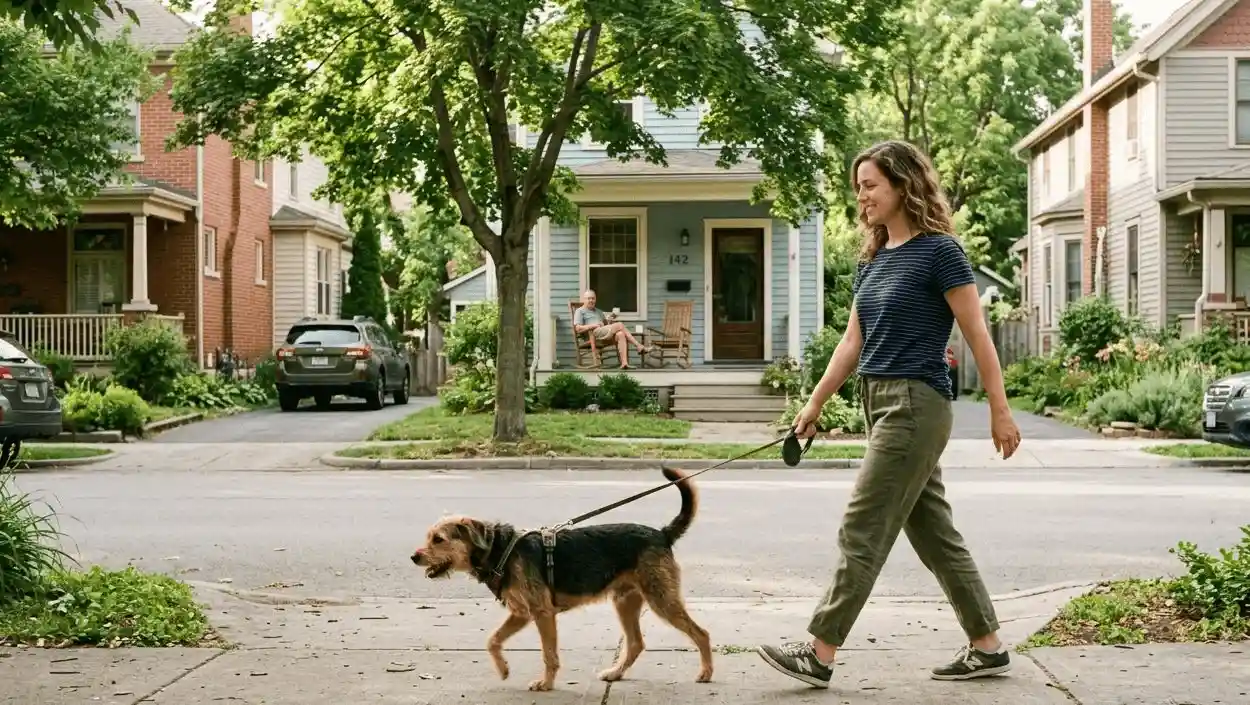
Propinquity — physical or psychological proximity — is one of the most powerful forces in social psychology. The mere exposure effect, first documented by Robert Zajonc, shows that repeated, passive exposure to a stimulus increases liking for it. In neighborhoods, this means that every time a neighbor sees you walking your dog, bringing in groceries, or leaving for work, they are forming an impression — whether you interact or not.
The propinquity effect operates below conscious awareness. Your neighbor does not think, “I have seen her ten times, therefore I trust her.” They simply feel more comfortable around you. That comfort becomes the foundation of neighborhood trust.
Conversely, negative propinquity also accumulates. If your glimpses are consistently associated with loud arguments, neglected property, or aggressive body language, the repeated exposure builds distrust — even without a single conversation.
Why Familiar Faces Feel Safer
The brain is a pattern‑recognition machine. Familiar faces require less cognitive processing than unfamiliar ones. Less processing feels easier. Easier feels safer. Safer feels trustworthy.
This is why neighborhoods with low turnover feel cohesive. Long‑term residents have seen each other thousands of times. Their brains have filed each other under “safe.” New residents must earn that safety through repeated positive glimpses.
| Propinquity Signal | Observer Brain Response | Trust Accumulation |
|---|---|---|
| Regular wave or nod | Familiarity + positive association | High |
| Consistent routine (same time, same walk) | Predictability, no surprises | Medium‑High |
| Neutral presence (seen but ignored) | Baseline familiarity, low threat | Medium |
| Erratic schedule, sudden changes | Unpredictability, mild alert | Low |
| Negative glimpses (angry phone calls, slammed doors) | Familiarity + negative association | Negative |
| No visibility (always inside, curtains drawn) | Mystery, unknown risk | Very Low |
The Psychology of Passive Observation
Passive observation is what neighbors do when they are not actively interacting — looking out a window, gardening, checking mail. During these moments, the brain is still gathering data.
WHAT PASSIVE OBSERVATION CAPTURES
- Consistency — Do you leave at the same time? Return at the same time?
- Emotional baseline — Do you look relaxed or tense? Smiling or scowling?
- Social connections — Who visits you? Do you interact with others?
- Territorial behavior — Do you maintain your property? Respect shared space?
You cannot control whether neighbors observe you. You can only control what they see. The propinquity effect means that every passive glimpse is a vote in your neighborhood reputation.
How Daily Routines Build Reputation
Your daily routines are public performances, even when you think you are “off‑stage.” Walking to the car, bringing in trash bins, sitting on the porch — these are all observable behaviors that accumulate into a reputation.
UPSIDES
- ✓ Consistent timing — Leaves for work at 8:00 AM, returns at 6:00 PM. Predictable.
- ✓ Calm demeanor — No visible stress, no phone shouting, no aggressive gestures.
- ✓ Brief greetings — A nod or wave to neighbors seen during the routine.
- ✓ Respect for shared space — Parking within lines, not blocking sidewalks.
DOWNSIDES
- ✕ Erratic timing — Coming and going at random hours (signals instability)
- ✕ Visible stress — Slamming car doors, agitated phone conversations
- ✕ Avoidance — Looking away or crossing the street to avoid neighbors
- ✕ Entitled behavior — Taking two parking spaces, letting dogs bark
Repeated Exposure and Social Comfort
Social comfort is the feeling that you can be yourself without being judged or threatened. In neighborhoods, social comfort is built through repeated exposure to positive or neutral cues.
THE EXPOSURE FORMULA
- Positive exposure (wave, nod, brief chat) → High comfort → Trust
- Neutral exposure (seen but not acknowledged) → Baseline comfort → Low trust
- Negative exposure (arguments, neglect, aggression) → Discomfort → Distrust
- No exposure (never seen) → Uncertainty → Low trust (stranger danger)
Many people mistake “no exposure” for privacy. But in neighborhood psychology, invisibility is not neutral. It signals that you are not part of the community — which can lead to suspicion.
Why Strange Behavior Gets Remembered
The brain prioritizes unusual events. A neighbor who is normally calm but suddenly screams will be remembered for weeks. A neighbor who is normally absent but suddenly appears at midnight will be noted.
This is the novelty bias: unusual behavior is encoded more deeply than routine behavior. One strange incident can override months of positive propinquity.
PROTECT YOUR NEIGHBORHOOD REPUTATION
- Avoid public emotional outbursts (even on the phone)
- Do not change routines abruptly without explanation (if possible)
- If you must behave unusually (e.g., moving furniture late at night), acknowledge it briefly to neighbors
A simple “Sorry for the noise — moving a couch” resets the narrative. Without acknowledgment, neighbors fill in their own stories — usually negative.
Neighborhood Trust Without Conversation
Most neighborhood trust is built without a single conversation. It is built through propinquity — repeated, passive, positive glimpses.
HOW TO BUILD TRUST WITHOUT TALKING
- ✓ Be visible at predictable times (walking, gardening, checking mail)
- ✓ Maintain a calm, neutral facial expression (not scowling, not overly smiling)
- ✓ Perform small courtesies (holding the gate, moving your bin promptly)
- ✓ Keep your property visible and maintained (signals self‑respect)
You do not need to be friends with your neighbors. You only need to be a predictable, safe presence. Propinquity does the rest.
Final Thoughts
The propinquity effect means that your neighbors are always watching — not in a creepy way, but in a passive, unconscious way. Every glance out a window, every walk to the car, every interaction with your property is a data point.
You cannot stop the observation. But you can shape what is observed. Be predictable. Be calm. Be visible. Let the repeated glimpses build trust, brick by invisible brick.
Your neighborhood reputation is not built in conversations. It is built in glimpses. Make each one count.