Personality Types — Why People Think, Feel, and Act So Differently
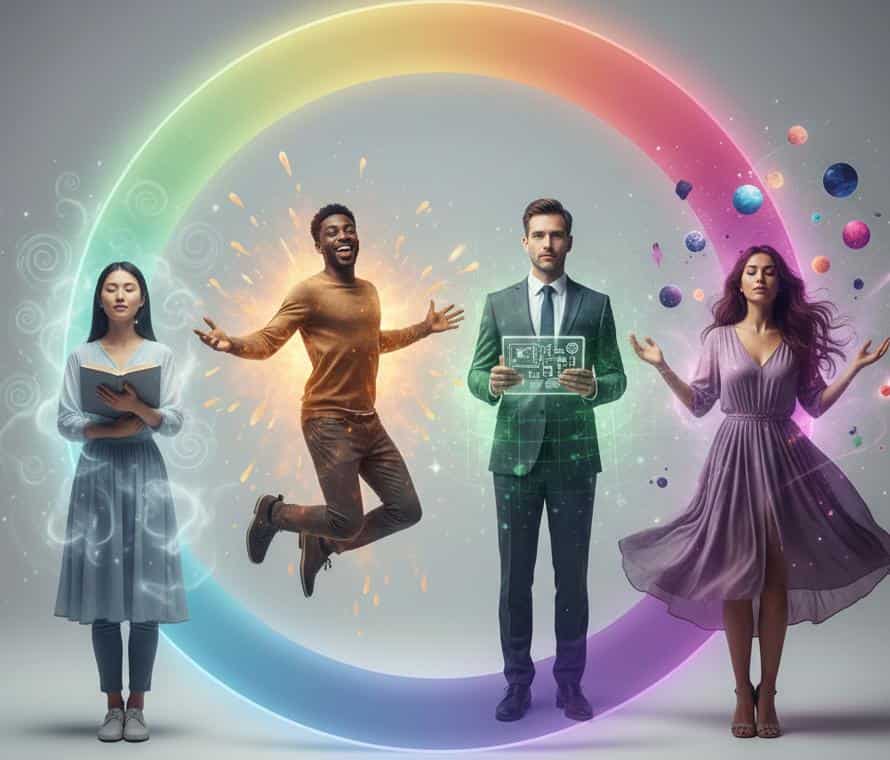
Four diverse figures standing side-by-side, each surrounded by a different colored aura and symbol: A woman in teal with a lotus symbol (Serenity/Calm). A man in brown with a flame symbol (Passion/Energy). A woman in a business suit with a gear/circuit symbol (Logic/Structure). A man in a mystic robe with an all-seeing eye symbol (Intuition/Vision).

Why do some people thrive in a crowd while others recharge in quiet corners? Why do deadlines energize some and overwhelm others? From ancient astrologers charting the stars to modern apps predicting our online habits, humans have always sought to understand these patterns. Personality psychology turns curiosity into insight. It gives structure to the age-old … Read more

Behavioral Psychology: Understanding Why We Act the Way We Do

Learning from Outcomes: Reward, Action, and Consequence Flowchart

Ever wondered why you reach for your phone the moment you wake up, or crave dessert even when you’re full? Most of the time, our actions aren’t random — they’re learned. Behavioral psychology explores this simple but powerful idea: that much of what we do is shaped by experience, not just intention. This branch of … Read more

Decoding the Mind: A Beginner’s Guide to Abnormal Psychology

A person deep in thought gazes out of a rain-streaked cafe window, their body language suggesting introspection and mild melancholy. The interior has warm, soft lighting, and other patrons are blurred in the background, emphasizing the main person's isolation.

We casually use terms like depression, anxiety, or schizophrenia, but the science behind them is complex. Abnormal Psychology is the field that precisely defines when a “bad day” crosses the line into a clinical disorder. By learning the basics, we can replace fear and misunderstanding with empathy, knowledge, and support. This scientific field explores patterns … Read more

Technology & AI in Counselling and Education: Enhancing Human Connection, Not Replacing It

A smiling female counselor observes and guides three elementary school children in a modern classroom. One girl wears a VR headset, a boy interacts with a holographic anatomy display, and another girl uses a tablet, all surrounded by glowing digital interfaces and data screens.

Technology and artificial intelligence (AI) are transforming how we teach, learn, and care for mental health. In fact, the global mental health apps market is projected to reach over $10 billion by 2027, highlighting a massive shift toward digital support. Yet, the goal isn’t to replace human expertise — it’s to strengthen it. Think of … Read more

Dissociative Amnesia vs. Retrograde Amnesia: Understanding the Key Psychological Differences

Split-screen showing difference between Dissociative Amnesia and Retrograde Amnesia — one caused by trauma blocking memories, the other by brain injury erasing past memories.

Memory is a cornerstone of our identity. Yet, for some, it can become fragmented or lost entirely. Amnesia, a condition characterized by memory loss, manifests in various forms. Two such forms—Dissociative Amnesia and Retrograde Amnesia—are often misunderstood. While both involve memory impairment, their origins, manifestations, and treatments differ significantly. This article delves into these differences, … Read more

Recovered vs False Memory in Amnesia: The Shocking Truth About Your Mind

Stack of vintage black-and-white family photos on a wooden table representing distorted and reconstructed memories.

Recovered vs. false memory in amnesia explores the complex ways our minds remember—or misremember—past experiences. It examines whether memories retrieved after periods of amnesia, often during therapy, reflect actual events or are unintentionally constructed by the brain. This field highlights how trauma, suggestion, and the natural reconstructive process of memory can blend fact and fiction, … Read more

Perception Psychology: How Your Brain Constructs Reality

Split image: a man on the left focused on a computer spreadsheet; the same man on the right, distracted by his phone, pours water from a bottle into a coffee cup, causing a large spill.

Perception psychology is the scientific study of how our brain organizes, interprets, and makes sense of sensory information. It goes beyond simply registering stimuli—it explores how the brain actively transforms raw sensory input into a coherent, meaningful experience of the world. Your brain functions as a highly opinionated editor, constantly filtering, shaping, and guessing to … Read more

All 12 Jungian Archetypes: Which One Are You & Why It Matters

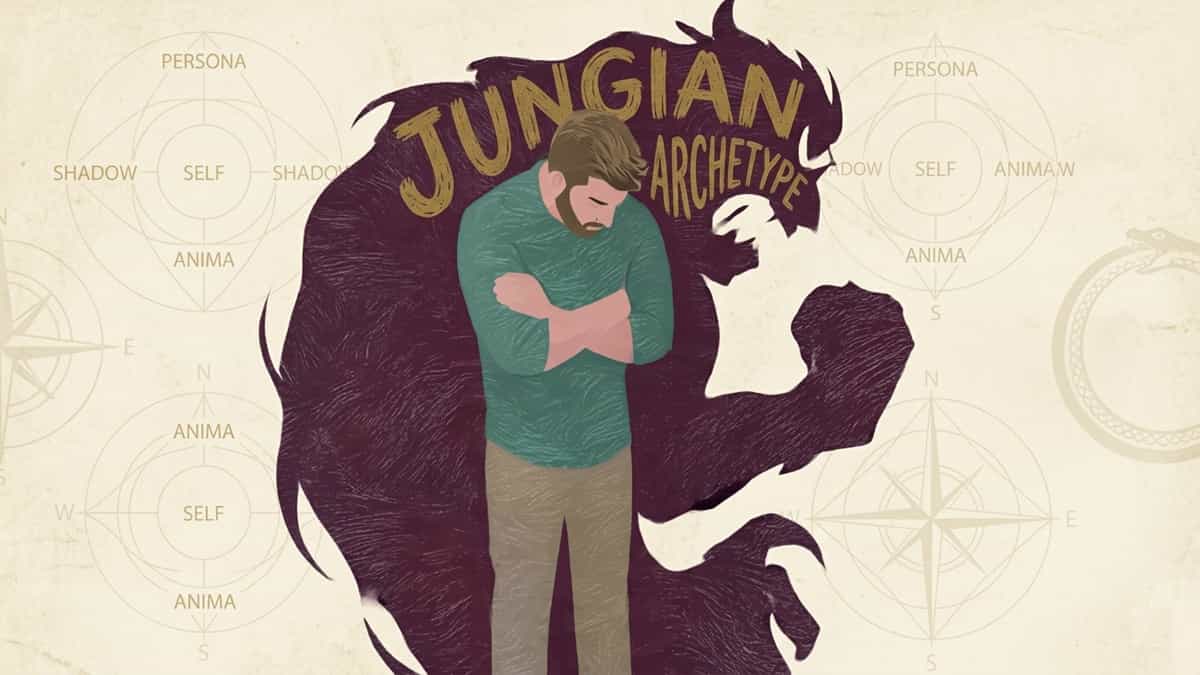
Illustration of a man with his arms crossed, casting a large, menacing, monster-like Shadow behind him, representing the repressed unconscious.

Carl Jung’s archetypes are universal patterns of thought and imagery that exist in what he called the collective unconscious—a shared, inherited layer of the human mind. Think of them as psychic blueprints for the roles, symbols, and stories that repeat across cultures and history. They aren’t literal images, but deep, inborn predispositions that shape how … Read more

Understanding Post-Traumatic Stress Disorder (PTSD): More Than Just “Bad Memories”

Illustration showing the brain's fear center (amygdala) and memory system (hippocampus) in relation to Post-Traumatic Stress Disorder (PTSD) or trauma.

Post-Traumatic Stress Disorder (PTSD) is a serious mental health condition that can develop after experiencing or witnessing a terrifying event. It’s not a sign of weakness—it’s the brain’s survival system stuck in overdrive. Normally, the body’s fight-or-flight response switches on briefly in danger, then calms down. In PTSD, that system gets “locked on,” causing intense, … Read more