
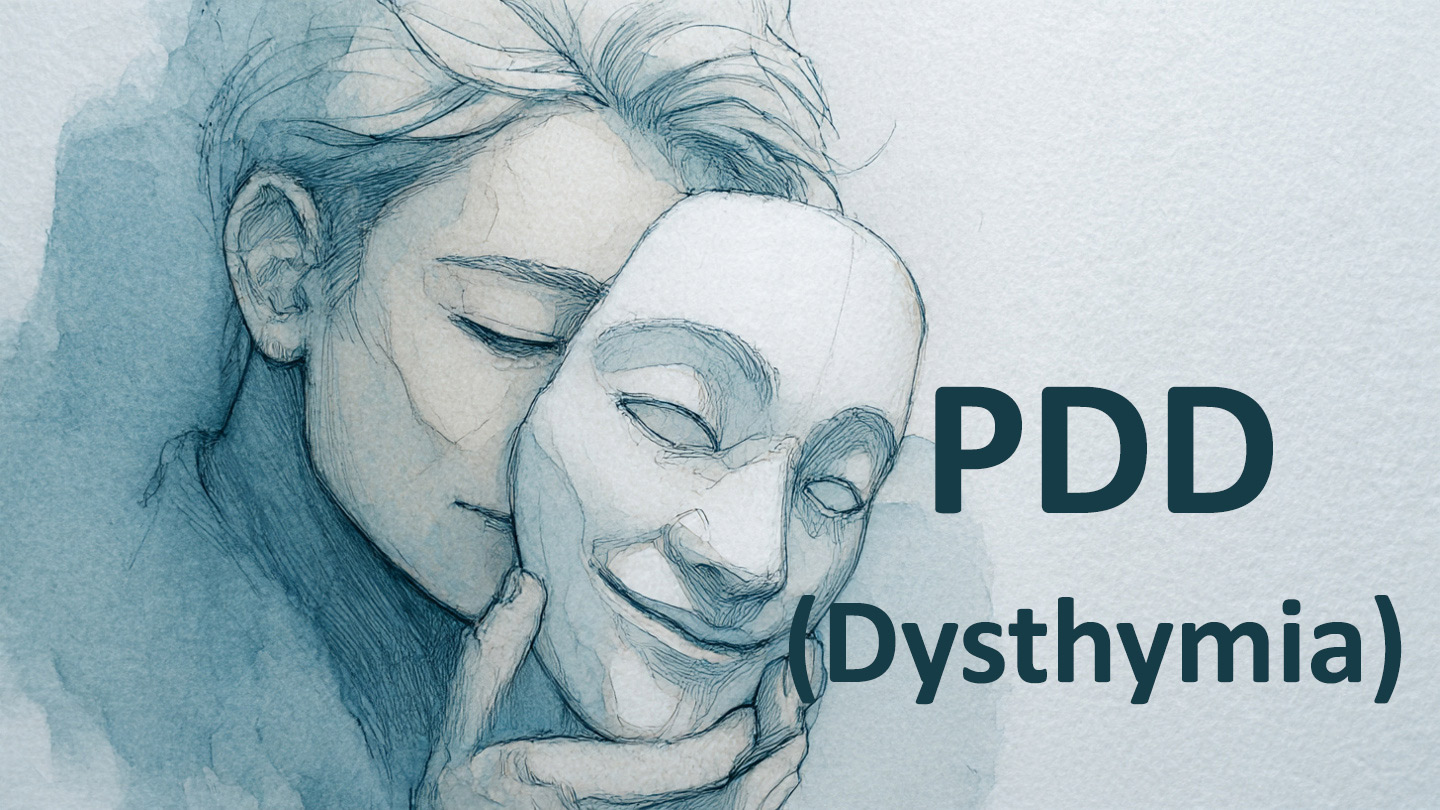
We all experience periods of sadness, but what happens when a low, gloomy mood becomes a constant, years-long companion? This is the reality for those living with Persistent Depressive Disorder (PDD), formerly known as Dysthymia.
“The so-called ‘psychotically depressed’ person who tries to kill herself doesn’t do so out of quote ‘hopelessness’… but because of the relentless, persistent, and unspeakable pain.”
– David Foster Wallace
It’s not just “being negative” or a personality flaw—it’s a legitimate and treatable chronic depressive condition. This guide will help you understand what PDD is, how to recognize its signs, and most importantly, how to find a path toward light and recovery.
KEY TAKEAWAYS
- PDD is a chronic, low-grade depression lasting 2+ years in adults and 1+ year in children/adolescents.
- Unlike episodic Major Depressive Disorder, PDD acts like a persistent, low-grade ‘gray filter’ over everyday life.
- A combination of psychotherapy and medication offers the most effective path to recovery.
What Is Persistent Depressive Disorder (PDD)?
Persistent Depressive Disorder is a chronic form of depression where a sad, low, or “empty” mood is present most of the day, for more days than not, for at least two years in adults (one year in children and adolescents). It’s like a gray filter has been placed over your life, muting joy and making everything feel like an effort. For a broader understanding of mood disorders, see our guide to different types of psychology.
Why It’s Called “Dysthymia”
The term “dysthymia” comes from Greek roots meaning “bad state of mind” or “ill humor.” While the official diagnostic term is now Persistent Depressive Disorder, “dysthymia” is still widely used to describe this specific, long-lasting form of depression.

How It Differs from Major Depression
While both are depressive disorders, the key difference lies in duration and intensity. Major Depression is often episodic, with intense, debilitating symptoms that can make daily functioning very difficult for a shorter period. In contrast, PDD (Dysthymia) is a chronic, low-grade depression. The symptoms are less severe but far more persistent. People with PDD often continue to function, but they feel they are never truly “living” or “happy.”
How Common Is PDD?
PDD is a relatively common condition, affecting approximately 1.5% of the adult population in the U.S. in any given year. It can begin in childhood, adolescence, or early adulthood, and it often has an insidious onset, making it hard to pinpoint when it started.
Signs & Symptoms of PDD
The symptoms of PDD are pervasive and can affect every aspect of a person’s life. Emotional symptoms include persistent feelings of sadness, hopelessness, emptiness, a loss of interest in activities once enjoyed, and irritability. Physical symptoms often manifest as low energy, fatigue, changes in appetite, and sleep disturbances like insomnia or hypersomnia. Cognitive symptoms involve poor concentration, indecisiveness, feelings of guilt or worthlessness, and a persistently negative outlook on life. This “slow-burning” nature is the signature feature, making the sadness feel like a fundamental part of one’s identity.
COMMON SYMPTOMS OF PDD
- ✓ Emotional: Chronic sadness, hopelessness, emptiness, and irritability
- ✓ Physical: Persistent low energy, fatigue, insomnia, or oversleeping
- ✓ Cognitive: Difficulty concentrating, indecisiveness, and low self-esteem

“Depression is the inability to construct a future.”
– Rollo May
Causes & Risk Factors
Like most mental health conditions, PDD is caused by a combination of factors. These include biological factors like brain chemistry imbalances, and psychological factors such as a history of other mental health conditions, including anxiety disorders, which can increase vulnerability. Family history and genetics play a role, and having a close relative with depression increases one’s risk. Chronic stress, trauma (which can be related to PTSD), and certain personality traits like high neuroticism can also be significant contributing factors.
You May Also Like
Exploring Genetic Factors in Depression: What You Need to Know
How PDD Affects Daily Life
The chronicity of PDD means it slowly erodes quality of life. At work, it can cause difficulty staying motivated and meeting deadlines. In relationships, irritability and low mood can strain connections with partners, family, and friends. Perhaps most profoundly, living with a constant negative self-view can deeply damage one’s sense of self-esteem and self-worth over time.
“The worst kind of sad is not being able to explain why.”
– Unknown
PDD vs. Normal Sadness
Everyone feels down sometimes. The difference with PDD is in its duration, which spans years rather than days; its pervasiveness, as it colors most aspects of life; and its impact on functioning, where even if you can “push through,” it remains a constant and draining struggle.
PDD vs. MDD (Major Depressive Disorder)
The key differences between PDD and MDD (Major Depressive Disorder) are intensity and chronicity. However, the two can—and often do—coexist in a condition known as “Double Depression.” This occurs when a person with the baseline of PDD experiences an episode of major depression on top of it. It’s like a heavy, dark cloud descending on an already gray sky. When the major depressive episode lifts, the individual typically returns to their baseline dysthymic state unless the PDD itself is treated.
UPSIDES
- ✓ Long-term chronicity (2+ years)
- ✓ Mild to moderate symptom intensity
- ✓ Often allows for basic daily functioning
- ✓ Acts as a continuous ‘baseline’ mood
DOWNSIDES
- ✕ Episodic duration (weeks or months)
- ✕ Severe, acute symptom intensity
- ✕ Significantly impairs daily functioning
- ✕ Occurs in distinct, heavy cycles

Diagnosis of PDD
A diagnosis is made by a mental health professional based on the DSM-5 criteria, which includes a depressed mood for most of the day, for at least two years, along with two or more additional symptoms. This is determined through a detailed clinical interview and is sometimes aided by standardized psychological tests like the PHQ-9.
Treatment Options for PDD
Because PDD is woven into the fabric of a person’s life, treatment often requires a multi-faceted approach.
1. Psychotherapy (Talk Therapy)
Therapy is a cornerstone of treatment. Effective modalities include Cognitive Behavioral Therapy (CBT) to change negative thought patterns, Interpersonal Therapy (IPT) to improve relationships, Psychodynamic Therapy to explore past conflicts, and Behavioral Activation to combat inertia by scheduling enjoyable activities. For a deeper look, our guide on types of therapy can be helpful.
2. Medications
Medications such as SSRIs, SNRIs, and other atypical antidepressants are commonly prescribed to help correct neurotransmitter imbalances in the brain.
3. Combination Therapy
Research consistently shows that a combination of psychotherapy and medication is often the most effective approach for chronic depression like PDD.
“The goal of therapy is not to rid the person of sadness, but to give them the capacity to bear it, to make room for it, and to use it in a way that is productive.”
– Andrew Solomon
Lifestyle & Self-Help Strategies
While not a substitute for professional treatment, these strategies are vital for management. Key areas include maintaining healthy sleep, diet, and exercise; building a consistent daily routine to create structure; journaling to process emotions; and actively pursuing social connection to fight the urge to isolate. Understanding the mind-body connection can be particularly helpful in managing PDD symptoms.
EXPERT MANAGEMENT TIPS
- Build Routine: Create small, daily routines to reduce decision fatigue and maintain structure.
- Prioritize Sleep & Exercise: Regular physical activity and consistent sleep improve baseline mood.
- Practice Social Connection: Resist the impulse to isolate by keeping small, low-pressure engagements.
Long-Term Prognosis
The prognosis for PDD is good with treatment, but recovery takes time and patience. It’s a process of slowly lifting the veil. Learning to manage symptoms and prevent relapse is a key part of achieving long-term success and stability. Exploring principles from positive psychology can provide valuable tools for building resilience and well-being.
“I can say that for me, the diagnosis felt like a relief. It gave me a framework, a path, and, most importantly, hope that I could feel better.”
– Anonymous
When to See a Mental Health Professional
If you relate to the symptoms described and they have persisted for a long time, it’s time to seek help. Key warning signs include a consistently low mood that impacts your work, relationships, or self-view; an inability to remember a time when you felt truly happy or at peace; and a reliance on unhealthy coping mechanisms to get by.
“Asking for help is not a sign of weakness; it is a sign of strength. It shows you have the courage to admit when you don’t know something and to learn something new.” – Barack Obama
The first session with a therapist is typically an assessment where they will listen to your story and work with you to create a path forward. Taking that first step is an act of courage and self-compassion. Remember, the shadow of dysthymia can be lifted, and a brighter, more vibrant life is possible.
Note: This article is for educational purposes only and does not constitute professional clinical advice.
Related Articles


Sponsored


You May Also Like

The Deception of Dress: How to Ethically Weaponize Your Ward…

Social Hierarchies in Animals vs Humans: Same Patterns, Diff…

The Chameleon Premium: Behavioral Adaptation Without Losing …

Why Some Faces Look “Off” to the Brain

The “Nihilist Penguin” Effect: Why a Lonely Peng…
