Author: Ms. Shikha Sharma — Psychology Postgraduate
Have you ever wondered why movie popcorn tastes better in a theater? Or why a phone call feels clearer when you can see the person’s face on video? These everyday experiences aren’t coincidences—they’re vivid examples of your brain’s remarkable ability to perform multisensory integration.
We often think of our five senses—sight, sound, touch, taste, and smell—as separate channels. But the truth is far more fascinating: our brain constantly blends these senses to create a single, unified experience of reality.
This integration happens seamlessly, millions of times a day, without our conscious awareness. Understanding multisensory perception isn’t just academic curiosity—it impacts learning, communication, and even enjoyment of everyday life. From making food taste better to supporting children with learning differences, the applications are everywhere.
What is Multisensory Perception? The Brain’s Symphony
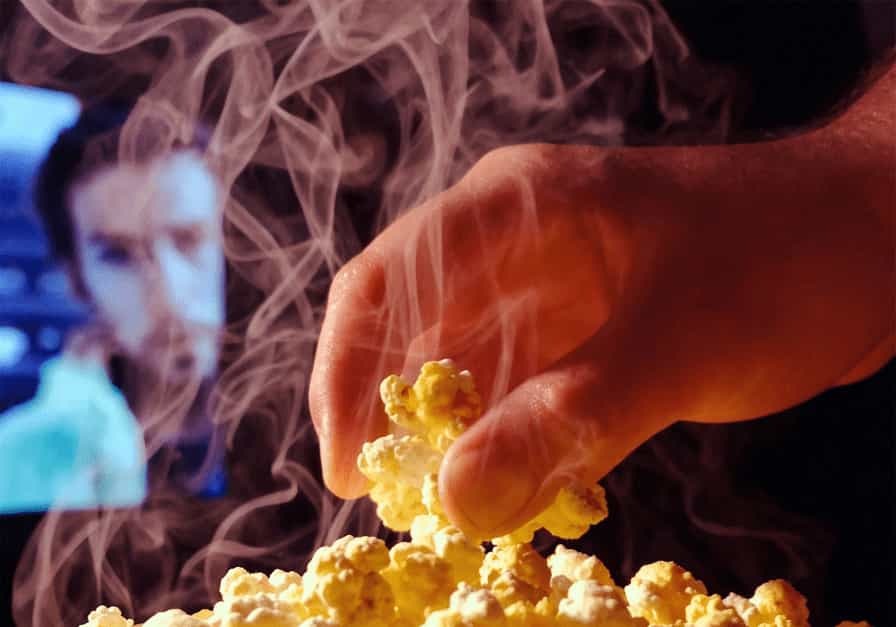
Multisensory perception studies how the brain combines information from different sensory modalities to form a coherent perception of the world. Rather than processing sight, sound, and touch separately, specialized neural networks integrate these signals—enhancing our ability to detect, recognize, and respond to our environment.
Think of it like an orchestra: each instrument (sense) can play alone, but the real magic happens when they play together under the conductor’s guidance (the brain). Integration creates experiences richer and more accurate than any single sense alone could provide.
The Principles of Multisensory Integration
Research from institutions like the Max Planck Institute and University of California, Berkeley highlights several principles guiding sensory integration:
- The Spatial Rule: Signals from the same location are more likely to be combined. You’re more likely to connect a voice with someone’s moving lips when they’re in sync.
- The Temporal Rule: Signals occurring at the same time are perceived as related. Ventriloquism works because your brain links the moving mouth with the simultaneous sound.
- The Inverse Effectiveness Principle: Weak information from one sense is greatly enhanced when paired with another. In a dark, noisy room, faint visual and auditory cues together improve perception more than either alone.
Real-World Magic: Where Multisensory Integration Shows Up

- The McGurk Effect: Seeing can override hearing. If a video shows someone saying “ga-ga” while the audio says “ba-ba,” you may hear “da-da.” Vision alters auditory perception in action.
- Flavor Perception: Taste isn’t just about the tongue. Smell, texture, and even colour contribute. That orange drink looks “orangier” than a clear one, even if flavourings are identical.
- The Rubber Hand Illusion: When a hidden real hand and visible rubber hand are stroked simultaneously, the brain integrates sight and touch—creating the sensation that the rubber hand is part of the body.
Practical Applications: From Therapy to Technology
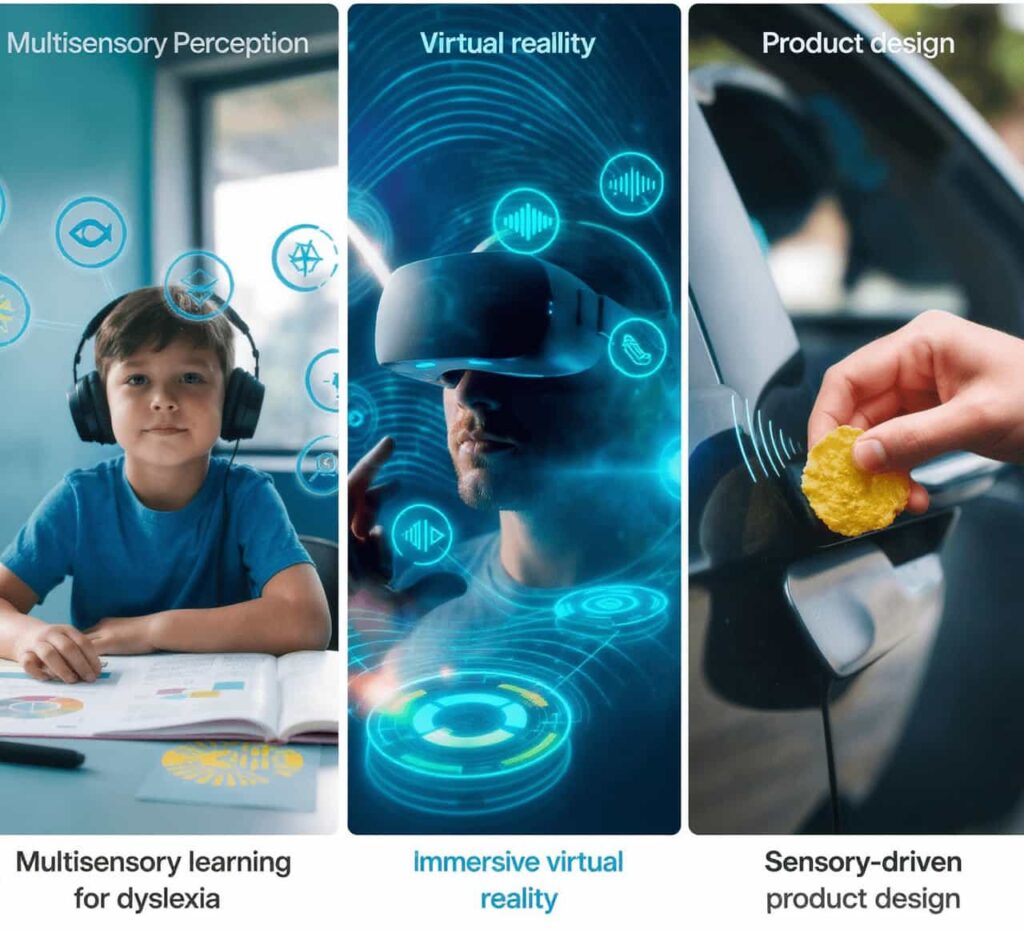
- Education: Multisensory learning—combining listening, writing, and seeing—helps children with dyslexia and other learning differences create stronger memory pathways.
- Virtual Reality (VR): VR designers synchronize visual, auditory, and haptic feedback to create immersive experiences.
- Marketing & Product Design: Brands use multisensory cues to enhance experiences—from the “click” of a car door to the crunch of a chip—making products memorable.
Case Studies: Science in Action
1. Sonic Seasoning at Oxford:

Professor Charles Spence showed that sound influences taste. Participants rated identical ice cream sweeter while listening to high-pitched, tinkling sounds versus low-pitched, brassy sounds. Restaurants now use soundscapes to enhance dining experiences.
2. Multisensory Rehabilitation for Stroke Patients:

A Chicago rehab center used simultaneous visual, auditory, and tactile stimulation for patients with unilateral neglect. Patients performing tasks while seeing, hearing, and feeling their affected hand improved 40% more than standard therapy, demonstrating how sensory integration rewires neural pathways.
Expert References
Modern understanding of multisensory perception comes from leading research centres worldwide:
- Dr. Barry Stein & Dr. Alex Meredith (Virginia Commonwealth University): Pioneered neurobiological foundations.
- Dr. Charles Spence (University of Oxford): Focused on real-world applications in food and design.
- International Multisensory Research Forum (IMRF): A hub for cutting-edge research.
A Relevant Quote
“The senses, being the explorers of the world, open the way to knowledge.”
— Maria Montessori
This perfectly captures the essence of multisensory perception: our understanding of the world emerges from the collaboration of all our senses.
Practical Tips / Takeaways
- Enhance Learning: Engage multiple senses. Read aloud (auditory), write notes (kinesthetic), and use colourful diagrams (visual) to boost memory.
- Improve Focus: In noisy environments, use noise-cancelling headphones to reduce conflicting inputs and sharpen attention.
- Create Better Experiences: For a memorable meal, consider music (sound), lighting (sight), plate texture (touch), and aroma (smell).
- Be Mindful of Sensory Conflicts: Motion sickness often results from mismatched visual and balance signals. Focus on the horizon or control movement to reduce discomfort.
Multisensory perception shows that we are active interpreters, not passive receivers, of sensory information. By understanding the brain’s hidden symphony of senses, we can design better learning environments, create engaging technology, and appreciate the subtle ways our experiences are shaped.
Every moment, our brain blends the world into a single, rich reality—an intricate masterpiece happening behind the scenes of everyday life.
Note: This article is for educational purposes only and does not constitute professional clinical advice.
Related Articles

Sponsored


You May Also Like

You Are Not a Robot: A Deep Dive into Humanistic Psychology

Why Competitive Education Makes Even Good Students Feel Like…

Genetic Factors in Depression: Unraveling the DNA of Your Mo…
Signs Your Thinking Patterns Are Becoming Harmful

Beyond the Game: Why Visualization Is the Secret Weapon of E…