

“Industrial-Organizational Psychology: The Science of Making Work Work” is a fantastic headline. It works on multiple levels: it’s clear, professional, and includes the main keyword for SEO. The sub-headline is clever and relatable, which instantly tells readers they’re in the right place. We’ll stick with it because it’s already a winner.
Ever Hated Your Job? You Can Thank I-O Psychology for the Opposite.
Let’s be real. We’ve all been there: a terrible boss, a pointless meeting, or a company culture that feels like a bad high-school clique. But what if there was a science dedicated to fixing all of that? There is. It’s called Industrial-Organizational (I-O) psychology, and it’s the secret sauce behind the best workplaces in the world.
Think of I-O psychologists as the brainiacs who apply the principles of human behavior to the chaos of the work world. They’re the ones making sure your job interview isn’t a pointless Q&A, that your training actually helps you grow, and that your company’s culture doesn’t feel like a punishment. They’re the silent heroes making sure your work life isn’t just tolerable—it’s productive, healthy, and maybe even… dare we say… enjoyable.
The Two Sides of the Same Coin: Industrial vs. Organizational
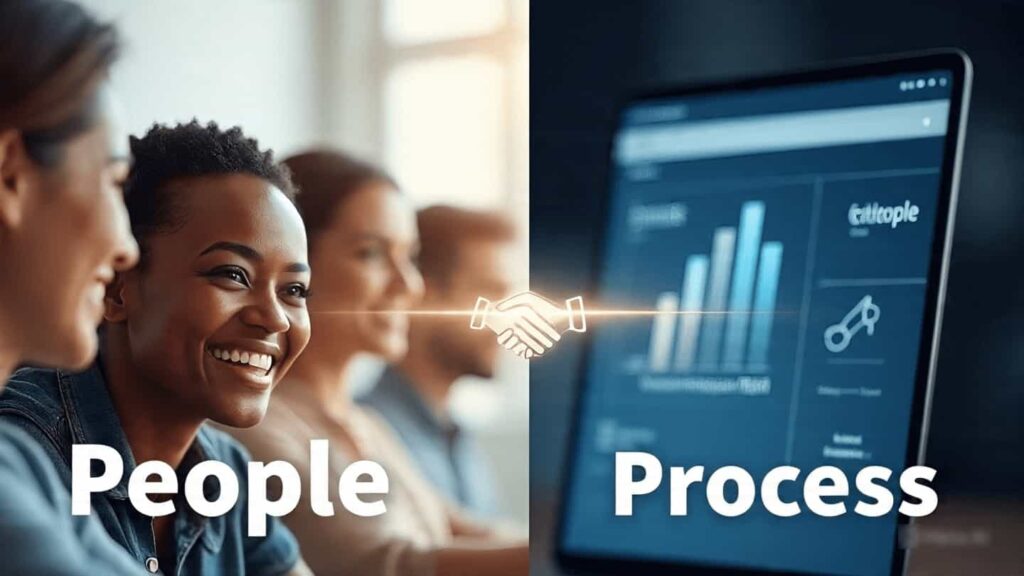
So what, exactly, is this two-sided field? It’s pretty simple when you break it down:
- The Industrial Side: This is the nuts-and-bolts part of the job. It’s all about finding the right people for the right jobs. Think of it as “personnel psychology.” This is where I-O pros tackle hiring, performance reviews, and training programs. Their goal is to make these processes fair, effective, and free from bias.
- The Organizational Side: This is the big picture. It’s about the human experience within the company. This is where I-O psychologists explore the dynamics of leadership, employee motivation, and company culture. They want to know what makes people feel engaged, happy, and loyal to their work. This is where you see the principles of positive psychology applied to the corporate world, focusing on strengths and well-being rather than just problems.
The coolest part? These two sides are always working together to create a workplace where both the company and the people who work there can thrive.
How I-O Psychology Has Quietly Changed Your Work Life
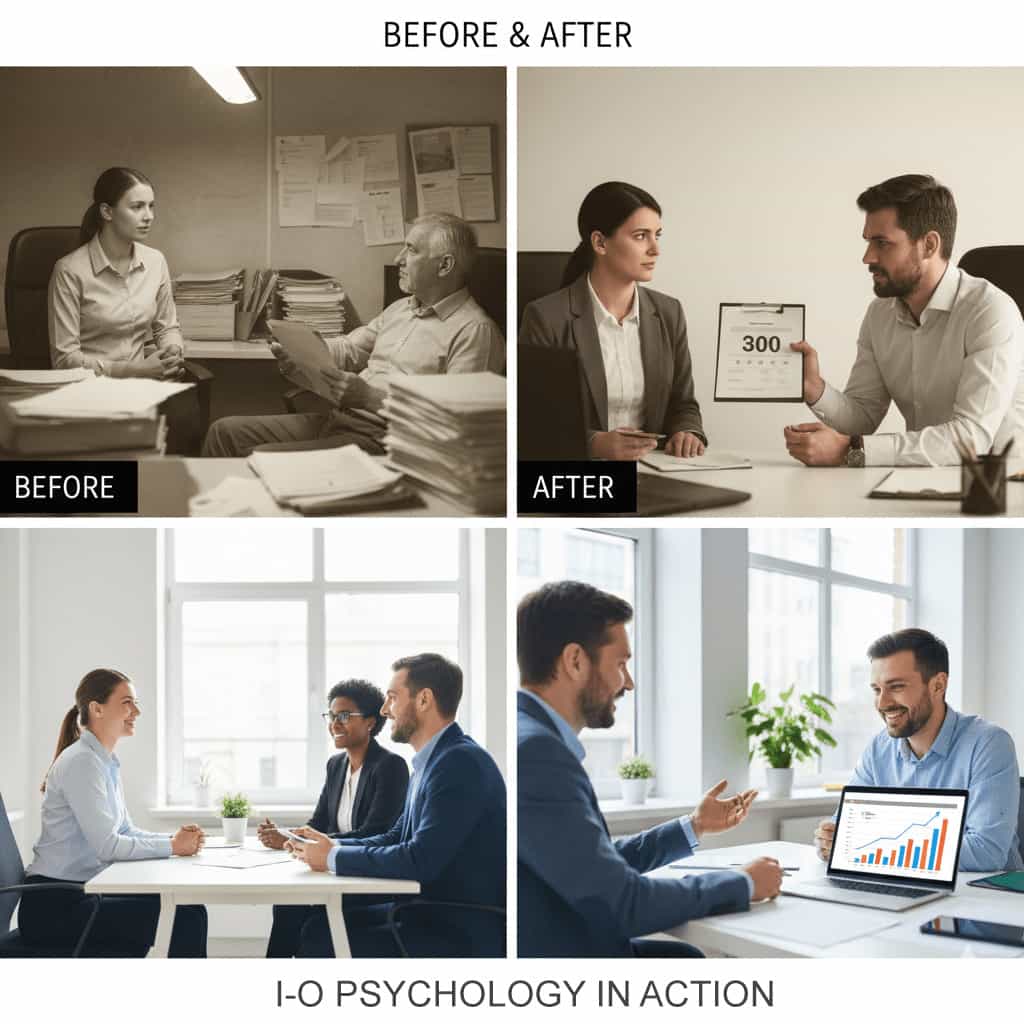
You might not even realize it, but I-O psychology is everywhere.
- Hiring Fairly: Those structured interviews with pre-set questions? An I-O psychologist probably designed them to remove personal bias and ensure everyone gets a fair shot. They’ll tell you that relying on the big five personality traits (OCEAN) is far more effective than just going with your “gut feeling”.
- Smarter Training: Instead of sitting through another boring PowerPoint, I-O psychologists design training that’s based on real learning principles. They’re constantly evaluating what works and what doesn’t, so your time is never wasted.
- The End of the Dreaded Annual Review: I-O pros are leading the charge to replace that stressful, once-a-year review with a system of ongoing, constructive feedback. It’s less about a single rating and more about continuous growth. This is where we see parallels to developmental psychology. For instance, understanding the principles of growth, such as Erik Erikson’s stages of psychosocial development can inform how we support employees’ professional and personal growth over their careers3.
- Battling Burnout: With a focus on employee well-being, I-O psychologists are the ones who can identify the root causes of burnout and turnover, whether it’s an unreasonable workload, a lack of recognition, or something else entirely.
Ready for a Career That Actually Makes a Difference?
The demand for I-O psychologists is growing. You can find them in:
- HR Departments: Designing fair hiring systems and performance metrics.
- Consulting Firms: Advising big corporations on culture and leadership.
- Tech Companies: Working as “people scientists” to improve employee experience.
- Academia: Conducting research to push the field forward.
It’s a career with solid pay, high demand, and the chance to genuinely improve both a business and the lives of its employees.
FAQ: Get to Know I-O Psychology
What’s the difference between I-O psychology and HR?
HR is the operational arm that manages people processes. I-O psychology is the science behind those processes, providing the evidence-based tools to make them effective and fair.
Do I need a PhD to be an I-O psychologist?
A master’s degree can get your foot in the door for many roles, but a PhD is often required for the top research and consulting positions.
Is I-O psychology just common sense?
Absolutely not. Research often proves that what we think is “common sense” is actually a myth! The field relies on hard data and science.
Dive Deeper!
- Society for Industrial and Organizational Psychology (SIOP)
- APA Division 14: Society for Industrial and Organizational Psychology
- Harvard Business Review (HBR)
- Simply Psychology: I-O Psychology
Now you know the magic behind the curtain. What part of I-O psychology do you find most interesting? Let us know in the comments below! 💬
Note: This article is for educational purposes only and does not constitute professional clinical advice.
Related Articles



Sponsored


You May Also Like

Why Roller Coasters Cause Anxiety

Technology & AI in Counselling and Education: Enhancing …

Behavioral Synchronization: The Psychology of Mirroring and …

The Seat Selection Algorithm: The Primal Psychology of Share…

Big 5 Personality Traits (OCEAN) — What They Mean and How Th…
