
We all second-guess ourselves from time to time. But for some, self-doubt isn’t a rare visitor—it’s a permanent roommate. That inner whisper of “You’re not ready,” “Who do you think you are?” or “You’ll mess this up” plays on repeat, regardless of past achievements or clear evidence of competence.
If you constantly feel like you’re one step away from being “found out,” you’re not alone. Understanding why this happens is the first step toward turning down the volume on that critical inner voice. Let’s explore the real, everyday reasons behind persistent self-doubt—without the clinical jargon.
KEY TAKEAWAYS
- Self-doubt is a protective neural habit, not a character flaw.
- Early environments and perfectionism are major drivers of persistent inner criticism.
- Simple shifts—like naming the thought and lowering perfectionist standards—can rewrite the pattern.
The Root: How Early Experiences Shape Your Inner Critic
Long before adulthood, your brain was learning what to expect from the world. If you grew up in an environment where praise was rare, expectations were impossibly high, or mistakes were met with harsh judgment, your mind likely built a strong “warning system.” That system now interprets any challenge as a potential threat to your worth.
This isn’t about labeling past experiences as “traumatic” in a clinical sense. It’s simply how habits of thought form. When you were never taught that trying and failing is normal, your default becomes self-protection through self-doubt.
Personality and the Overthinking Trap
Not everyone is wired the same way. Some people naturally lean toward introspection and caution. If you score high on neuroticism (one of the Big Five personality traits), you’re more prone to worry, self-criticism, and rumination. This isn’t a flaw—it’s a tendency. But it does mean your brain spends more time scanning for what could go wrong.
The good news? Awareness of your natural tendencies helps you stop taking every doubtful thought so seriously. You can learn to see self-doubt as just a mental habit, not the truth.
You May Also Like
Discover how personality traits influence behavior: Big Five Personality Traits (OCEAN)
The Comparison Game: Social Media and Unrealistic Standards
We now carry a highlight reel of everyone else’s life in our pocket. Curated posts, filtered photos, and carefully worded updates make other people look effortlessly confident and successful. When you compare your behind-the-scenes chaos with someone else’s polished final cut, self-doubt flourishes.
The problem isn’t you—it’s the game. Your brain didn’t evolve to process hundreds of “perfect” lives every day. Constant social comparison trains your mind to feel inadequate by default.
Perfectionism: The Hidden Engine of Doubt
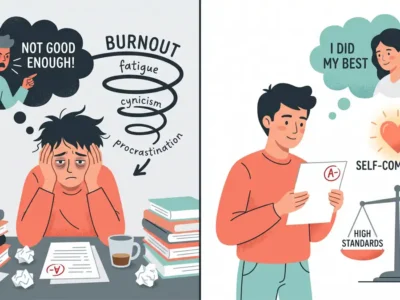
At first glance, perfectionism sounds like a strength. “I just have high standards,” you might say. But perfectionism is often just self-doubt in disguise. You believe that if you can be flawless, no one can criticize you. The trouble is, perfection is impossible. So you end up feeling like a failure before you even begin.
Perfectionists don’t doubt because they lack skill. They doubt because their internal ruler has no zero mark—only higher and higher.
Why Past Successes Never Seem to Count
One of the strangest features of persistent self-doubt is memory filtering. You might have ten wins and one small mistake. What do you remember? The mistake. Your brain treats past successes as “luck” or “not that hard,” while failures become proof of inadequacy.
This happens because your mind prefers familiar patterns. If you’ve spent years doubting yourself, your brain has built strong neural pathways for that feeling. Success feels like the exception. Doubt feels like home.
Breaking the Cycle: Simple Shifts That Help
You don’t need therapy or a diagnosis to start shifting self-doubt. Small, practical changes add up:
PRACTICAL SHIFTS TO REFRAME DOUBT
- ✓ Name it: Say, ‘There’s my old habit of self-doubt again’ to separate yourself from the thought.
- ✓ Look for evidence: Ask yourself, ‘What’s one fact that suggests I can do this?’
- ✓ Lower the bar: Aim for ‘good enough’ instead of perfect. Improve later if needed.
- ✓ Track small wins: Write down three tiny things you did well each day to retrain your memory filter.
Change doesn’t require becoming a different person. It just requires noticing your patterns and gently choosing a different response.
FAQs
Is self-doubt always a bad thing?
Not necessarily. In small doses, healthy self-doubt encourages self-reflection, preparation, and caution. However, chronic self-doubt becomes paralyzing when it stops you from taking action.
How is self-doubt different from Imposter Syndrome?
Self-doubt is a general feeling of uncertainty about your abilities. Imposter Syndrome is a specific psychological pattern where high-achieving individuals attribute their success to luck or timing rather than their competence.
Can self-doubt be permanently eliminated?
Rather than eliminating self-doubt entirely, the goal is to change your relationship with it. When you recognize doubt as a automatic protective response, it stops holding power over your choices.
Constant self-doubt isn’t a sign that you’re broken. It’s usually a sign that your mind learned to play it safe—over and over until safety felt like doubt. The good news is that habits of thought can be reshaped. Not by fighting yourself, but by understanding why the doubt exists and practicing small, kind responses.
You don’t have to believe everything you think. Especially the doubtful parts.
Disclaimer: This article is for general informational purposes only and does not constitute professional advice. The content is based on common psychological concepts presented in a non-clinical, educational manner. If self-doubt is significantly impacting your daily life or well-being, please consider speaking with a qualified professional.
Related Articles

Sponsored


You May Also Like

The Fence Psychology: Negotiating Privacy vs. Community Acce…

Why Do People Behave Differently in Groups?

Why Social and Cognitive Factors Influence Criminal Behavior
The Smartphone “Brain Drain”: Why Having Your Ph…

Why Some Bridges Feel Uncomfortable to Cross