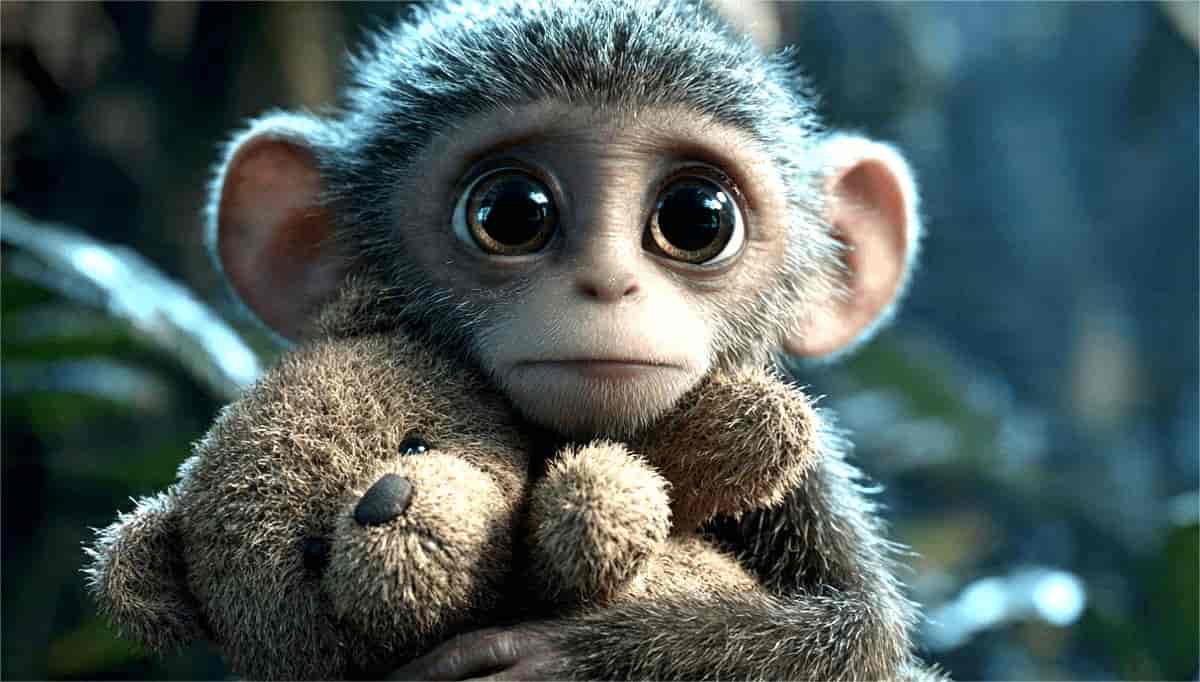
Every once in a while, a simple internet story captures the emotions of millions. The viral “Punch Monkey” story is one of those rare examples.
At first glance, it is a short emotional cartoon: a small baby monkey finds himself alone in the jungle after being separated from his mother. Lost and frightened, he discovers a small teddy bear. From that moment on, he holds the bear tightly and refuses to let it go.
While many viewers feel a deep sense of sadness, this impact is not accidental. When viewed through the lens of psychology, the story reveals powerful insights about human attachment and the mind’s ability to cope with loneliness.
KEY TAKEAWAYS
- Attachment forms the early foundation of emotional safety.
- Separation from caregivers triggers deep survival-level anxiety.
- Transitional objects (like teddy bears) act as emotional bridges.
- Virality is driven by universal human empathy and shared emotional experiences.
The Importance of Attachment in Early Life
One of the most critical concepts in developmental psychology is attachment—the deep emotional bond between a child and their primary caregiver. This bond plays a critical role in how childhood experiences shape adult behavior.
In the Punch Monkey story, the young monkey’s sense of safety is tied directly to his mother. When that connection disappears, his emotional foundation is disrupted. According to Erikson’s first stage of development, Trust vs. Mistrust, a lack of consistent care at this stage can lead to a fundamental sense of insecurity about the world.
Separation Anxiety: The Fear of Losing Security
When separated from caregivers, young minds experience separation anxiety. This includes fear, distress, and a primal urge to reunite with the source of safety. This is a core reason why anxiety feels so overwhelming for those experiencing it; the brain perceives the loss of an attachment figure as a threat to survival.
Must Read
Why Anxiety Feels So Overwhelming
The Teddy Bear as a “Transitional Object”
The most meaningful moment occurs when the monkey finds the teddy bear. In psychology, this is known as a transitional object—an item (like a blanket or toy) that provides emotional security when a child is separated from their caregiver.
Introduced by psychoanalyst Donald Winnicott, these objects act as “emotional bridges” between dependence and independence. They help children cope with the absence of a caregiver while still feeling a sense of comfort.
“Sometimes the smallest things we hold onto help us survive our biggest emotional storms.” — Inspired by psychologist Donald Winnicott
Why the Story Feels So Relatable
The story resonates because it reflects universal human experiences. We have all experienced moments of loneliness or loss. When viewers see the monkey clinging to the bear, they may unconsciously connect it to their own personality traits or past experiences of seeking comfort during distress.
Emotional Coping and Resilience
The mind possesses remarkable resilience. When faced with loss, it naturally tries to restore balance. This is a form of emotional regulation. The teddy bear represents a “safe anchor” during uncertainty, allowing the monkey to adapt to a frightening environment.
You May Also Like
Why Emotional Regulation Develops Slowly
Why Emotional Stories Go Viral
Humans are naturally drawn to themes of vulnerability and caregiving. These stories trigger empathy, activating protective instincts. This is part of perception psychology—we don’t just see a cartoon; our brains construct a reality where we feel the monkey’s pain and subsequent relief.
The Deeper Lesson
The Punch Monkey story reminds us that emotional security is a fundamental human need. When connections are disrupted, the mind instinctively searches for ways to restore balance—whether through new relationships or symbolic objects.
Sometimes healing does not begin with grand solutions. Sometimes, it begins with something as small as having something to hold onto. 🧸
FAQs
What is a transitional object in psychological terms?
A transitional object is a physical item, such as a security blanket or teddy bear, that provides emotional comfort to a child (or individual) during times of stress, anxiety, or separation from a caregiver.
Who introduced the concept of the transitional object?
The concept was introduced by psychoanalyst Donald Winnicott in 1951 to explain how children transition from absolute dependence on a caregiver to emotional independence.
Why did the 'Punch Monkey' animation go viral?
It went viral because it taps into universal feelings of loss, vulnerability, and the emotional urge for safety, activating human empathy through storytelling.
Related Articles

Sponsored


You May Also Like

Why Silence Feels Creepy at Night

The Fence Psychology: Negotiating Privacy vs. Community Acce…

Online Projection: Instagram, Reels & Fake Perception

What Is Major Depressive Disorder (MDD)? A Comprehensive Gui…

Why Certain Images Instantly Make Your Skin Crawl