What Civil Inattention Really Means
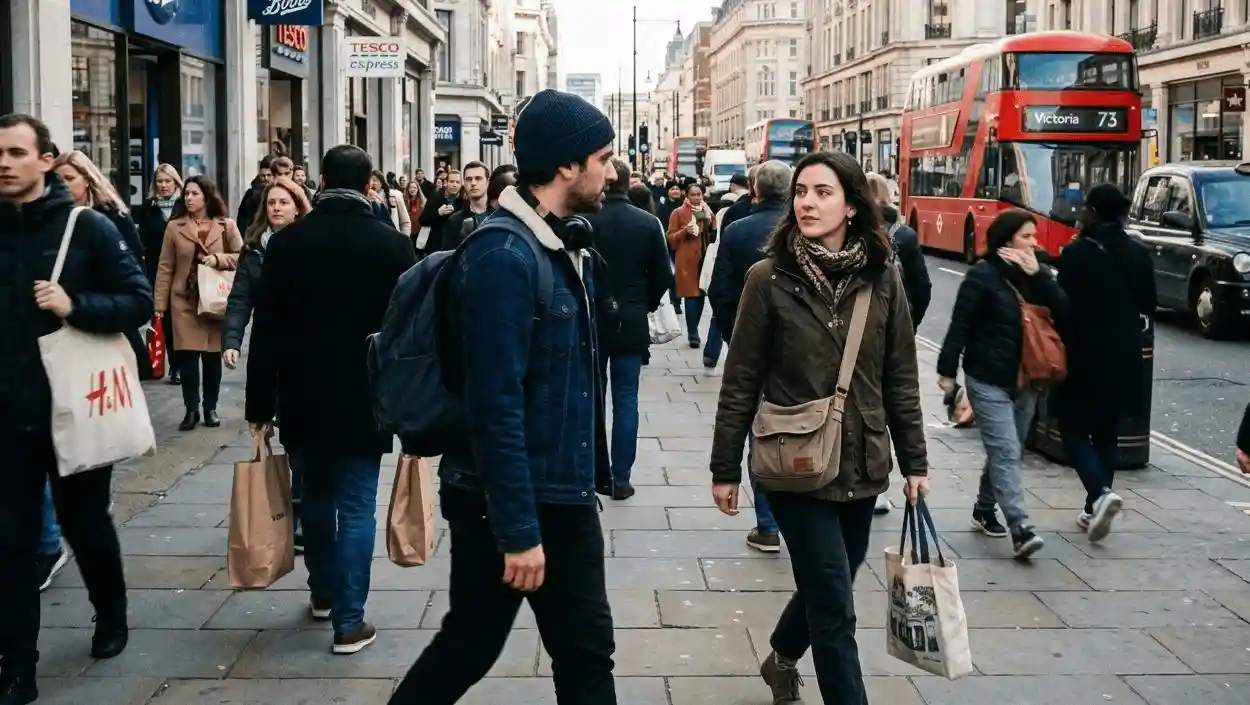
On a busy city street, you walk past hundreds of strangers. You see them. They see you. But you do not stare, nod, or speak. Instead, you acknowledge their presence just enough to avoid collision — then look away.
This is civil inattention, a term coined by sociologist Erving Goffman. It is the delicate balance between recognizing another human being and respecting their privacy. On the street, civil inattention says: “I see you. I mean no threat. We can both continue as if we are alone.”
KEY TAKEAWAY
- The 3‑second gaze is the operational rule of civil inattention.
- You look at a stranger for 1–3 seconds, then look away.
- Longer than three seconds becomes staring — a territorial challenge or threat. Shorter than one second feels evasive or fearful. The sweet spot signals calm, confident public presence.
Why Eye Contact Feels Powerful on Streets
Eye contact activates ancient neural circuits. In evolutionary terms, sustained eye contact between unrelated adults was rare — and often preceded aggression or mating. The brain still treats prolonged gaze as a high‑stakes signal.
On a modern street, this means that a gaze lasting more than three seconds triggers:
- Increased heart rate in the observer
- Activation of the amygdala (threat detection)
- A defensive posture shift (shoulders turning away)
- Possible verbal confrontation (in extreme cases)
Civil inattention avoids these reactions entirely. By limiting gaze duration and combining it with neutral facial expression, you signal: “I am aware of you, but you are not a threat — and I am not one either.”
| Gaze Duration | Signal | Typical Response |
|---|---|---|
| 0–1 second (glance away quickly) | Nervous, evasive, low status | Observer feels dismissed or confused |
| 1–3 seconds (casual acknowledgment) | Confident, socially aware, non‑threatening | Observer returns brief glance, relaxes |
| 3–5 seconds (sustained gaze) | Interest, dominance, potential threat | Observer becomes tense, looks away, or prepares |
| 5+ seconds (staring) | Aggression, territorial challenge | Observer feels threatened, may confront or flee |
The Thin Line Between Respect and Threat
The line between respectful acknowledgment and threatening stare is thin and context‑dependent.
Factors that shift the line:
- Environment — On a crowded subway, longer glances are tolerated (scanning for threats). On an empty sidewalk, a long glance feels predatory.
- Time of day — Daytime allows slightly longer gaze. Nighttime reduces tolerance dramatically.
- Gender dynamics — Men gazing at women for more than 2 seconds is often perceived as threatening, regardless of intent.
- Group size — A group staring at an individual is more threatening than one‑on‑one.
Socially intelligent pedestrians calibrate their gaze to the situation. They do not use the same duration on a dark side street as on a sunny shopping boulevard.
The Psychology of Quick Acknowledgment
The ideal street gaze is brief, neutral, and followed by a natural break — looking ahead, to the side, or down briefly before returning to forward scan.
WHAT QUICK ACKNOWLEDGMENT SIGNALS
- Confidence — “I am not afraid to see you”
- Respect — “I acknowledge your presence”
- Disengagement — “We have no business beyond this glance”
This sequence takes 1–2 seconds. It is not cold. It is efficient. It allows hundreds of pedestrians to share space without constant social negotiation.
People who cannot perform quick acknowledgment — who stare at the ground, turn away exaggeratedly, or lock eyes too long — are read as socially anxious or aggressive. Both judgments reduce public comfort.
Why Staring Triggers Territorial Responses
Staring is a form of territorial challenge. In animal behavior, sustained eye contact is used to establish dominance or signal aggression. Humans retain this wiring.
When a stranger stares at you on the street, your brain:
- Releases cortisol (stress hormone)
- Increases muscle tension
- Prepares for fight or flight
- Interprets the stare as a threat to personal territory
The stared‑at person may respond by:
- Staring back (challenge)
- Looking away quickly (submission)
- Changing their path (avoidance)
- Verbally confronting (“What are you looking at?”)
None of these outcomes is desirable in routine pedestrian encounters. The 3‑second gaze is designed to prevent them entirely.
The Social Function of the Head Nod
The head nod is a specialized form of street acknowledgment, reserved for specific contexts.
THE HEAD NOD SYSTEM
- Downward nod (chin to chest) — Acknowledgment without invitation. Used when passing someone you have made eye contact with but have no relationship. Signals: “I see you. That is all.”
- Upward nod (chin up) — More familiar, often used between acquaintances or in less formal settings. Signals recognition and openness.
On a typical sidewalk, the downward nod is appropriate when accidental eye contact extends beyond 1 second. It closes the interaction cleanly.
The head nod is not required in most street encounters. A simple glance away is sufficient. But for those who feel awkward after eye contact, a brief downward nod resolves the tension instantly.
You May Also Like
Learn why we care so much about others’ opinions — the head nod acknowledges without engaging
Building Calm Public Confidence
Mastering street eye contact is a form of public confidence. You do not need to dominate or avoid. You simply need to be present.
STEPS TO A CALM, CONFIDENT STREET GAZE
- ✓ Look ahead naturally — Not at the ground, not scanning defensively
- ✓ Allow your eyes to land on people — Do not actively avoid faces
- ✓ Hold gaze for 1–2 seconds — Long enough to see them, not long enough to stare
- ✓ Look away without hurry — To the side, ahead, or with a slight downward nod
- ✓ Return to forward scan — Repeat as needed
This pattern signals that you are comfortable in public space. It lowers the anxiety of those around you. It makes you look like someone who belongs.
Final Thoughts
The 3‑second gaze is the grammar of street interaction. Too short, and you seem fearful. Too long, and you seem threatening. Just right, and you move through the world with quiet confidence.
Civil inattention is not rejection. It is respect. It allows millions of strangers to share streets, sidewalks, and subways without friction.
Master the glance. Honor the boundary. Keep walking.