At its core, perception is the process of organizing and interpreting sensory information to understand the world. But your brain isn’t a passive receiver; it’s an active predictor. Neuroscientists like those at the Massachusetts Institute of Technology (MIT) have shown that the brain is constantly making guesses about what should be there based on what has been there before. This predictive coding saves precious energy and allows for quick reactions, but it also means we sometimes see what we expect to see, not what is actually there.
The Cognitive Shortcuts That Lead Us Astray
Our brains use mental shortcuts, known as heuristics, to make sense of the world quickly. While often helpful, these shortcuts are a primary source of disconnects between perception and reality.
The Confirmation Bias: This is our brain’s tendency to seek, interpret, and remember information that confirms our pre-existing beliefs. For instance, if you believe a new coworker is unfriendly, you’ll notice every time they don’t say “good morning” but overlook the times they offer to help. You perceive their behavior through a filter of your own making.
The Actor-Observer Bias: Here, we attribute our own actions to external circumstances (“I snapped because I’m stressed”), but we attribute others’ actions to their internal character (“They snapped because they are a rude person”). This creates vastly different perceptions of the same event.
Types of Perception in Psychology (With Real Examples)
While perception may feel like a single process, psychology shows that it actually operates in multiple layers. Each type of perception influences how we interpret reality in different situations. Understanding these types helps explain why people can experience the same event in completely different ways.
1. Sensory Perception
Sensory perception is the most basic form of perception. It involves how we interpret information coming directly from our senses—sight, sound, touch, taste, and smell.
For example, imagine hearing your name in a crowded room. Even if the sound is faint, your brain “picks it out” because it is meaningful to you. Similarly, visual illusions show how the brain can misinterpret shapes, colors, or movement.
This type of perception proves that even raw sensory input is not always accurate—it is filtered and interpreted by the brain.
👉 This is why two people can literally see the same thing but experience it differently.
2. Social Perception
Social perception refers to how we interpret other people—their behavior, intentions, and emotions. It plays a major role in first impressions, relationships, and communication.
For instance, if someone avoids eye contact, one person may perceive them as shy, while another may see them as rude or disinterested. The behavior is the same, but the interpretation changes.
This type of perception is heavily influenced by biases, stereotypes, and past social experiences.
👉 This is why two people can experience the same interaction but form completely different opinions about it.
3. Self-Perception
Self-perception is how we view ourselves—our abilities, personality, and self-worth. It shapes confidence, decision-making, and personal identity.
For example, a person who believes they are “bad at public speaking” may feel anxious and perform poorly, reinforcing that belief. Another person with a positive self-image may perform confidently under the same conditions.
Self-perception often becomes a self-fulfilling loop, where beliefs influence actions, and actions reinforce beliefs.
👉 This is why two people with similar abilities can have completely different outcomes in the same situation.
4. Emotional Perception
Emotional perception is the influence of emotions on how we interpret situations. Our current emotional state can significantly distort how we see reality.
For example, when you are angry, neutral comments may feel like personal attacks. When you are happy, the same comments might seem harmless or even humorous.
Emotions act like a filter, highlighting certain details while ignoring others.
👉 This is why the same situation can feel completely different depending on your mood.
Why These Types Matter
These four types of perception work together constantly. In real life, you are not using just one—you are combining sensory input, social interpretation, self-beliefs, and emotional states all at once.
This layered system explains a simple but powerful truth:
👉 We don’t experience reality as it is—we experience it as we are.
Understanding these different types of perception is the first step toward reducing misunderstandings, improving communication, and seeing situations more clearly.
Now that we understand how perception works at different levels, let’s see how these distortions play out in the real world—especially in digital environments.
The Digital World: A Playground for Misperception
Nowhere is the perception vs. reality gap more evident than online. Cyberpsychology examines how our offline cognitive biases are amplified in digital environments.
Social Media and the Highlight Reel: We perceive others’ lives based on their curated, perfect posts, comparing our behind-the-scenes reality to their highlight reel. This distorted perception is a significant driver of anxiety and inadequacy.
The Online Disinhibition Effect: The anonymity and lack of physical cues online can lead to misperceiving the tone of a message (e.g., reading a neutral text as sarcastic), often sparking unnecessary conflict.
Case Studies
Case Study 1: The “Incompetent” New Hire (US Workplace)

Sarah, a manager at a tech firm in Austin, Texas, hired Mark, a recent graduate. Mark was quiet and preferred to process information alone before contributing. Sarah, an extroverted and quick-speaking leader, perceived his silence as a lack of engagement or competence. This was her reality. Meanwhile, Mark felt intimidated and believed his thoughtful approach was undervalued. This perception made him withdraw further.
Outcome: During a performance review, a candid conversation revealed the misperception. Sarah learned to provide agendas beforehand, allowing Mark to prepare. Mark made an effort to vocalize his thought process. By acknowledging their perceptual gaps, they created a new, shared reality that leveraged both their strengths, significantly improving team collaboration.
Case Study 2: The “Fake News” Spiral
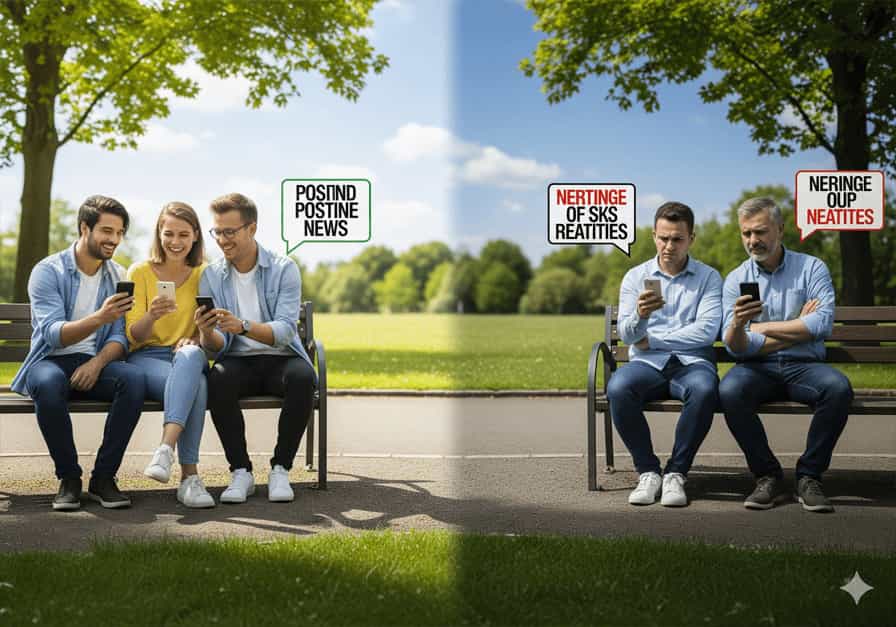
A study out of Yale University’s psychology department explored how confirmation bias fuels the spread of misinformation. Researchers presented individuals with headlines, some true and some false. Participants were far more likely to believe and share headlines that aligned with their political beliefs, regardless of their veracity. Their perception of “truth” was not based on fact-checking but on how the information fit into their pre-existing narrative of the world.
Outcome: This case study highlights the societal impact of perceptual errors. It demonstrates why misinformation spreads so rapidly—it feels true to our biased brains, creating alternative realities within different social groups.
Expert References / External Sources
Research from Stanford University on social psychology confirms the power of situational factors over character traits in shaping behavior (the Fundamental Attribution Error), a key concept in understanding perceptual gaps. The American Psychological Association (APA) has published extensive literature on cognitive biases and their role in decision-making and interpersonal relationships. Furthermore, labs at Harvard University dedicated to visual and cognitive neuroscience continue to unravel how the brain constructs visual reality from ambiguous data.
Relevant Quote
“The eye sees only what the mind is prepared to comprehend.” – Henri Bergson, Philosopher.
This quote perfectly encapsulates the article’s theme: our perception is limited and shaped by our existing knowledge and expectations.
Practical Tips / Takeaways
Embrace Cognitive Humility: Actively acknowledge that your perception is not objective truth. Start sentences with, “The way I’m seeing this is…” to open space for other perspectives.
Seek Disconfirmation: Make a conscious effort to look for evidence that contradicts your beliefs. This is the antidote to confirmation bias.
Pause and Reframe: Before reacting, especially to a text or email, pause. Ask yourself: “What is another way this could be interpreted?” Reframe the observer bias by considering what external factors might be influencing someone’s behavior.
Curate Your Inputs Mindfully: Understand that your brain uses what you feed it. Diversify your social media feed and news sources to break out of your perceptual filter bubble.
Prioritize Direct Communication: Instead of assuming you know what someone meant, ask clarifying questions. “I wanted to check on the tone of your last message; I interpreted it as X, was that your intention?“
The gap between perception and reality isn’t a flaw in human design; it’s a feature of our efficient, prediction-making brains. By learning about the mechanics behind our perceptions, we gain a powerful tool. We can choose to question our initial interpretations, cultivate empathy by considering other viewpoints, and build a personal and professional life based more on shared understanding and less on solitary assumption. The journey isn’t about seeing reality perfectly, but about seeing each other more clearly.
❓FAQs
What is perception in psychology?
Perception in psychology is the process by which the brain organizes and interprets sensory information to understand the world. It is not just about what we see or hear—it’s about how our mind gives meaning to those inputs. The brain actively filters information based on past experiences, expectations, and beliefs. This is why two people can observe the same situation but perceive it differently. Perception is shaped by both external stimuli and internal mental processes, making it a subjective experience rather than an exact reflection of reality.
Why is perception different from reality?
Perception differs from reality because the brain does not process information objectively—it interprets it. Instead of recording events like a camera, the brain uses cognitive shortcuts (biases), past experiences, and expectations to “predict” what is happening. This can lead to distortions, where what we believe feels real, even if it’s not accurate. Factors like confirmation bias, emotions, and social influence can further widen the gap between perception and reality, causing people to form completely different interpretations of the same event.
Can perception be changed?
Yes, perception can be changed with awareness and practice. Since perception is influenced by thoughts, beliefs, and past experiences, it can be reshaped by consciously challenging assumptions and exposing yourself to new perspectives. Techniques like cognitive reframing, critical thinking, and seeking alternative viewpoints help rewire how the brain interprets information. While it’s not possible to eliminate bias completely, you can train yourself to pause, question your initial interpretation, and respond more objectively over time.
What affects perception the most?
Several factors influence perception, but the most powerful ones include past experiences, cognitive biases, emotions, and expectations. The brain relies heavily on previous knowledge to interpret current situations, which is why personal history plays a major role. Emotions can distort perception by amplifying certain details while ignoring others. Social and cultural influences also shape how we see the world, as do mental shortcuts like confirmation bias. Together, these factors create a unique “filter” through which each person experiences reality.
Note: This article is for educational purposes only and does not constitute professional clinical advice.
Related Articles

Sponsored


You May Also Like
Positive Synonyms: 101 Powerful Alternatives to “Good&…

The Pheromone Myth vs. Reality: The Actual Science of Scent …
Contagious Emotion: How Audible Audience Reactions Change th…

Why Mental Health Issues Often Go Unnoticed

The Seat Selection Algorithm: The Primal Psychology of Share…