
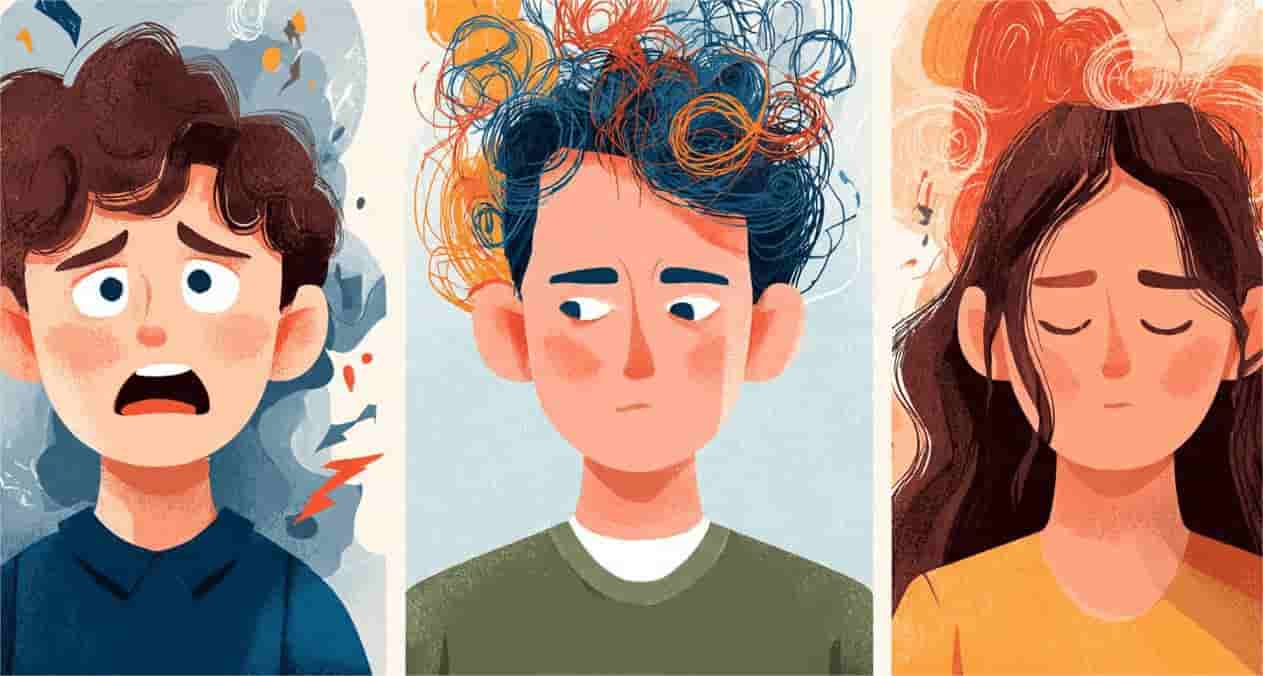
While observing emotional reactions across ages, it became clear that self-control doesn’t appear suddenly. Children react openly, adolescents struggle with intensity, and adults continue refining emotional balance. Developmental psychology shows why regulation takes time.
KEY TAKEAWAYS
- Emotional control develops gradually over years and is not an innate, automatic trait.
- Brain development, specifically the prefrontal cortex, dictates the pace of emotional regulation.
- Social learning and supportive environments strongly shape lifelong coping mechanisms.
Emotion Precedes Control
Emotional regulation—the ability to manage feelings in adaptive ways—is often mistaken as a basic life skill that should “come naturally.” In reality, emotion arrives long before control. Humans are born with emotional systems fully active, but the mechanisms that manage, pause, or redirect those emotions develop gradually over years. This delay is not a flaw; it is a fundamental feature of psychological development explained by brain maturation, learning, and experience .
As psychologist Daniel Goleman famously noted, “Self-awareness and self-regulation are learned abilities, not automatic traits.” Emotional control is built, not installed.
Early Emotional Expression
In early childhood, emotions are raw and unfiltered. A toddler cries, laughs, or rages without restraint because the brain areas responsible for inhibition and planning are still immature. From a developmental psychology perspective, children experience emotions intensely but lack the cognitive tools to regulate them effectively .
This explains why tantrums are common and why expecting “mature behavior” too early often leads to frustration for both adults and children.
Brain Development and Regulation
The slow pace of emotional regulation is closely tied to brain development, particularly the prefrontal cortex. This region governs impulse control, emotional evaluation, and decision-making. Neuroscientific research shows that the prefrontal cortex continues developing into the mid-20s, long after emotional centers like the amygdala are fully active .
This imbalance—strong emotions with weak regulation—explains why adolescents often experience emotional swings, risk-taking, and heightened sensitivity.
Social Learning of Emotional Control
Beyond biology, emotional regulation is learned socially. Children observe how parents, teachers, and peers express anger, cope with stress, and recover from disappointment. These repeated interactions gradually shape coping mechanisms and emotional scripts .
A supportive environment teaches children that emotions are manageable, while inconsistent or punitive responses may slow regulation development.
Why Overreaction Is Common
Overreactions are not signs of weakness or immaturity—they are predictable developmental outcomes. When emotional intensity exceeds regulatory capacity, the brain defaults to instinctive responses. This phenomenon explains emotional outbursts in teens and even adults under stress.
A Tier-1 case study from the United States examining adolescent behavior found that teens exposed to chronic stress showed delayed emotional regulation compared to peers raised in stable environments. Similarly, a UK-based longitudinal study observed that adults who lacked early emotional modeling required more time to develop self-control skills later in life.
BENEFITS
- ✓ Builds neural pathways through real-world trial and adaptation
- ✓ Fosters resilience across adult milestones and relationships
- ✓ Strengthens self-awareness when supported by positive environments
LIMITATIONS
- ✕ Requires years of brain maturation into early adulthood
- ✕ Sensitive to chronic environmental stress and negative modeling
- ✕ Can cause frustration when expectations exceed developmental stage
Regulation Improves With Experience
The good news: emotional regulation improves with experience. Repeated exposure to emotional challenges strengthens neural pathways involved in reflection, delay, and emotional reframing. Adults are not emotionally “finished”; they continue refining emotional balance through relationships, work stress, parenting, and therapy.
This aligns with broader developmental theories that emphasize learning through interaction and adaptation rather than fixed emotional maturity .
Supporting Emotional Development
Supporting emotional regulation means shifting expectations. Instead of demanding instant control, caregivers and educators should focus on emotional labeling, modeling calm responses, and allowing safe expression. These strategies accelerate the learning process rather than suppress emotion.
Psychological research consistently shows that emotion regulation strengthens fastest in environments where emotions are acknowledged, not dismissed.
STRATEGIES FOR SUPPORTING REGULATION
- Emotion Labeling: Help children identify and name emotions as they occur.
- Model Calm Responses: Demonstrate emotional balance in high-stress moments.
- Safe Expression: Allow emotions to be experienced without immediate judgment or punishment.
Regulation Is a Skill
Emotional regulation develops slowly because it is one of the most complex skills humans learn. It requires brain maturity, social learning, and lived experience. Understanding this process reduces unrealistic expectations and fosters empathy across ages. Regulation is not about eliminating emotion—it is about learning how to live with it skillfully.
Note: This article is for educational purposes only and does not constitute professional clinical advice.
FAQs
Why do children struggle with emotional control?
Emotional systems (like the amygdala) develop much earlier than regulatory brain regions such as the prefrontal cortex, leaving children with high emotional intensity and limited inhibition tools.
Does emotional regulation stop developing in adulthood?
No. Adults continuously refine emotional regulation through new experiences, relationships, therapy, and life challenges, as neural pathways remain adaptable.
Can emotional regulation be taught faster?
While supportive environments, co-regulation, and active modeling help accelerate skill acquisition, full emotional maturity still relies on biological brain development over time.
Related Articles


Sponsored


You May Also Like

Overwhelming Synonym: 25 Powerful Alternatives (With Meaning…

What Is Sports Psychology? The Mind Behind the Medal

Why Do We Care So Much About Others’ Opinions?

Civil Inattention: The Psychological Art of Being Pressed Ag…

The Creator Archetype – Driven by Innovation, Expression &am…
