
By PsychoPeak Editorial
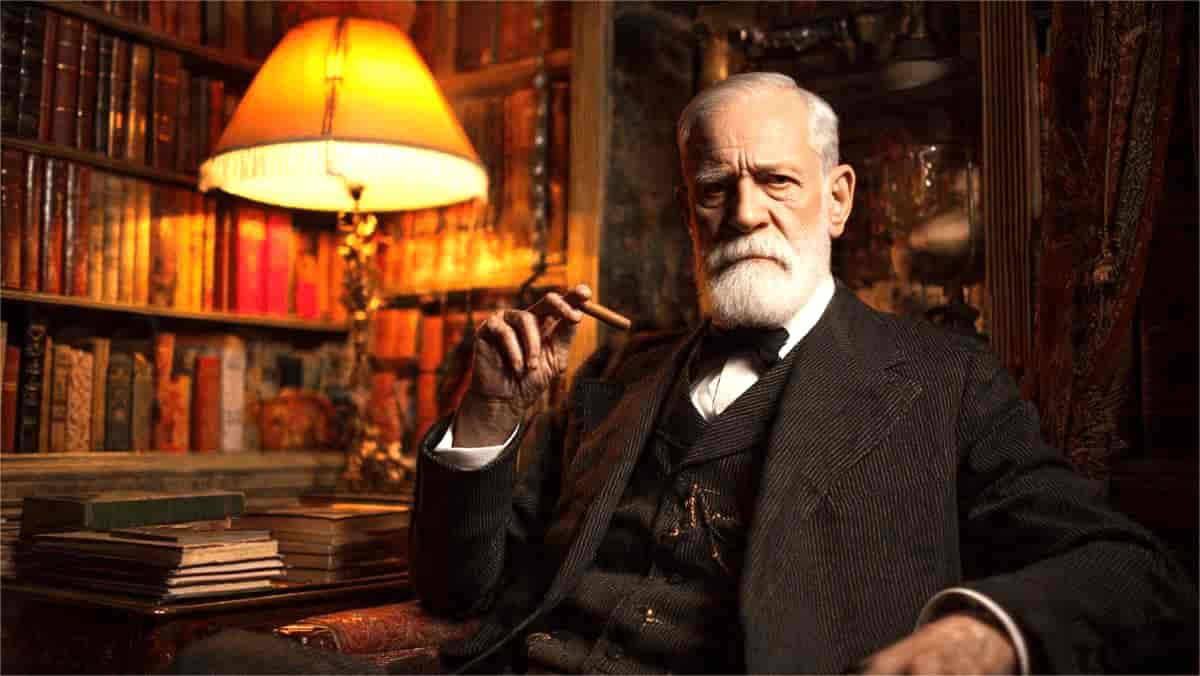
What if your biggest decisions are not truly made by you, but by a hidden force within your mind that you cannot see or control?
This unsettling yet fascinating possibility was introduced to the world by Sigmund Freud, a thinker whose ideas reshaped psychology and forever changed how humanity understands itself.
KEY TAKEAWAYS
- The Unconscious Mind: Human behavior is heavily guided by hidden motives, desires, and conflicts.
- Personality Structure: The psyche is driven by the dynamic interaction between the Id, Ego, and Superego.
- Enduring Impact: Modern talk therapy, defense mechanisms, and child psychology still rely on Freudian foundations.
Early Life and Intellectual Awakening
Sigmund Freud was born in 1856 in Freiberg (now in the Czech Republic). Gifted with an extraordinary intellect, he pursued medicine at the University of Vienna and initially specialized in neurology. Yet, clinical observation led him toward a deeper question: What truly drives human behavior?
This curiosity pushed Freud beyond biology into the unexplored terrain of the psyche, where he developed psychoanalysis, a method designed to uncover hidden motives, suppressed memories, and unconscious conflicts.
The Core Idea That Changed Psychology
Freud’s most revolutionary claim was simple yet radical:
Human behavior is largely shaped by the unconscious mind.
He compared the mind to an iceberg — the conscious part visible above water is small, while the vast unconscious lies beneath the surface, influencing thoughts, emotions, and actions without awareness.
To explain personality, Freud proposed the famous structural model:
THE STRUCTURAL MODEL OF MIND
- ✓ Id: Instinctual drives and basic biological desires operating on the pleasure principle.
- ✓ Ego: The rational mediator balancing instinctual demands with real-world reality.
- ✓ Superego: Moral standards and idealized goals shaped by society and upbringing.
Personality, he argued, emerges from the tension and negotiation among these three forces. This framework remains one of the most recognized psychological models even today.
Dreams: The Royal Road to the Unconscious
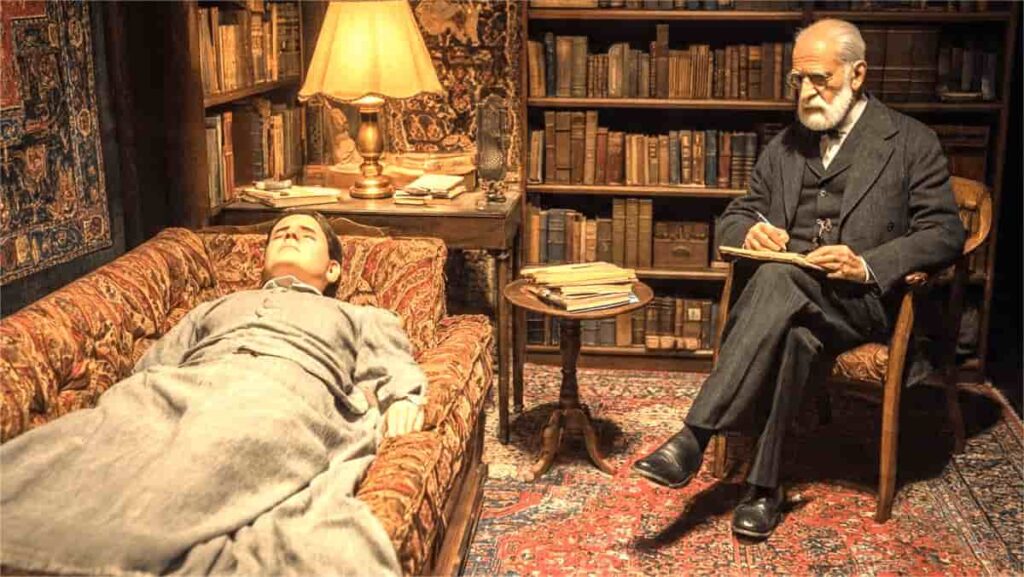
In his landmark 1900 book The Interpretation of Dreams, Freud proposed that dreams are symbolic expressions of repressed wishes. He famously wrote:
“Dreams are the royal road to the unconscious.”
Although modern neuroscience interprets dreams differently, Freud’s central insight — that dreams carry psychological meaning — continues to influence therapy, literature, and cultural thought.
Childhood Shapes the Adult Mind
Freud was among the first thinkers to argue that early childhood experiences shape adult personality. His theory of psychosexual stages suggested that unresolved conflicts in early life could manifest later as emotional or behavioral patterns.
While controversial, this perspective permanently shifted psychology’s focus toward childhood development — a principle now foundational across nearly all modern psychological approaches.
Myths vs. Reality About Freud
Why Freud Still Matters in Everyday Life
Freud’s influence appears in daily language and behavior more often than people realize:
FREUDIAN CONCEPTS IN DAILY LIFE
- ✓ Freudian Slip: Saying something unintentionally that reveals an underlying subconscious thought.
- ✓ Defense Mechanisms: Rationalizing or suppressing painful truths to protect emotional stability.
- ✓ Unconscious Patterns: Repeatedly engaging in predictable relationship habits without conscious awareness.
In other words, Freud’s ideas are not confined to textbooks; they are embedded in how we interpret ourselves and others.
A Brief Timeline of Influence
- 1856 — Born in Freiberg
- 1895 — Begins formulating psychoanalytic theory
- 1900 — Publishes The Interpretation of Dreams
- 1923 — Introduces Id, Ego, Superego model
- 1939 — Dies in London, leaving a lasting intellectual legacy
Criticism and Debate
STRENGTHS
- ✓ Pioneered the clinical concept of talk therapy and active listening.
- ✓ Shifted focus to the vital role early childhood plays in adult development.
- ✓ Introduced foundational ideas like psychological defense mechanisms.
WEAKNESSES
- ✕ Many original hypotheses lacked empirical, scientific testability.
- ✕ Overemphasized instinctual drives at the expense of social factors.
Yet even critics concede that Freud transformed psychology from speculative philosophy into a discipline deeply concerned with inner experience, motivation, and emotional conflict.
The Enduring Legacy
Modern therapies — including psychodynamic therapy and many forms of counseling — still draw inspiration from Freudian principles. More importantly, Freud normalized the idea that mental struggles are not signs of weakness but signals of inner conflict that can be understood and resolved.
His words capture this philosophy perfectly:
“Being entirely honest with oneself is a good exercise.”
Final Reflection
Freud did not merely study the human mind — he challenged humanity to confront it. He illuminated the hidden forces shaping thoughts, fears, desires, and dreams, forcing the world to recognize that self-understanding requires courage as much as intellect.
Sigmund Freud’s greatest contribution was not a single theory, but a new way of looking inward — and psychology has never been the same since.
FAQs
What is Sigmund Freud most famous for?
Sigmund Freud is best known as the founder of psychoanalysis and for introducing the concept of the unconscious mind, the Id/Ego/Superego structural model, and dream interpretation.
Is psychoanalysis still used today?
Yes, while modern practice has evolved, contemporary psychodynamic therapy directly stems from Freudian psychoanalysis and remains widely used by modern therapists.
What did Freud mean by the 'Id, Ego, and Superego'?
The Id represents raw instinctual drives, the Superego embodies learned moral standards, and the Ego acts as the conscious mediator balancing both with reality.
Sponsored


You May Also Like

7 Calming Verses for When Life Feels Overwhelming (Find Peac…

How Environmental Alertness Shifts Public Respect

Psychopath vs Sociopath — Student Edition

Commuter Claustrophobia: Managing the Silent Status Battles …

Why Humans Trust Screens More Than Real People: A Cyberpsych…
