

The final power chord fades, house lights go up, and the crowd disperses. Yet for many fans, the concert isn’t truly over. The distorted guitars, pounding drums, and visceral energy of hard rock continue to reverberate in the mind, creating what we can call a Mental Echo Effect. This lingering mental and emotional resonance is more than just a catchy riff stuck in your head—it is a measurable cognitive and neurochemical phenomenon, where thoughts, emotions, and even behaviour remain influenced long after the music ends.
This article explores the science behind this effect, blending cognitive psychology, neuroscience, and real-world observations to explain why hard rock can leave such a lasting imprint.
The Science of the “Mental Echo” Phenomenon
The defining experience of hard rock listening is what psychologists term the after-effect—the persistent cognitive imprint that remains when silence returns.
- High Tempo and Neural Firing Rates: Research in music psychology shows that rapid beats correlate with increased neural firing rates, potentially speeding up information processing. This can benefit quick decision-making but often at the expense of accuracy and deliberate thought.
- Neurochemical Surge: The music directly stimulates the sympathetic nervous system, releasing adrenaline and cortisol. This chemical response explains the amplified energy, confidence, and emotional release many listeners experience.
- Auditory Imagery (The Actual Echo): Scientifically termed involuntary musical imagery (INMI), this is the brain’s tendency to continue replaying fragments of music. This “mental echo” occupies your phonological loop—a component of working memory—affecting mood, focus, and short-term recall for extended periods.
This intense sensory processing represents a fascinating aspect of cognitive psychology. To understand how your brain normally filters and constructs reality, explore our article on Perception vs. Reality in Psychology.
🎶 Cognitive Priming: Music as a Mental Accelerator
Hard rock doesn’t merely entertain; it primes the brain. Cognitive priming explains how exposure to a stimulus makes related thoughts more accessible. High-energy riffs, aggressive tones, and rebellious lyrics activate mental schemas linked to strength, defiance, or arousal.
- Example from research: A 2011 Psychology of Music study found participants exposed to aggressive rock lyrics reported heightened assertiveness in problem-solving tasks immediately afterward (Psychology of Music, 2011).
This priming effect is a central driver of the Mental Echo Effect, where thoughts and behaviour remain influenced long after the concert ends. It explains why some listeners leave a show energized and ready for action, while others—depending on pre-existing mental states—might experience heightened irritability or even aggression.
Transition: This priming effect is amplified by the way the brain encodes the emotional state of the concert, a process called state-dependent memory.
The Brain on Overdrive: Stimulation vs. Overload
From the first power chord, hard rock delivers a powerful multisensory assault. Your auditory cortex fires intensely, processing complex layers of distortion, rapid tempo, and high volume. This triggers the brain’s reticular activating system, boosting physiological arousal and alertness. In moderation, this stimulation can enhance energy and focus. However, the brain thrives on stimulation only until it overloads. Prolonged exposure can overwhelm cognitive processing, creating neural “noise” that interferes with precision thinking and deep concentration.
🧠 State-Dependent Memory: Emotion Embedded in Memory
The intense emotions experienced during a concert become intertwined with memory through state-dependent memory. When you felt euphoric, liberated, or intensely focused amid the mosh pit, your brain encoded that state alongside the sensory experience. Later, even a single guitar riff or memory of the crowd can recreate a similar neurochemical cocktail of dopamine and adrenaline.

- Real-world reflection: Fans of Metallica’s 1991 Moscow concert still report decades later that recalling the event evokes the same feelings of liberation and communal energy (Fan Interviews & Music Psychology Observations, 1991–2020).
This lingering effect is a core component of the Mental Echo Effect, explaining why the concert experience can resurface long after leaving the venue.
Transition: While memory keeps the emotional echoes alive, the body itself reinforces the experience through neurochemical surges.
The Anatomy of a Mental Echo
The defining experience of hard rock listening is what happens afterward—the persistent cognitive imprint.
- High Tempo, Faster Thinking: Rapid beats correlate with increased neural firing rates, potentially speeding up information processing. This can benefit quick decision-making but often at the expense of accuracy and deliberate thought.
- Emotional & Chemical Surge: The music directly stimulates the sympathetic nervous system, releasing adrenaline and cortisol. This chemical cocktail amplifies energy, confidence, and power, while also providing a cathartic release for many listeners.
- The Lingering Echo (Auditory Imagery): Scientifically termed involuntary musical imagery (INMI), this is the brain’s tendency to continue replaying fragments of music. This “echo” occupies your phonological loop—a component of working memory—affecting mood, focus, and short-term recall for minutes or hours.
This intense sensory processing is a high-stakes form of perception. To understand how your brain normally filters and constructs reality, explore our article on Perception vs. Reality.
Personality Differences in Music Processing
The impact of hard rock on brain function is filtered through individual differences. According to Eysenck’s arousal theory in personality psychology:
- Extroverts (with naturally higher stimulation thresholds) often find hard rock optimally arousing, sometimes showing enhanced performance on certain tasks
- Introverts are more prone to cognitive overstimulation and disrupted focus from the same musical intensity
This personality-based response explains why hard rock serves as emotional catharsis for some but creates cognitive distress for others.
Neurochemical Surges: The Brain’s Own Mosh Pit
Hard rock activates the sympathetic nervous system, triggering adrenaline and noradrenaline release, increasing heart rate and alertness. Simultaneously, the brain’s reward pathways release dopamine, reinforcing pleasure and creating an addictive feedback loop.
- Concert observation: Emergency room reports from European music festivals show post-show spikes in mild panic, hyperactivity, or insomnia—not necessarily due to crowd behaviour, but the intensity of the music itself.
These neurochemical residues are another pillar of the Mental Echo Effect, sustaining heightened arousal beyond the venue.
Transition: Yet not every listener responds the same way; the Mental Echo Effect interacts with personal cognitive and emotional frameworks, leading to divergent outcomes.
🎭 Individual Variability: Creativity vs. Aggression

Not all listeners react the same way. The Mental Echo Effect interacts with pre-existing cognitive and emotional frameworks:
- Creative channelling: Individuals with strong emotion regulation or creative tendencies can use the heightened arousal for art, problem-solving, or physical activity. Music acts as fuel; the prefrontal cortex acts as the steering wheel.
- Dysregulation risk: Those with anxiety, depression, or poor emotional regulation may find the surge overwhelming. Aggressive lyrics or high-intensity sounds can amplify negative thoughts, potentially leading to agitation, insomnia, or impulsive behaviour.
The music itself is neutral; the listener’s mind determines whether the echo becomes a catalyst or a stressor.
The Cognitive Trade-Offs: Load, Attention, and Fatigue
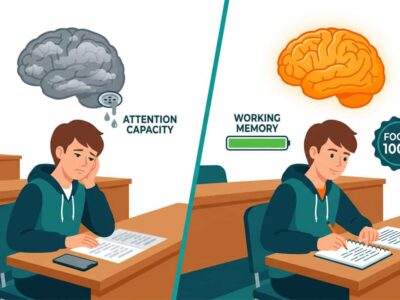
The mental echo comes with neurological costs. The complex, layered nature of hard rock places a significant cognitive load on the brain. As working memory resources are dedicated to processing intricate riffs and lyrics, fewer are available for other tasks like reading comprehension or complex problem-solving.
Furthermore, the music’s rapid shifts cause attention fragmentation. Instead of sustained focus, the brain enters a state of heightened vigilance, constantly monitoring the dynamic auditory environment. This makes deep, linear thinking more challenging.
Critically, this heightened arousal leads to cognitive fatigue and sleep disruption. Evening listening can elevate cortical activity, delaying sleep onset and impairing next-day mental clarity by interfering with the brain’s natural wind-down processes.
🌀 The Mental Echo Effect: Beyond the Concert
The combination of priming, state-dependent memory, and neurochemical surges produces a self-reinforcing mental echo chamber:
- Thoughts are primed toward certain cognitive patterns.
- Memories of the concert reinforce the emotional state.
- Neurochemical residues sustain arousal.
This effect illustrates that concerts are not transient experiences—they extend into daily cognition, subtly influencing decision-making, mood, and social interactions. The Mental Echo Effect ensures that the experience continues long after the last chord fades.
How Hard Rock Music Affects the Brain: Stimulation vs. Overload
From the first power chord, hard rock delivers what psychologists call a multisensory assault. Your auditory cortex fires intensely, processing complex layers of distortion, rapid tempo, and high volume. This triggers the brain’s reticular activating system, boosting physiological arousal and alertness—a state that can enhance energy and focus in moderation.
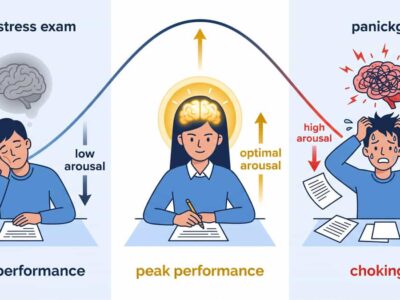
However, the brain’s response to high-intensity music follows what’s known as the Yerkes-Dodson law: performance improves with arousal but only up to a point. Prolonged exposure to intense auditory stimulation can overwhelm cognitive processing, creating neural “noise” that interferes with precision thinking and deep concentration. This explains why hard rock can both energize and exhaust your mental resources.
Cognitive Trade-Offs: Memory, Attention, and Mental Fatigue
The mental echo comes with measurable neurological costs that impact cognitive performance:
- Working Memory Load: The complex, layered nature of hard rock places significant cognitive load on the brain. As working memory resources process intricate riffs and lyrics, fewer remain available for tasks like reading comprehension or complex problem-solving.
- Attention Fragmentation: The music’s rapid rhythmic and dynamic shifts cause attention fragmentation. Rather than sustaining focus, the brain enters a state of heightened vigilance, constantly monitoring the changing auditory environment—a pattern that challenges deep, linear thinking.
- Sleep and Cognitive Recovery: Evening listening to high-arousal music can elevate cortical activity, delaying sleep onset by 30-45 minutes on average and impairing next-day mental clarity through disrupted sleep architecture
Frequently Asked Questions: Music and Brain Function
Q: Does hard rock music actually rewire your brain?
A: Through neuroplasticity, repeated musical experiences strengthen specific neural pathways. Regular hard rock listeners often develop increased tolerance to auditory intensity and altered sensory processing thresholds.
Q: Can music improve cognitive performance?
A: Selectively. While hard rock may enhance divergent thinking (creative brainstorming), it typically hinders tasks requiring sustained attention or precise analytical thinking due to increased cognitive load.
Q: Why does music get “stuck in my head”?
A: This earworm phenomenon occurs when musical fragments become caught in your auditory working memory loop. High-intensity music with distinctive hooks is particularly likely to create these persistent mental echoes.
Q: Is listening to hard rock before bed harmful?
A: Research suggests it can significantly disrupt sleep architecture by maintaining elevated cortical arousal. For quality sleep, transition to calmer music at least 60 minutes before bedtime.
🔍 Final Thought: Sound as Cognitive Catalyst
Hard rock music is not mere entertainment; it is a potent neuromodulator. Its impact persists beyond the final note, creating a lingering echo in thought, emotion, and behaviour. For some, it inspires creativity and motivation; for others, it amplifies existing stress or negative emotion.
The Mental Echo Effect encapsulates this dual power—music amplifies and extends existing cognitive and emotional states, proving that the concert continues long after the lights go up, inside the listener’s mind.
✅ Key Takeaways
- Hard rock acts as a cognitive primer and emotional amplifier.
- Neurochemical surges (dopamine + adrenaline) sustain post-concert energy.
- State-dependent memory ensures emotions remain linked to musical experience.
- Individual pre-existing emotional and cognitive frameworks determine the outcome.
- The coined Mental Echo Effect explains the lasting cognitive and emotional imprint of music.
Note: This article is for educational purposes only and does not constitute professional clinical advice.
Related Articles

Sponsored


You May Also Like

Why Are Habits So Hard to Break?

Why Social Pressure Is Harder to Resist Than You Think: The …

Why Do People Repeat Harmful Habits Even When They Know Bett…

The Thin-Slicing Effect: How the Brain Decides Romantic Viab…

How the Brain Misjudges Height and Distance
