

Why can one outfit make a woman feel beautiful, confident, and ready to face the world, while another makes her feel uncomfortable—even when both fit perfectly?
Why do some women repeatedly choose revealing outfits, while others feel self-conscious wearing similar clothes? Why can a particular dress initially feel unfamiliar but become a favourite after wearing it several times? And why might someone feel confident in the same outfit in one place but uncomfortable in another?
These questions reveal that clothing is not always just about fabric, colour, or current fashion trends. For many women, what they wear is connected to their self-image, emotions, personal identity, social experiences, and the way they expect others to perceive them.
Fashion psychology explores the relationship between clothing, thoughts, feelings, and behaviour. It helps us understand why an outfit can influence how someone sees herself, how she presents herself to others, and how comfortable she feels in different situations.
But there is no single psychological explanation for every clothing choice. A woman may choose an outfit for comfort, personal taste, cultural reasons, attraction, self-expression, social expectations, or simply because she likes how it looks. The same outfit can mean very different things to different people.
Why Does Wearing a Particular Dress Make a Woman Feel Beautiful?
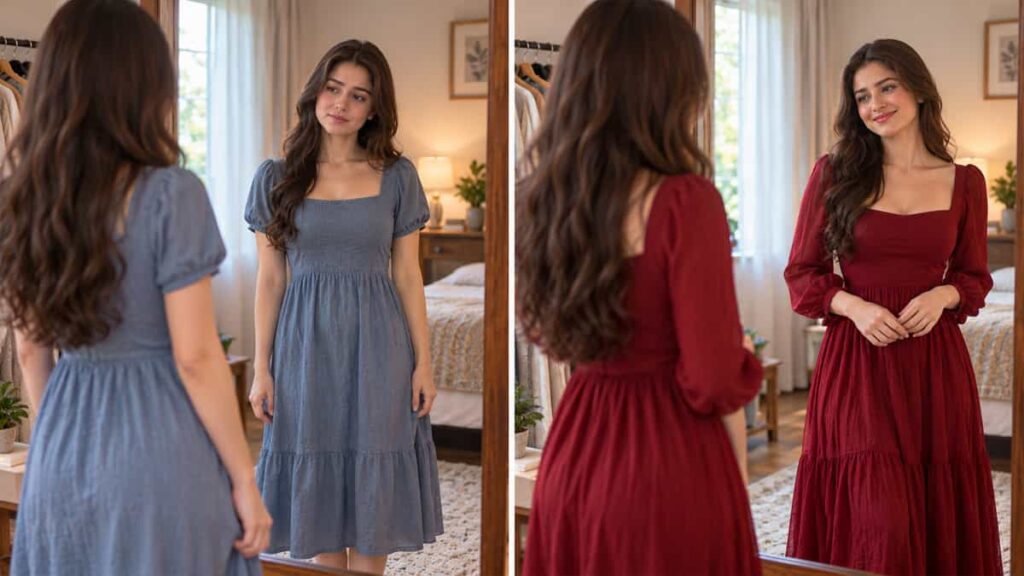
Imagine a woman trying on two outfits. Both fit her well, but when she looks in the mirror wearing one of them, she immediately feels more attractive. She stands differently, smiles at her reflection, and feels more confident about going out.
What changed?
The outfit did not necessarily change her physical appearance dramatically. Instead, it may have changed how she interpreted her appearance.
The connection between clothing and self-image
Self-image refers to the way we perceive and evaluate ourselves. Clothing can influence this perception by drawing attention to certain features, creating a particular silhouette, or matching the appearance we want to achieve.
A woman might feel beautiful in a dress because it highlights a feature she likes, matches her preferred style, or makes her feel closer to the version of herself she wants to express.
For someone else, beauty might mean wearing a traditional outfit, choosing a modest silhouette, wearing oversized clothes, or keeping an appearance simple.
The important point is that feeling beautiful is not determined by the outfit alone. It also depends on what the outfit means to the person wearing it.
The influence of an ideal self
People often have an idea of how they would like to look or present themselves. This may be influenced by personal preferences, admired individuals, cultural beauty standards, friends, celebrities, or social media.
When an outfit seems to match that ideal, the wearer may experience satisfaction and increased confidence. When it does not match, she may feel that something is missing, even if other people think she looks attractive.
This can help explain why the same woman may love one style and dislike another without any obvious difference in the quality or fit of the clothes.
Why Do Some Women Feel Incomplete Without Their Favourite Style?

Some women feel especially confident in fitted dresses. Others prefer loose clothing, traditional outfits, jeans, crop tops, sarees, or a particular combination of accessories.
Over time, a preferred style can become closely connected to a person’s sense of identity.
Familiarity creates comfort
When a woman repeatedly wears a particular type of outfit and has positive experiences in it, the style may begin to feel natural. She knows how it fits, how it moves, and what to expect when she wears it.
A new style can feel awkward simply because it is unfamiliar. The wearer may keep adjusting the outfit, wondering whether it looks right, or worrying about how others will react.
After repeated use, some of that uncertainty may fade.
This does not mean that the brain becomes permanently attached to one kind of dress. Rather, familiarity, positive associations, and physical comfort can make a style easier to choose again.
When fashion becomes part of identity
A woman may eventually think, “This is my style,” rather than simply, “I like this dress.“
Her clothing choices may become part of how she recognises herself. Wearing the style can reinforce a familiar sense of identity, while dressing differently may make her feel unlike herself.
This can happen with almost any style, including modest clothing, bold fashion, formal wear, or casual outfits.
It is also why telling someone to change her style may not feel like a simple suggestion about clothing. Depending on how strongly she identifies with it, she may experience the suggestion as criticism of her taste or appearance.
Why Do Some Women Choose Revealing Clothes?
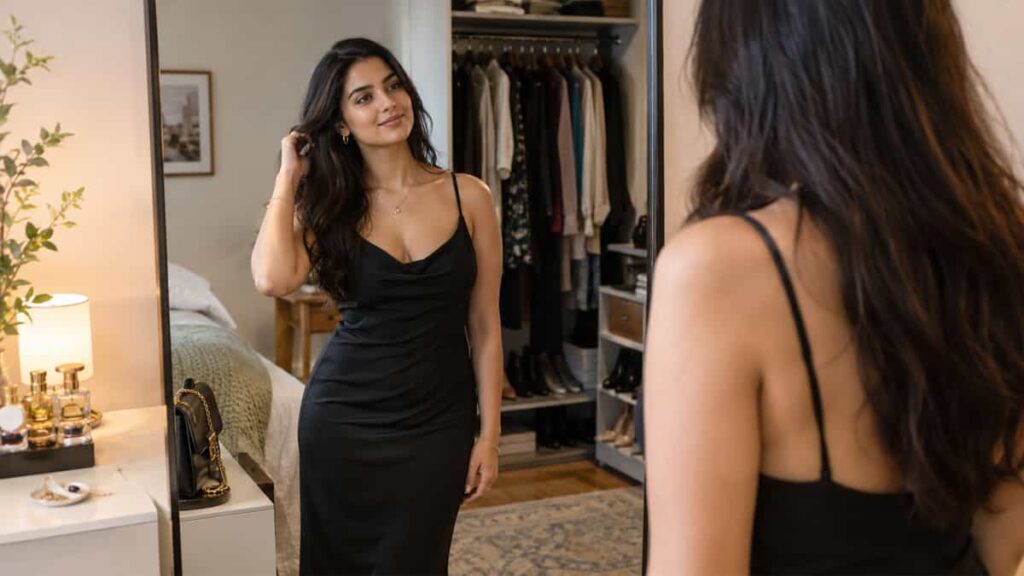
This is one of the most misunderstood aspects of women’s fashion.
A woman may choose a low neckline, a short skirt, a backless dress, or a fitted outfit because she likes the way it looks and feels. Another woman may prefer covering more of her body. Neither choice automatically reveals a person’s confidence, insecurity, personality, or intentions.
So what might influence these preferences?
Personal taste and self-expression
Some women enjoy particular silhouettes because they find them attractive, stylish, feminine, modern, or expressive of their identity. Others simply like how a specific outfit fits their body.
For them, choosing revealing clothing may be an ordinary expression of personal taste rather than a deliberate psychological statement.
Feeling attractive and receiving attention
Clothing can also influence how people hope to be perceived. Someone might choose an outfit for a date, a celebration, a party, or a special occasion because she wants to feel attractive or make a particular impression.
Social feedback can reinforce these choices. If someone receives positive comments while wearing a certain style, she may become more interested in wearing it again.
However, wanting to look attractive and wanting sexual attention are not the same thing. Nor does wearing revealing clothing establish that someone is seeking attention at all.
Social norms and beauty standards
Fashion trends, advertising, celebrity culture, peer groups, and social media can shape what people consider attractive or fashionable.
When a particular appearance is repeatedly praised, some women may feel encouraged to adopt it. Others may reject the same standard and choose clothing that better reflects their preferences.
These influences can coexist with genuine personal choice. A preference may feel entirely individual even when the surrounding culture has helped shape what seems desirable.
A revealing outfit is not a psychological test. You cannot reliably determine a woman’s motives or emotional state by looking at how much skin her clothing shows.
Why Can a Woman Feel Insecure in One Outfit but Confident in Another?
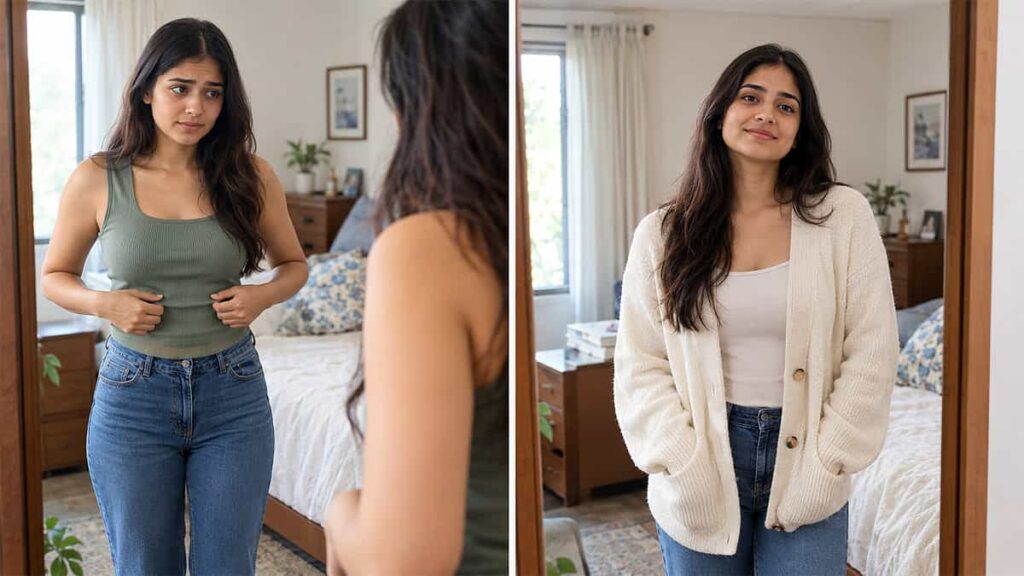
Imagine a woman who is comfortable wearing a sleeveless top around close friends but feels exposed wearing it at a family gathering or in a crowded public place.
Her clothing has not changed. The situation has.
Body image and self-consciousness
Body image involves how a person thinks and feels about her physical appearance. Those feelings can fluctuate with mood, circumstances, past experiences, and the way she interprets her body.
Research on women’s clothing practices has found that people may use outfits to emphasise features they appreciate, conceal areas they feel uncomfortable about, or manage distress about their appearance.
For example, a woman who feels self-conscious about her arms might prefer long sleeves on certain days. Someone else might choose fitted clothing because it helps her appreciate her shape.
Neither choice necessarily indicates a serious psychological problem. Clothing can be an everyday way of managing appearance and comfort.
The difficulty begins when a person feels she must hide herself, repeatedly checks whether others are judging her, or avoids activities because of persistent appearance-related anxiety.
The imagined gaze of other people
Sometimes the discomfort is less about the garment itself and more about what the wearer expects others to think.
She may wonder:
- Will people judge how I look?
- Will this outfit attract unwanted comments?
- Do I look appropriate for this setting?
- Will people compare my body with someone else’s?
These thoughts can make a person unusually aware of her clothing and appearance.
A woman who feels relaxed in an environment where she expects acceptance may feel uncomfortable in a setting where she anticipates criticism. Her response may reflect previous experiences, social expectations, or uncertainty about how others will react.
It does not necessarily mean she lacks confidence in every part of her life.
Why Do Some Women Feel Comfortable in Revealing Clothes Even in Places They Consider Unsafe?
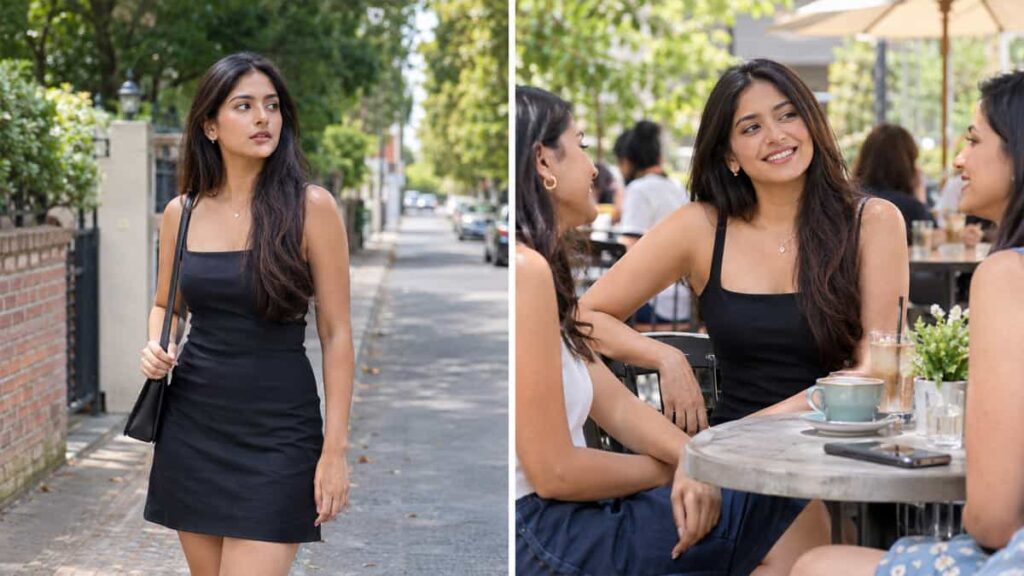
At first, this can appear contradictory.
One woman may feel uncomfortable wearing a revealing outfit in a familiar neighbourhood. Another may wear a similar outfit at a crowded event or while travelling and feel perfectly relaxed.
Why do their reactions differ?
Perceived safety is not the same as actual safety
People do not assess every environment in exactly the same way. Their feelings may depend on who is present, whether they are with friends, their previous experiences, the time of day, local social norms, and how much control they feel they have over the situation.
A woman may feel relaxed because she is with trusted friends, is familiar with the venue, or expects the people around her to be respectful.
Another woman may feel uneasy because she has previously experienced unwanted attention, even in an otherwise familiar place.
These reactions are personal and context-dependent. They cannot be predicted simply from clothing preferences.
Why discomfort does not always change clothing choices
A person can recognise that a setting has risks without feeling anxious at every moment. Equally, someone can feel anxious in a situation that is objectively relatively safe.
Emotional comfort and a person’s assessment of external risk are related, but they are not identical.
Someone might continue wearing a preferred outfit because it expresses her identity, because she does not want to change her behaviour around others, or because she feels comfortable managing the situation. Another person may choose more covering clothing to feel at ease.
Neither response proves that one woman is more sensible, confident, or aware than the other.
Most importantly, clothing does not cause or justify harassment or assault. Responsibility for harmful behaviour belongs to the person who commits it, not to the person wearing a particular outfit.
Why Do We Keep Wearing Clothes That We Once Felt Unsure About?
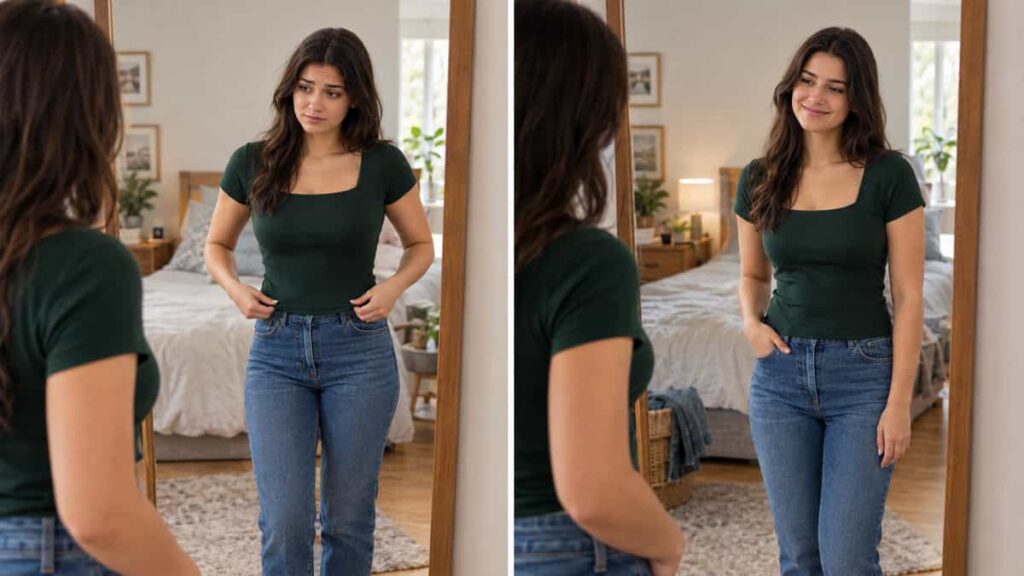
A dress that initially feels too bold, too fitted, too different, or simply unfamiliar may eventually become a favourite.
This change can happen through familiarity and experience.
Suppose a woman buys a new outfit but feels awkward wearing it the first time. She worries about how it looks and repeatedly checks her reflection. However, the event goes well, she enjoys herself, and she receives a few positive comments.
The next time she wears it, she may feel less uncertain. After several positive experiences, the outfit might become associated with comfort and confidence.
This is one way learned associations can influence clothing choices.
The reverse can happen too. If a woman experiences embarrassment or unwanted attention in a particular outfit, she may begin to associate it with discomfort and avoid wearing it again.
These associations are not permanent rules. People can change their preferences, reinterpret past experiences, and become comfortable with styles they previously avoided.
Physical comfort matters, too
Psychology is only part of the explanation. Fabric, temperature, fit, movement, and the need to keep adjusting a garment all affect how comfortable it feels.
A dress that looks beautiful in a photograph may be difficult to walk, sit, or work in. Another outfit may look less fashionable by current standards but feel so comfortable that the wearer chooses it repeatedly.
For many people, a favourite outfit succeeds because it combines physical ease with a positive feeling about their appearance.
Can Clothes Actually Change the Way We Think and Feel?

Psychologists have studied a concept known as enclothed cognition: the possibility that clothing can influence the wearer’s psychological processes through both its symbolic meaning and the physical experience of wearing it.
For example, a person might associate formal clothing with professionalism, a particular uniform with responsibility, or a favourite outfit with feeling prepared for an important occasion.
Those associations may influence how the person feels or behaves.
However, this idea should not be exaggerated. A 2025 review of 40 studies found evidence supporting some clothing-related psychological effects, particularly in research published after 2015, while also raising concerns about the reproducibility of some early findings.
This means clothes can matter psychologically, but they do not automatically transform a person’s confidence, intelligence, mood, or abilities.
An outfit may help someone feel prepared. It cannot guarantee that she will feel confident in every situation or that other people will respond positively.
Clothing is one influence among many, alongside personality, experience, mood, social relationships, and the circumstances in which a person wears it.
When Does Fashion Support Confidence—and When Can It Become a Source of Pressure?
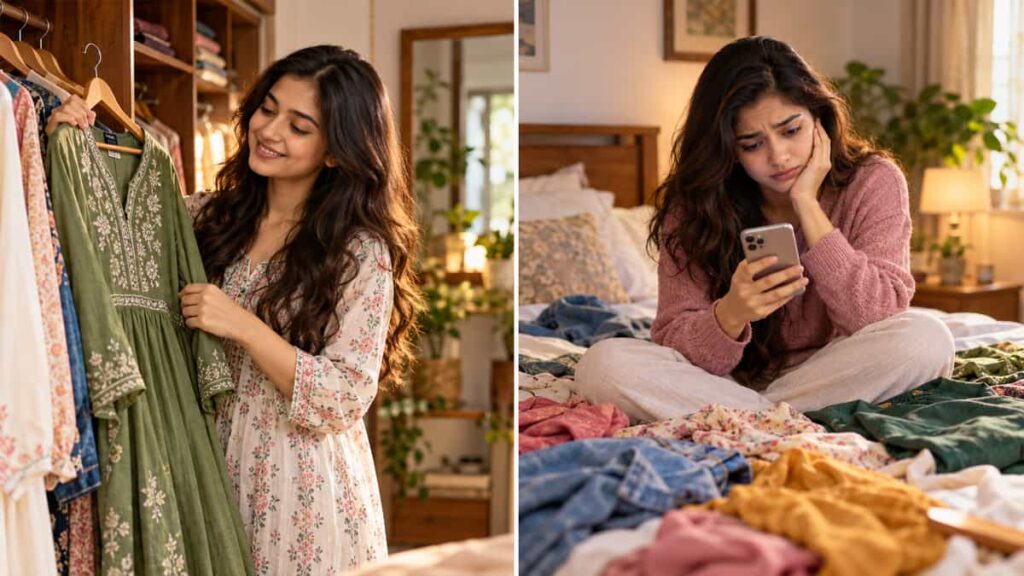
Enjoying fashion is not inherently superficial. Clothing can be creative, enjoyable, culturally meaningful, and an important way to express personal identity.
The question is whether clothing adds to a person’s life or starts controlling how she feels about herself.
When fashion supports well-being
Fashion may be serving a positive role when a woman:
- Chooses clothes that reflect her taste and identity.
- Feels comfortable moving and participating in daily activities.
- Enjoys experimenting with different looks without feeling obligated to follow every trend.
- Can wear a simple or repeated outfit without feeling that she has failed to look attractive.
- Can appreciate her appearance without needing constant approval from others.
When appearance pressure becomes exhausting
Clothing may become a source of distress when a person:
- Feels unattractive unless she wears a particular style.
- Repeatedly compares her appearance with edited images or idealised beauty standards.
- Avoids social events because she cannot find an outfit that makes her feel good enough.
- Constantly worries about how other people are evaluating her body.
- Feels compelled to change her appearance to earn acceptance or avoid criticism.
These experiences do not automatically indicate a mental health disorder. Their significance depends on their intensity, persistence, and effect on daily life.
A helpful first step is to notice the thoughts behind the discomfort. Is the outfit physically uncomfortable? Does it conflict with personal taste? Is the concern about other people’s opinions? Or has a narrow beauty ideal made it difficult to appreciate one’s own appearance?
Understanding the source of the pressure can make clothing choices feel more personal and less dictated by external expectations.
Is Fashion Psychology Different for Every Woman?
Yes. There is no single fashion personality shared by all women.
One woman may use fashion to explore identity. Another may care more about comfort and practicality. Someone else may enjoy experimenting with bold outfits, while another feels most like herself in simple, familiar clothing.
Culture, age, financial circumstances, personal history, body image, social environment, and individual preferences can all contribute to these differences.
Even the same woman may dress differently depending on whether she is attending a wedding, going to college, meeting friends, working, or spending time at home.
Men also experience clothing-related confidence, identity, and social pressure. But this article focuses primarily on women because the relationship between women’s appearance, body image, social expectations, and everyday clothing choices is an important area of psychological discussion—not because every woman is more interested in fashion than every man.
The goal is not to label women according to what they wear. It is to understand the different meanings clothing can hold for them.
What Fashion Choices Can Tell Us About Ourselves
The next time you choose an outfit, consider asking yourself a few questions:
- Do I genuinely like this outfit, or do I mainly like the reaction I expect to receive?
- Do I feel physically comfortable wearing it?
- Does this style reflect how I see myself, or how I believe I should look?
- Am I choosing it because I enjoy it, or because I am afraid of being judged in something else?
- Can I feel good about myself even when my outfit is simple, repeated, or different from the current trend?
There are no universally correct answers. Wanting to look attractive is normal, and enjoying compliments does not make someone insecure. Similarly, preferring modest, revealing, fashionable, or practical clothing does not automatically reveal a person’s deeper psychological state.
The value of these questions lies in helping us recognise our own motivations instead of assuming that other people dress for the same reasons we do.
10 Key Takeaways: What Fashion Psychology Helps Us Understand
- ✓ Clothing and self-image are connected. An outfit can influence how a person evaluates and presents herself.
- ✓ Feeling beautiful is personal. Different women can feel equally attractive in very different styles.
- ✓ Familiarity can create comfort. Repeated positive experiences may make a particular style feel natural.
- ✓ Revealing clothing does not reveal someone’s intentions. It cannot reliably tell us whether a woman is confident, insecure, or seeking attention.
- ✓ Body image can influence clothing choices. People may choose outfits to emphasise features they like or feel more comfortable with their appearance.
- ✓ Social expectations matter. Friends, culture, advertising, and social media can influence what people consider attractive.
- ✓ Context changes how an outfit feels. The same clothing may feel comfortable in one setting and uncomfortable in another.
- ✓ Feeling safe and being safe are different things. A person’s comfort level does not guarantee that an environment is safe.
- ✓ Clothes can influence feelings, but their effects are not unlimited. Clothing does not guarantee confidence or determine behaviour.
- ✓ Enjoying fashion is not a problem. It becomes worth examining when appearance pressure causes persistent distress or limits everyday life.
Fashion psychology is not simply about understanding why a woman chooses one dress over another. It is about understanding the relationship between appearance, identity, emotions, social expectations, and the way people experience themselves.
A woman may dress to feel beautiful, comfortable, expressive, accepted, or simply like herself. Sometimes several of these motivations exist at the same time. Her preferences may change with experience, and an outfit that feels empowering to her may mean very little to someone else.
Rather than judging a woman by what she wears, it is more useful to recognise that clothing choices can have personal meanings that are not immediately visible.
Ultimately, the most revealing part of fashion psychology is not what a woman wears, but what she believes her clothing allows her to feel, express, or experience.
References
- Adam, H., & Galinsky, A. D. (2012). Enclothed cognition. Journal of Experimental Social Psychology, 48(4), 918–925. https://doi.org/10.1016/j.jesp.2012.02.008
- Frith, H., & Gleeson, K. (2008). Dressing the Body: The Role of Clothing in Sustaining Body Pride and Managing Body Distress. Qualitative Research in Psychology, 5(4), 249–264. https://doi.org/10.1080/14780880701752950
- Horton, C. B., Adam, H., & Galinsky, A. D. (2025). Evaluating the Evidence for Enclothed Cognition: Z-Curve and Meta-Analyses. Personality and Social Psychology Bulletin, 51(2), 203–221. https://doi.org/10.1177/01461672231182478
- Johnson, K., Lennon, S. J., & Rudd, N. (2014). Dress, Body and Self: Research in the Social Psychology of Dress. Fashion and Textiles, 1, Article 20. https://doi.org/10.1186/s40691-014-0020-7
- Kodzoman, D. (2019). The Psychology of Clothing: Meaning of Colors, Body Image and Gender Expression in Fashion. Textile & Leather Review, 2(2), 90–103. https://doi.org/10.31881/TLR.2019.22
Related Articles



Sponsored


You May Also Like

The Non-Conformity Paradox: Why Dressing Slightly Different …

7 Signs Overthinking Is Silently Ruining Your Day (And How t…

Generativity vs. Stagnation (Erikson’s Seventh Stage of Psyc…

Bad Boys, Dark Behaviour and Hidden Pleasures

Trust vs. Mistrust (Erikson’s First Stage of Psychosocial De…
