

Article Index
Ever wondered why you react a certain way, repeat certain habits, or get stuck in the same emotional cycles? It’s not just “how you are” — it’s how your brain is wired. Neuropsychology uncovers this hidden blueprint. It explains how the structure and chemistry of your brain shape the thoughts you think, the emotions you feel, and the actions you take every single day.
KEY TAKEAWAYS
- Brain-Behavior Link: Your daily thoughts, habits, and emotional reactions stem directly from neural circuits.
- Neuroplasticity: Your brain is dynamically re-wireable throughout life through deliberate practice and therapy.
- Functional Insight: Neuropsychology reveals how effectively the brain functions, bridging gaps left by structural imaging alone.
From split-second decisions to long-term habits, everything begins in the neural circuits deep inside your head. When those circuits fire differently, your behaviour changes — sometimes subtly, sometimes dramatically. In other words, your brain isn’t just influencing your life… it’s running the show.
Neuropsychology gives us the map to understand this inner world — and once you see how your brain drives your mind, changing your behaviour becomes not just possible, but powerful.
This field represents the powerful convergence of psychology and neuroscience, moving beyond theory to map how specific neurons, circuits, and regions—like the prefrontal cortex and amygdala—orchestrate the symphony of human experience. Understanding this link is more than academic; it’s a transformative tool for self-mastery, mental well-being, and intentional living.
What Is Neuropsychology? The Bridge Between Biology and Behavior
Neuropsychology is fundamentally the study of brain-behavior relationships. It seeks to understand how the physical matter of your brain—its intricate wiring and chemical soups—gives rise to everything that makes you you: your decisions, memories, personality, and skills. It provides empirical answers to questions like, “Why does a stroke change a person’s personality?” or “How does trauma literally reshape the mind?” By examining how damage to specific areas leads to predictable changes, neuropsychologists have charted the functional map of the human brain.
What Is Neuropsychology?
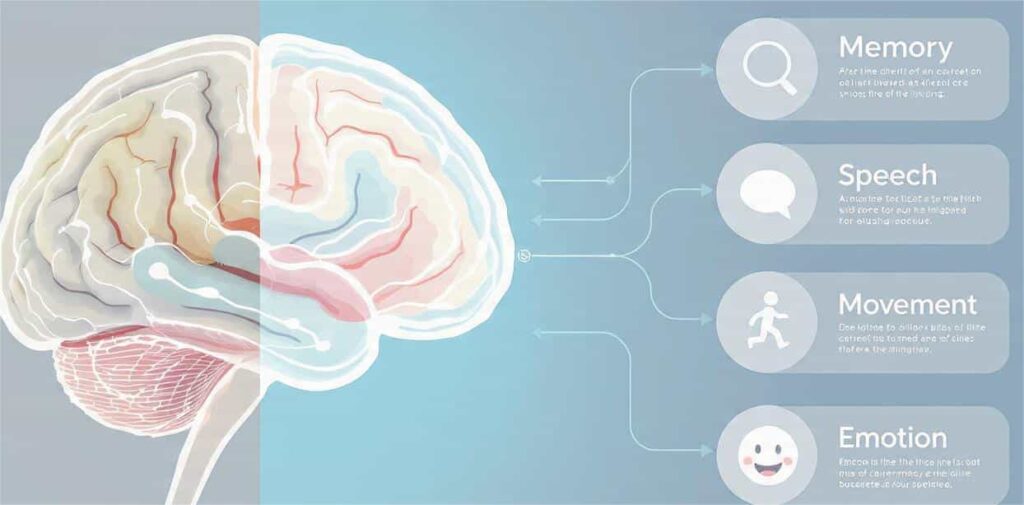
At its core, neuropsychology explores the relationship between the structure and function of the brain and observable psychological processes. It bridges neuroscience and psychology, focusing on how damage, disease, or developmental differences affect cognition and behavior.
Think of the brain as a complex network — each region performing specialized roles, yet working as an integrated whole. The frontal lobes plan, organize, and regulate impulses; the temporal lobes manage memory and language; the parietal lobes coordinate spatial reasoning and sensory integration; the occipital lobes interpret visual data; and the cerebellum fine-tunes movement and balance. Neuropsychology studies how alterations in these systems produce distinct behavioral patterns, offering insights that imaging alone cannot.
The Neural Authors of Thought and Action
Your thoughts are not random wisps; they are the direct output of precise electrochemical signaling. Key brain structures act as specialized authors:
Prefrontal Cortex: The CEO. This region behind your forehead is responsible for executive functions: rational decision-making, planning, impulse control, and moderating social behavior.
Amygdala: The Alarm System. This almond-shaped cluster deep in the brain processes emotions, especially fear and threat, triggering instant, survival-oriented reactions.
Hippocampus: The Librarian. Critical for forming and organizing new memories, giving context to your experiences.
Limbic System: The Emotional Hub. A interconnected network (including the amygdala and hippocampus) that regulates emotions, motivation, and memory.
A simple decision, like pausing before sending an angry email, is the outcome of a rapid dialogue between your amygdala’s urge to react and your prefrontal cortex’s counsel to reconsider.
From Circuit to Habit: How Wiring Becomes Behavior
Every action you take, from brushing your teeth to complex problem-solving, is triggered by well-trodden neural pathways. These pathways strengthen with repetition, forming habits that run on a cue → routine → reward loop. This is why both helpful and harmful behaviors can feel automatic.
Procrastination, for instance, often isn’t laziness but a brain-based conflict. It may involve an overactive amygdala (dreading a task’s stress), an under-engaged prefrontal cortex (poor executive planning), and a brain that has learned the immediate reward of distraction.
The brain’s wiring is not fixed. Trauma and chronic stress can carve deep, hyper-reactive pathways, particularly in threat-detection circuits. Understanding this is key to compassionate self-awareness and effective change.
You May Also Like
Understanding PTSD Symptoms and Treatment
Neuroplasticity: Your Brain’s Lifelong Power to Change
The most hopeful discovery in modern neuroscience is neuroplasticity—your brain’s innate ability to reorganize itself by forming new neural connections throughout life. The adage “neurons that fire together, wire together” means that focused practice, learning, and therapy can forge new, healthier pathways.
This is the mechanism behind healing and growth. Whether recovering from an injury, managing anxiety (often an overactive threat system), or breaking a bad habit, you are engaging in active brain sculpting. Effective treatments like Cognitive Behavioral Therapy (CBT) work by literally training the prefrontal cortex to calm the amygdala and build new cognitive pathways.
The Brain-Based Lens on Mental Health
Neuropsychology reframes mental health conditions as patterns of neural functioning, not just clusters of symptoms:
Depression can involve underactive motivation and reward circuits, coupled with overactive rumination loops in the brain’s default network.
OCD is frequently linked to dysregulation in circuits responsible for error-detection and behavioral termination, creating a loop of doubt and compulsion.
ADHD often relates to differences in networks governing attention, impulse control, and executive function.
This perspective leads to more targeted interventions, from neurofeedback to therapies designed to re-regulate specific brain circuits.
Your Daily Life as Brain Care
Your lifestyle is your most consistent brain-tuning regimen. Sleep, nutrition, exercise, and stress management directly impact neurochemical balance (like serotonin and dopamine), neural energy, and even the birth of new neurons. The mind-body connection is a tangible neural reality; chronic stress can shrink key brain areas, while mindfulness can strengthen them.
Why This Knowledge Changes Everything
BENEFITS OF NEUROPSYCHOLOGICAL SELF-AWARENESS
- ✓ Gain Emotional Agility: Recognize amygdala hijacks and use prefrontal strategies to regain control.
- ✓ Make Wiser Decisions: Identify cognitive shortcuts and pause for deliberate processing.
- ✓ Effective Behavior Change: Leverage neuroplasticity to replace unhealthy habit loops.
- ✓ Cultivate Self-Compassion: Frame personal struggles around neural patterns rather than personal failure.
By learning your brain’s master code, you shift from being a passenger to becoming the skilled architect of your own mind. The journey starts with a single, powerful realization: every thought is a chance to reshape your brain, and every action is a step toward a new you.
What Neuropsychologists Do
A neuropsychologist assesses, diagnoses, and guides treatment for individuals with neurological, psychiatric, or developmental conditions. Their core tool — the neuropsychological assessment — evaluates domains such as memory, attention, executive function, language, and visual-spatial processing through standardized tests.
These evaluations help to:
Differentiate diagnoses: For example, distinguishing early Alzheimer’s disease from depression-related cognitive decline.
Guide rehabilitation: After stroke or traumatic brain injury, identifying preserved abilities helps tailor therapy.
Support surgical planning: Cognitive mapping before epilepsy or tumor surgery helps surgeons protect critical language and memory areas.
Inform educational and clinical care: Assessing learning disabilities, ADHD, or developmental disorders to design appropriate interventions.
Unlike neuroimaging, which shows structure, neuropsychological testing reveals function — how effectively the brain actually works in daily life.
Expert Insight
According to a 2023 review in Frontiers in Psychology, neuropsychological assessment remains essential in early detection of dementia, providing nuanced cognitive profiles that neuroimaging alone may overlook. Similarly, a study by Wilson et al. (2022) highlighted that feedback following assessment significantly improves patient coping, self-awareness, and rehabilitation outcomes.
As Dr. Catherine Mateer, a leading neuropsychologist, notes:
“Assessment is never the endpoint — it’s the bridge between understanding the problem and guiding functional recovery.”
This approach reflects a shift in modern neuropsychology: from identifying deficits to fostering adaptive capacity, emphasizing neuroplasticity and individualized rehabilitation.
Case Study: When Testing Reveals the Hidden Story
Patient: 58-year-old woman, three-year history of progressive forgetfulness and language difficulty.
Assessment: Despite normal MRI findings, detailed cognitive testing revealed deficits in verbal memory, word retrieval, and abstract reasoning — patterns consistent with early Alzheimer’s disease rather than depression.
Outcome: The results informed both diagnosis and management. Early intervention, combined with caregiver education, improved daily functioning and emotional adjustment.
This case underscores a key advantage of neuropsychology: its ability to uncover subtle patterns invisible to scans, shaping care that’s both accurate and humane.
Myths and Realities in Brain Science
GOOD
- ✓ 100% Brain Utilization: Functional MRI shows virtually all brain areas are active at various times.
- ✓ Neuroplasticity & Recovery: Brain networks can adapt, rewire, and heal through targeted cognitive therapy.
- ✓ Integrated Brain Function: Logic and creativity rely on real-time collaboration across both hemispheres.
BAD
- ✕ The 10% Myth: The persistent misconception that humans only use a fraction of their brain capacity.
- ✕ Permanent Brain Damage Myth: The outdated belief that neural pathways cannot recover after injury.
- ✕ Left vs. Right Brain Myth: The oversimplified idea that people are strictly logical or purely creative based on dominant hemispheres.
Why Neuropsychology Matters
Neuropsychology is more than testing — it’s translation. It transforms neural data into lived understanding. By revealing how the brain constructs personality, emotion, and thought, it helps patients reclaim agency after neurological injury or illness.
In an era of advanced imaging and AI diagnostics, neuropsychology remains deeply human. It’s about meaning-making: interpreting patterns, guiding adaptation, and reminding us that cognitive health is not static but dynamic and resilient.
Neuropsychology sits at the crossroads of mind and brain — a field that both explains and empowers. It teaches clinicians to see beyond symptoms and helps individuals rediscover coherence after disruption.
The discipline’s greatest contribution may not be in mapping deficits, but in illuminating the pathways of recovery — proving, again and again, that the brain’s story is one of endurance and renewal.
Ready to explore more about the machinery of your mind?
continue your journey with these related insights.
- Discover how your brain constructs your experience of the world in our article on Perception vs. Reality.
- Dive deeper into the specific brain-behavior link in our dedicated overview of Neuropsychology.
- Consider how your unique neural patterns contribute to your personality by exploring the Big Five Personality Traits.
Frequently Asked Questions About Neuropsychology
How does a neuropsychological evaluation differ from an MRI or CT scan?
Brain imaging (MRI or CT scans) shows physical structure and anatomy, whereas a neuropsychological evaluation measures active cognitive function—revealing how your brain actually performs tasks like memory, focus, and executive reasoning in daily life.
Can neuropsychological testing help diagnose early-stage dementia?
Yes, detailed cognitive assessments can identify subtle deficits in memory, language, and executive processing long before structural changes become obvious on standard brain scans.
What is neuroplasticity and how does it aid recovery?
Neuroplasticity is your brain’s ability to rewire itself and form new neural connections. Through targeted cognitive therapy and behavioral changes, healthy areas of the brain can adapt and compensate for damaged neural pathways.
References (APA Style)
Boyd, L. A. (2021). Neuroplasticity: The brain’s ability to adapt and reorganize. Journal of Clinical Neuroscience, 88, 10–15.
Corballis, M. C. (2019). The truth about the left brain/right brain dichotomy. Scientific American Mind, 30(2), 26–31.
Kleim, J. A., & Jones, T. A. (2008). Principles of experience-dependent neural plasticity: Implications for rehabilitation after brain damage. Journal of Speech, Language, and Hearing Research, 51(1), S225–S239.
Wilson, B. A., Gracey, F., Evans, J. J., & Bateman, A. (2022). Neuropsychological rehabilitation: The international handbook. Cambridge University Press.
Mateer, C. A. (2020). Clinical perspectives in neuropsychological recovery. Archives of Clinical Neuropsychology, 35(7), 739–746.
Note: This article is for educational purposes only and does not constitute professional clinical advice.
Related Articles
Sponsored


You May Also Like

Your Life Isn’t Random — It’s a Story Unfolding. Freud Began…

The Minimalist Polish: How the “Put-Together” Ae…

The Rebel Archetype – Breaking Rules, Challenging Systems &a…

Why Scent Memories Outlast Visual First Impressions

Active Listening Anatomy: How Your Subconscious Conversation…
