
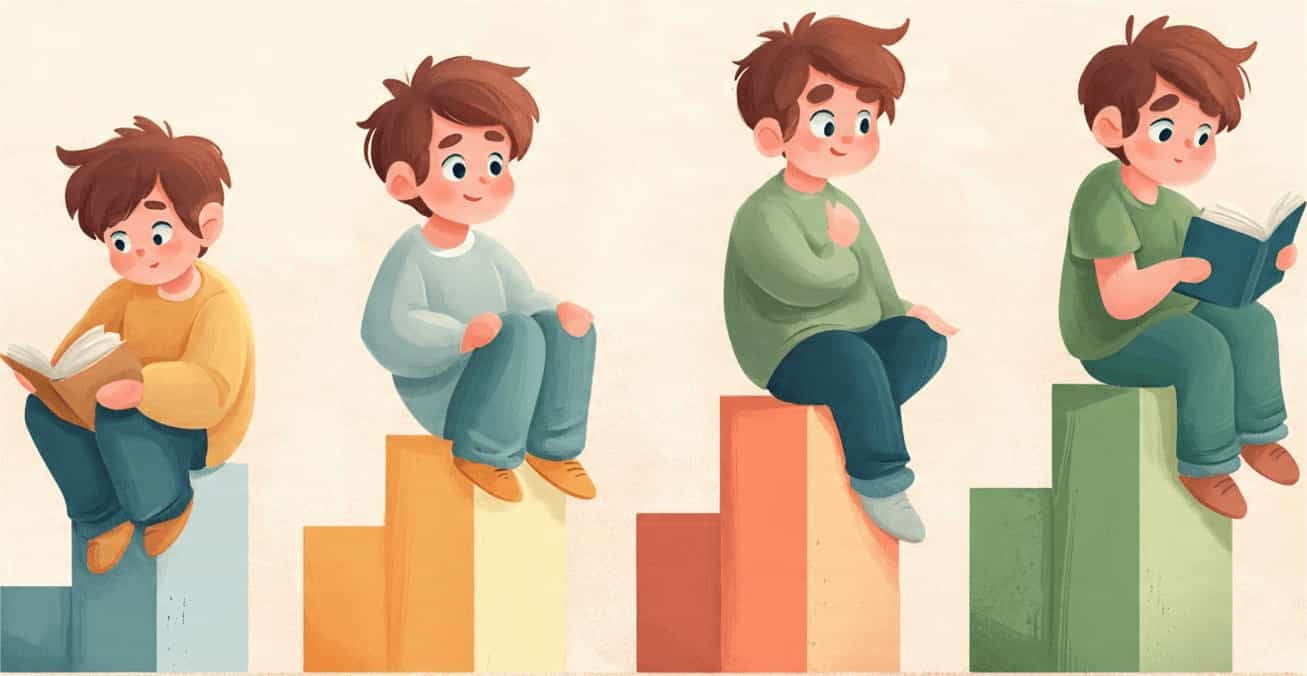
While observing learning, emotional maturity, and life progress across different ages, one pattern kept repeating—growth almost never moved in a straight line. People showed sudden improvements, long pauses, and unexpected setbacks. Developmental psychology explains that progress unfolds in phases, not smooth upward lines.
KEY TAKEAWAYS
- Human growth is non-linear and unfolds in developmental phases.
- Plateaus and regressions are essential for neural stabilization and internal integration.
- Progress feels uneven because emotional, cognitive, and environmental timelines vary.
The Myth of Linear Growth
Modern culture promotes the idea that development should be continuous and steady—each year better than the last. Whether it’s emotional regulation, learning skills, or career growth, we expect progress to be visible and measurable. When growth slows, people often assume something is wrong.
Developmental psychology challenges this assumption. Human development is nonlinear, shaped by biological maturation, environmental demands, and internal readiness. Plateaus and regressions are not failures; they are part of how the brain and behavior reorganize.
“Development is not about speed, but about readiness.” — Jean Piaget
Plateaus and Developmental Pauses
A developmental plateau occurs when progress appears to stop. These pauses are common in childhood learning, adolescence, and adulthood. During plateaus, the brain is often consolidating previous skills rather than acquiring new ones.
Neuroscience shows that learning involves cycles of acquisition and stabilization. Without pauses, new skills would remain fragile and unstable. What looks like stagnation externally may actually be internal integration.
Growth Spurts Across Life Stages
Growth tends to occur in bursts rather than gradual slopes:
LIFE STAGE GROWTH BURSTS
- ✓ Childhood: Sudden language or motor skill leaps
- ✓ Adolescence: Rapid identity and emotional shifts
- ✓ Young adulthood: Sharp changes in values and priorities
- ✓ Midlife: Reassessment and psychological reorganization
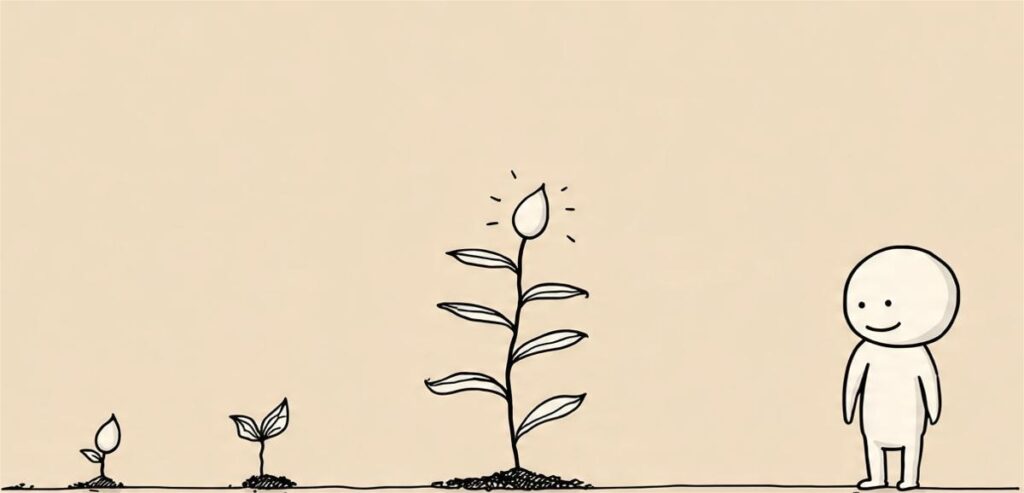
These spurts happen when biological maturity aligns with environmental opportunity. Development waits for the right conditions.
Setbacks as Learning Phases
Setbacks often feel like regression, but developmentally, they serve a function. When individuals encounter stress, transitions, or new responsibilities, previously stable behaviors may temporarily weaken.
A U.S.-based longitudinal study on adult learners found that participants often showed performance dips before mastering complex skills. These dips predicted stronger long-term retention, not failure.
Setbacks allow the brain to test limits, discard ineffective strategies, and rebuild stronger frameworks.
Emotional and Cognitive Timing
Not all skills develop at the same pace. Emotional regulation, cognitive flexibility, and decision-making rely on different neural systems with different timelines.
This explains why someone may be intellectually capable but emotionally unprepared—or emotionally mature but cognitively uncertain. Development depends on timing, not effort alone.
A UK study on emotional development found that individuals who experienced delayed emotional clarity often showed deeper self-awareness later, once cognitive and emotional systems aligned.
Why Progress Feels Uneven
Progress feels uneven because development is influenced by:
- Changing environments
- Stress and life transitions
- Shifting roles and expectations
When external demands increase faster than internal readiness, growth feels blocked. This mismatch often leads to self-doubt, even though development is still occurring beneath the surface.
Understanding this reduces unnecessary self-criticism and comparison.
Supporting Growth During Pauses
Instead of pushing harder during pauses, developmental psychology suggests:
HOW TO SUPPORT PAUSES
- Allowing consolidation time for brain rest
- Reducing social and peer comparison
- Focusing on overall process, not speed
- Providing psychological and emotional safety
Growth resumes naturally when conditions align again. Pauses are not detours—they are part of the path.
Phases Are Part of Progress
Development is not a straight staircase; it is a series of climbs, landings, and recalibrations. Plateaus, spurts, and setbacks are all signs of a system adapting to complexity. When we stop expecting linear growth, we make space for sustainable and meaningful development.
Note: This article is for educational purposes only and does not constitute professional clinical advice.
FAQs
Is non-linear development normal?
Yes. Research consistently shows that growth happens in phases, not straight lines.
Do setbacks mean failure?
No. Setbacks often precede stronger learning and integration.
How can I trust growth during slow phases?
By understanding that consolidation and readiness matter more than speed.
Related Articles



Sponsored


You May Also Like

Contagious Emotion: How Audible Audience Reactions Change th…

How to Break Negative Thought Patterns

Stuck and Numb? Behavioral Activation Can Get Your Life Movi…

The Rebel Archetype – Breaking Rules, Challenging Systems &a…

Why the Brain Overestimates Danger
