
Personal Observer Intro
While observing everyday health choices—people skipping sleep, ordering fast food despite diet plans, postponing exercise—I noticed a strange gap. Most individuals clearly know what’s healthy: sleep well, eat better, move more, manage stress. Yet behavior often moves in the opposite direction. Health psychology focuses on this exact space between knowledge and action—and why information alone rarely changes behavior.
EXPERT INSIGHT
- Knowing what is healthy rarely guarantees doing it.
- Behavior change requires bridging the psychological gap between intent and action.
Knowledge Isn’t the Problem
Public health campaigns, fitness apps, and endless online content have made health knowledge widely accessible. The issue today isn’t lack of awareness; it’s behavioral follow-through. Research in behavioral psychology consistently shows that knowing what to do does not automatically translate into doing it. Our brains are not wired to prioritize long-term health—they are wired to prioritize comfort, familiarity, and immediate rewards.
KEY TAKEAWAYS
- Education alone yields minimal behavior change.
- Automatic habit loops and brain defaults favor immediate comfort over future health.
- Consistency built through systems beats reliance on temporary willpower.
Information vs Behavior
A classic finding in health psychology is that education alone produces minimal behavior change. For example, smokers know the risks of lung disease, and sedentary adults understand the benefits of exercise. Yet habits persist. This disconnect is explained by the brain’s reliance on automatic decision-making systems, where behavior is driven more by routine and emotion than by conscious reasoning.
The mind–body interaction explains this well. Chronic stress, fatigue, and emotional overload weaken self-regulation, making healthy intentions harder to execute .
BENEFITS
- ✓ Delivers quick stress relief
- ✓ Conserves short-term cognitive energy
- ✓ Feels safe, familiar, and immediately satisfying
DRAWBACKS
- ✕ Undermines long-term physical health
- ✕ Reinforces hard-to-break reactive loops
- ✕ Decreases self-regulation capabilities
Habit Loops and Comfort Choices
Most daily actions operate on habit loops—cue, routine, reward. Late-night scrolling, sugary snacks, and skipping workouts often deliver immediate psychological relief. These behaviors reduce stress now, even if they harm health later.
The brain associates comfort with safety. From an evolutionary perspective, conserving energy and seeking pleasure were survival advantages. In modern life, however, these instincts clash with long-term health goals, reinforcing unhealthy routines .
Short-Term Rewards vs Long-Term Health
One key reason healthy behavior fails is temporal discounting—the tendency to favor immediate rewards over future benefits. Exercise improves health months later; rest on the couch feels good now.
A U.S.-based longitudinal study on lifestyle behavior change showed that participants who focused on immediate emotional rewards (such as feeling energized after walking) were more consistent than those focused only on long-term disease prevention. The brain responds better to felt benefits than abstract outcomes.
As psychologist William James famously noted:
“The greatest weapon against stress is our ability to choose one thought over another.”
But choosing that thought repeatedly requires structure—not just insight.
Why Motivation Fades Quickly
Motivation is often mistaken for a stable trait. In reality, it fluctuates with mood, energy levels, and environment. Relying on motivation alone makes health behavior fragile.
A UK workplace wellness case study found that employees who depended on “willpower” dropped new habits within three weeks, while those who altered routines—like scheduling walking meetings—maintained changes longer. Consistency beats intensity when it comes to health behavior.
You May Also Like
How Choice Architecture Shapes Daily Decisions
Environmental Triggers We Ignore
Our surroundings quietly shape choices. Food availability, screen exposure, sleep cues, and social norms influence behavior far more than conscious intention. The brain adapts to what’s easiest.
Health psychology emphasizes choice architecture—designing environments that make healthy behavior the default. Even minor changes, such as keeping healthy food visible or reducing friction around exercise, can significantly improve adherence .
Making Healthy Choices Easier
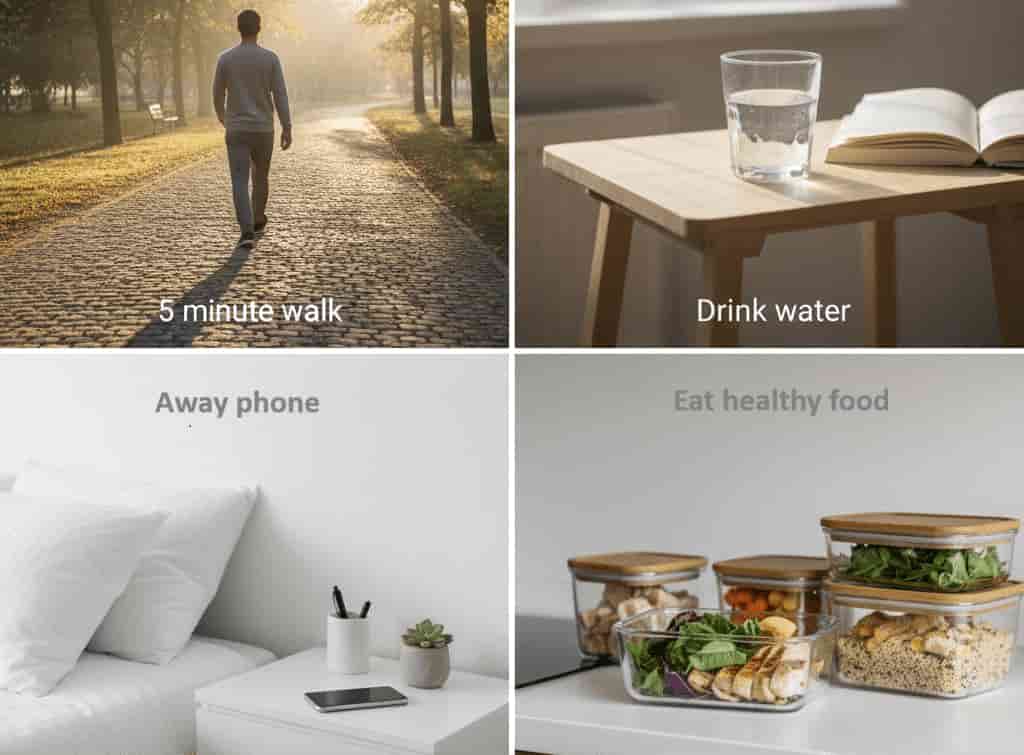
Successful health change doesn’t begin with more information—it begins with better systems. Evidence-based strategies include:
SYSTEMS-FIRST STRATEGIES
- ✓ Shrinking goals into micro-habits
- ✓ Attaching new habits to existing daily routines
- ✓ Reducing decision fatigue by planning choices ahead
- ✓ Designing environments that make healthy choices default
- ✓ Focusing on immediate emotional benefits over abstract goals
Understanding how thoughts, emotions, and behavior interact strengthens sustainable change .
Behavior Beats Awareness
Health knowledge is necessary—but not sufficient. The real challenge lies in how the brain prioritizes comfort, habit, and immediacy. When health strategies align with psychological realities, change becomes sustainable. In the end, behavior change isn’t about knowing more—it’s about designing life better.
FAQs
Why do people ignore health advice even when they understand it?
Because habits, emotions, and immediate rewards override rational knowledge.
Is motivation enough to maintain healthy habits?
No. Motivation fluctuates unpredictably. Systems, environmental architecture, and routines matter far more than temporary willpower.
What’s the most effective way to change health behavior?
Make healthy choices easier, more automatic, and immediately emotionally rewarding rather than relying on abstract future goals.
How long does it take to turn a health action into an automatic habit?
While popular culture suggests 21 days, psychological research shows habit formation typically takes between 18 to 254 days depending on individual consistency and routine complexity.
Note: This article is for educational purposes only and does not constitute professional clinical advice.
Related Articles



Sponsored


You May Also Like

The Vulnerability Paradox: Why “Flawless” Behavi…

Why Scent Memories Outlast Visual First Impressions

Why Do Childhood Experiences Shape Adult Behavior?

The Psychology of “Cockroach Army”: How Reels Turn Crowds In…

The Pheromone Myth vs. Reality: The Actual Science of Scent …
